How does ripeness affect Cornelian cherry liqueur flavour and colour?
Flavor Balance and Texture in Homemade Liqueurs
Direct Answer
Fully ripe Cornelian cherries give deeper ruby colour, softer acidity and richer plum-like flavour; underripe fruit tastes sharper and more astringent.
Expanded Explanation
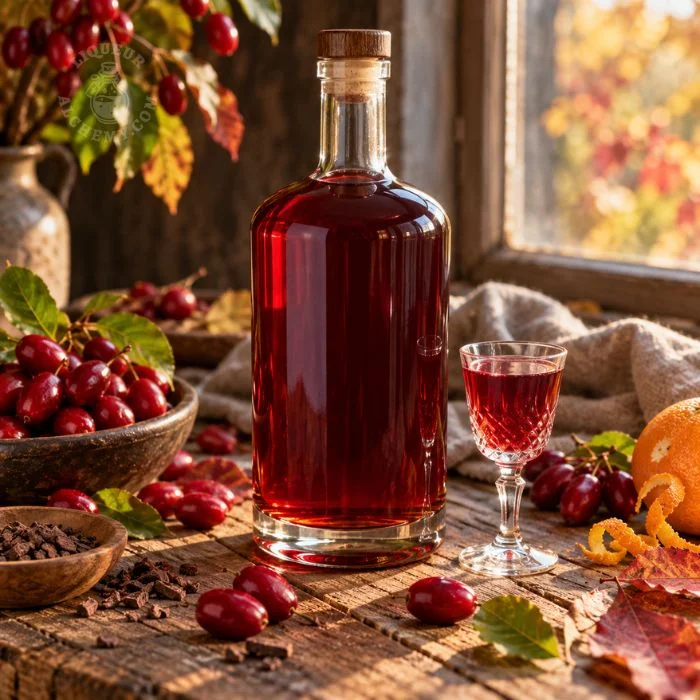
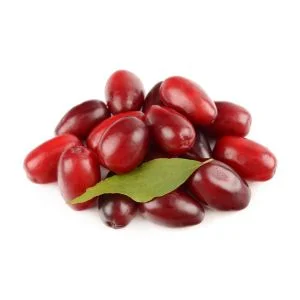
Ripeness has a major influence on both the flavour and colour of Cornelian cherry liqueur. Fully ripe fruit is usually deep red, softer to the touch, more aromatic, and less aggressively acidic than underripe fruit. It contributes a richer balance of sour-cherry, cranberry, and plum-like notes, with a slightly jammy quality that becomes more noticeable after sweetening. Less-ripe cherries can still provide strong colour, but their flavour is often sharper, greener, and more astringent, requiring greater care with infusion time and final sugar levels.
Colour extraction also changes with maturity. Deep-red ripe fruit generally produces a fuller ruby to garnet tone, while pale or partly ripe fruit may create a lighter, less saturated infusion. Frozen and thawed ripe cherries can release pigment very efficiently because their cell walls are already softened. Overripe fruit can give intense colour and a softer flavour, but damaged or fermenting cherries should be discarded because they can introduce off-aromas and microbiological problems before the alcohol fully penetrates the fruit. Uniform ripeness helps make batches more predictable.
For liqueur making, choose sound fruit that is fully coloured and fragrant but not spoiled. If your harvest contains a mixture of ripeness levels, sort out the palest, hardest cherries or use them only in small proportion. With very ripe fruit, begin tasting early because extraction may proceed quickly. With firmer fruit, freezing before infusion can improve flavour release. Ripeness also affects sweetening: ripe cherries generally need less sugar to feel balanced, while tart underripe fruit may tempt you to oversweeten. Using properly ripe fruit therefore improves both flavour clarity and colour while reducing the need for corrective adjustments later.