“Spices and herbs in alcohol infusion complete practical guide”
Spices and herbs are the soul of many unforgettable liqueurs, transforming simple alcohol into something layered, aromatic, and deeply expressive. From warm cinnamon and bright citrus peel to earthy roots and delicate herbs, each ingredient brings its own personality and extraction behavior.
In this guide, you’ll learn how to control infusion time, balance bitter and aromatic elements, avoid common mistakes, and build complex flavor profiles. Whether you’re crafting your first batch or refining your signature recipe, understanding how spices behave in alcohol is the key to consistent, high-quality liqueurs.
Spices and herbs are not supporting actors in liqueur making—they are the architects of aroma, depth, and identity. Fruit may define a direction, but spices shape the personality. A single clove can turn a bright citrus infusion into something dark and wintery. A few coriander seeds can lift a dull base into something vibrant and structured.
In liqueur alchemy, spices and herbs function as modifiers, enhancers, and sometimes as the core of the entire composition. They bring warmth, bitterness, freshness, and complexity. Understanding how they behave in alcohol is the difference between a balanced, layered liqueur and a confused, over-extracted mix.
Mastery begins with restraint and observation. Every spice carries intensity. Every herb evolves over time. The goal is not to add more—but to extract better.
Understanding Extraction Basics
How alcohol extracts flavor compounds
Alcohol is a powerful solvent capable of extracting both water-soluble and fat-soluble compounds. This makes it uniquely suited for capturing essential oils, aromatic compounds, and bitter elements from spices and herbs.
When spices are submerged in alcohol, several processes occur simultaneously:
Essential oils dissolve into the alcohol
Pigments may leach, affecting color
Tannins and bitter compounds begin to extract
Volatile aromatics develop and evolve over time
The structure of the ingredient determines what is extracted first. Surface-level aromatics release quickly, while deeper compounds require time. This is why many infusions taste bright and pleasant early on but become harsh if left too long.
Alcohol strength (ABV) vs extraction efficiency
Alcohol strength directly influences extraction speed and selectivity. Higher ABV extracts faster and pulls more intense compounds, including bitterness. Lower ABV extracts more gently and favors softer aromatics.
40–50% ABV: Balanced extraction, suitable for most spices and herbs
50–70% ABV: Faster extraction, stronger pull of oils and bitter compounds
Below 40%: Slower extraction, softer and sometimes incomplete
Using a higher ABV is not always better. It can easily lead to aggressive, unbalanced profiles. Precision comes from choosing the right strength for the ingredient.
Types of Spices & Herbs
Aromatic spices
Aromatic spices are primarily used for fragrance and warmth. They include cinnamon, cardamom, star anise, and vanilla. These ingredients contribute sweetness, warmth, and complexity without overwhelming bitterness when used correctly.
Bitter spices
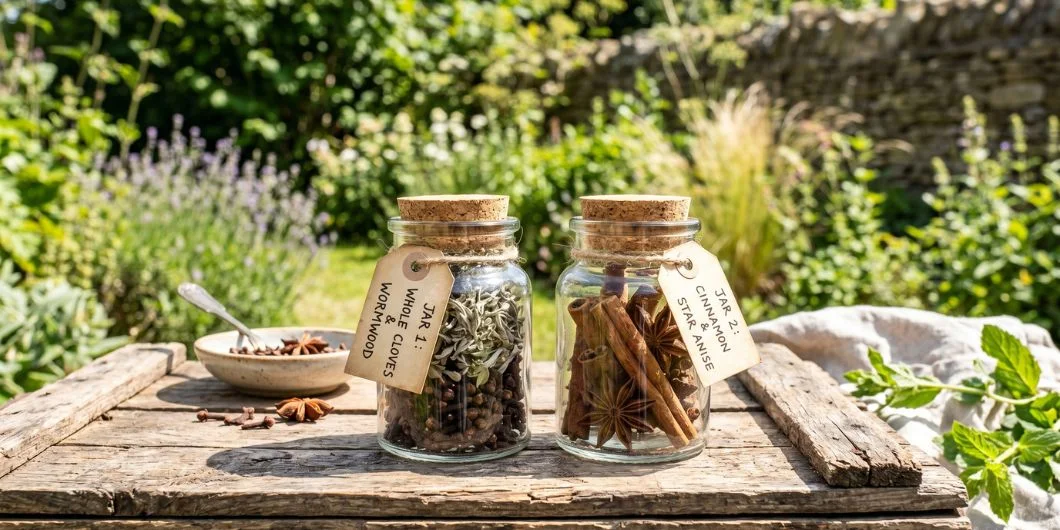
Bitter spices such as clove, wormwood, and certain roots are powerful and must be handled with care. They provide structure and depth but can quickly dominate an infusion.
Fresh herbs vs dried herbs
Fresh herbs offer green, vibrant, and sometimes volatile flavors. They are delicate and often require shorter infusion times. Dried herbs are more concentrated and stable, delivering deeper and more controlled extraction.
Roots, barks, seeds, leaves
Understanding the physical structure of spices and herbs is essential for controlling extraction. Each category behaves differently in alcohol due to density, oil content, and cellular structure. This directly affects how quickly flavors are released, how intense they become, and how easily they can tip into imbalance.
Roots are compact and fibrous, often containing deep, grounding flavors with varying levels of heat or bitterness. They release their character slowly and tend to evolve over time—from bright and spicy in the early stages to more earthy and rounded later.
Preparation is critical. Slicing, grating, or lightly crushing roots increases surface area and improves extraction efficiency. Fresh roots (like ginger or galangal) bring brightness and spice, while dried roots (such as angelica or orris) contribute structure and depth. Over-extraction can introduce harsh, woody bitterness, especially with medicinal roots.
Barks: warm, woody, medium extraction (e.g. cinnamon, cassia, cinchona, oak bark)
Barks are layered and porous, allowing alcohol to penetrate and extract warm, sweet, and sometimes bitter compounds. Cinnamon and cassia provide familiar warmth, while cinchona introduces quinine bitterness used in aperitif-style liqueurs.
These ingredients extract at a moderate pace but can quickly dominate if left too long. Breaking bark into smaller pieces increases extraction speed, but excessive fragmentation can lead to overly aggressive results. Toasting lightly before infusion can deepen aroma and add complexity.
Seeds: aromatic, often fast extraction (e.g. coriander, cardamom, fennel, anise, cumin, caraway)
Seeds are among the most expressive ingredients in liqueur making. They are rich in essential oils, which dissolve rapidly in alcohol, delivering immediate aromatic impact. Coriander adds citrusy brightness, fennel and anise bring sweetness and licorice notes, while cumin and caraway introduce earthy spice.
Light crushing is recommended to release oils, but over-grinding can lead to cloudy infusions and excessive extraction. Seeds can become overpowering quickly, so careful timing and tasting are essential.
Leaves are fragile and highly volatile. They deliver fresh, green, and sometimes floral notes, but their flavors degrade quickly if over-extracted. Mint and lemon balm provide brightness, while rosemary and sage introduce more resinous, savory tones.
Fresh leaves should be gently bruised to release oils, while dried leaves offer more stability and concentration. Infusion times are short—often hours to a few days. Leaving them too long can result in grassy, dull, or even bitter notes.
Each category demands a tailored approach. Dense materials like roots and barks require patience and controlled extraction, while seeds and leaves demand restraint and close monitoring. Mastery comes from understanding these differences and adjusting preparation, dosage, and timing accordingly.
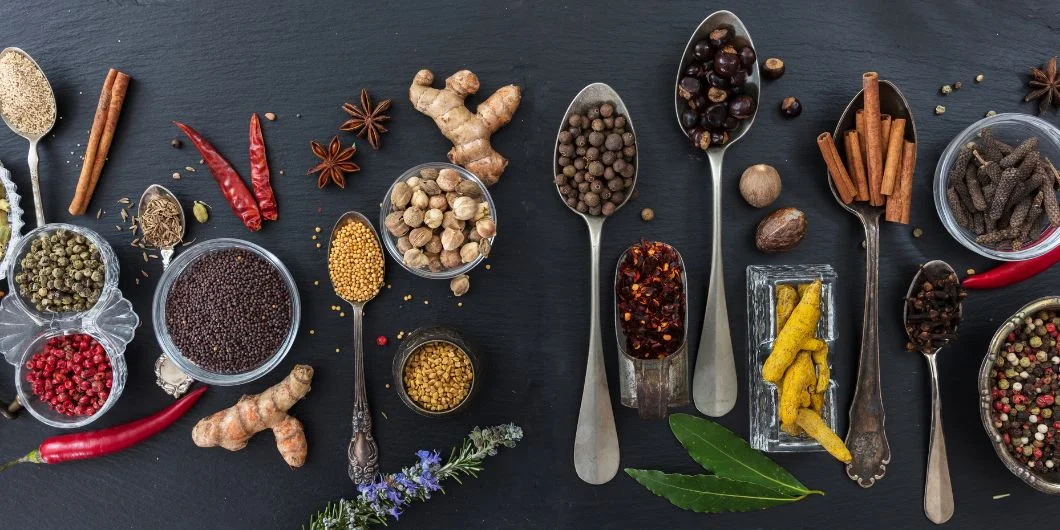
Different categories: roots, seeds, barks, and leaves—each bringing unique character to infusions.
Flavor Profiles & Their Impact on Liqueurs
Spices and herbs define the emotional tone of a liqueur. They decide whether the drink feels warm and comforting, bright and lively, dark and bitter, fresh and herbal, or deep and medicinal. This is why two liqueurs made with the same fruit can feel completely different once the spice structure changes.
In professional liqueur making, flavor is not only about taste. It is about aroma, first impression, body, balance, and finish. Some spices open the liqueur with fragrance, some sit in the middle and create weight, while others stay in the aftertaste and give length. Understanding where each ingredient acts helps you build a liqueur with structure instead of random flavor.
Warm spices: comfort, depth, and roundness
Warm spices create a sense of richness and softness. They are often associated with autumn, winter, baking, mulled drinks, and aged spirits. In liqueurs, they help make fruit taste deeper and more mature.
Cinnamon: sweet warmth, woody depth, soft spice
Nutmeg: rounded, creamy, slightly resinous warmth
Clove: intense, dark, warm, slightly medicinal
Allspice: a blend-like profile of clove, cinnamon, and pepper
Star anise: warm licorice sweetness with strong aromatic lift
Warm spices are powerful because they add emotional weight. A plum liqueur with cinnamon feels cosy and autumnal. An orange liqueur with clove feels darker and festive. A coffee liqueur with nutmeg feels smoother and more rounded.
The danger is heaviness. Too many warm spices can make a liqueur taste flat, brown, and muddy. Use them as accents, not as a wall of flavor.
Sweet aromatic spices: fragrance, lift, and elegance
Sweet aromatic spices do not always taste sweet by themselves, but they create the impression of sweetness through aroma. They make a liqueur feel smoother, more perfumed, and more refined.
Vanilla: creamy, soft, sweet-smelling, excellent for rounding edges
Cardamom: floral, citrusy, fresh, slightly spicy
Coriander seed: lemony, light, gently spicy
Fennel seed: sweet, herbal, anise-like
Tonka bean: almond, vanilla, spice-like warmth; use with care
These ingredients are excellent when a liqueur needs lift without adding sharp acidity. Cardamom can brighten mango, pear, apple, coffee, or citrus. Vanilla can smooth berry, plum, cherry, apricot, coffee, and chocolate infusions. Coriander seed can make heavy fruit liqueurs feel fresher and more alive.
Sweet aromatics are often best used in small amounts during the middle or late stage of infusion. This keeps their fragrance clean and prevents them from becoming dull.
Sharp spices: energy, heat, and movement
Sharp spices create motion in a liqueur. They stop sweetness from becoming heavy and give the drink a more active, lively profile. They can add heat, freshness, bite, or peppery tension.
Galangal: sharper, more herbal and resinous than ginger
Sharp spices are especially useful in sweet fruit liqueurs. Mango, peach, pineapple, strawberry, and pear can become syrupy if there is no contrast. A small amount of ginger or pepper gives the liqueur definition and keeps the sweetness alive.
The key is control. Sharpness should create a spark, not a burn. If the heat becomes the main flavor, the liqueur loses elegance.
Earthy spices and botanicals: grounding, body, and seriousness
Earthy notes give a liqueur depth and maturity. They are less playful than citrus or vanilla, but they make the drink feel more serious and structured. Earthy ingredients often come from roots, barks, dried herbs, and some seeds.
Angelica root: earthy, herbal, slightly bitter, excellent for structure
Gentian root: very bitter, earthy, aperitif-style structure
Oak: woody, dry, vanilla-like, tannic depending on use
Earthy ingredients work well when a liqueur needs backbone. They can stop a recipe from tasting like simple sweet fruit syrup. A small earthy note behind cherry, orange, plum, coffee, cacao, or herbal liqueurs can make the flavor feel more complete.
However, earthy ingredients are easy to overuse. Too much can make the liqueur taste dusty, medicinal, muddy, or root-heavy. Use them in small doses and taste frequently.
Medicinal and bitter botanicals: structure, dryness, and complexity
Medicinal does not mean unpleasant. In liqueur making, medicinal notes can create sophistication, bitterness, and a long finish. Many traditional herbal liqueurs rely on this style. The challenge is balance.
Wormwood: intensely bitter, herbal, dry, powerful
Gentian: deep bitterness, earthy root character
Quassia: very bitter, clean but aggressive
Yarrow: herbal, bitter, floral-green
Sage: savory, resinous, slightly medicinal
Rosemary: piney, resinous, strong herbal finish
Bitter botanicals add grip. They make sweetness feel more controlled and help the liqueur finish cleanly instead of sticky. This is especially useful in aperitif-style liqueurs, citrus liqueurs, herbal digestifs, and dark fruit recipes.
Use bitter botanicals carefully. They often need micro-dosing, short extraction, or separate infusion. Once bitterness is too strong, it is difficult to remove.
Fresh green notes: brightness, garden aroma, and volatility
Fresh herbs bring life and freshness, but they are fragile. Their aromas can be beautiful at first and dull after over-extraction. They are best treated gently.
Fresh green notes are excellent with citrus, berries, melon, cucumber, apple, pear, and tropical fruit. They can make a liqueur feel lighter and more modern. But if left too long, fresh herbs can become grassy, dull, brown, or bitter.
How flavor profiles affect the drinking experience
A good liqueur has movement. It should not taste the same from the first smell to the final aftertaste. Spices and herbs help shape this journey.
Aroma: volatile spices and herbs create the first impression
Entry: sweet, warm, or bright notes appear first on the palate
Middle: deeper spices, roots, barks, and fruit body develop
Finish: bitterness, warmth, tannin, herbs, or spice linger
For example, a cherry liqueur might open with vanilla, move into deep fruit and cinnamon, then finish with a tiny bitter almond or clove note. A mango liqueur might open with cardamom, move into juicy tropical fruit, then finish with ginger warmth.
Layering flavors for complexity
Layering means giving each ingredient a clear job. One spice may lift the aroma. Another may add warmth. A third may create dryness or finish. This prevents the recipe from becoming crowded.
A simple structure can look like this:
Main flavor: fruit, nut, coffee, cacao, or herb base
Top note: citrus peel, mint, cardamom, coriander
Middle note: cinnamon, vanilla, fennel, ginger
Base note: oak, angelica, gentian, clove, cacao nib
This approach creates a liqueur that feels intentional. Instead of adding five spices because they sound good, each ingredient supports a specific part of the flavor architecture.
Practical examples of flavor direction
Before choosing spices, decide what mood the liqueur should have. This makes ingredient selection much easier.
Bright and fresh: citrus peel, coriander seed, lemon balm, mint
Warm and cosy: cinnamon, vanilla, nutmeg, allspice
Dark and complex: clove, cacao nibs, oak, gentian, black pepper
Tropical and lively: ginger, cardamom, lime peel, basil
Herbal and digestif-style: wormwood, angelica, rosemary, sage, fennel
The best liqueurs usually combine contrast. Sweet fruit benefits from sharpness. Heavy spices benefit from citrus lift. Bitter botanicals need sweetness and aroma around them. Fresh herbs need a clean base so they do not disappear.
Key lesson for liqueur makers
Flavor profiles are not just descriptive labels. They are tools for construction. Warm spices build comfort. Sharp spices add energy. Sweet aromatics create elegance. Earthy botanicals provide depth. Bitter herbs give structure. Fresh herbs bring lift.
When you understand the role of each profile, you can design liqueurs with purpose. The drink becomes more than an infusion—it becomes a controlled flavor journey from aroma to finish.
Extraction Times & Infusion Control
Extraction time is one of the most critical—and most misunderstood—variables in liqueur making. It determines not only how much flavor is extracted, but also which compounds dominate. The same ingredient can taste bright and elegant after two days, or harsh and bitter after two weeks.
Time is not just duration—it is a control tool. Mastering extraction means knowing when to start, when to stop, and how to stage different ingredients so they work together rather than compete.
Quick vs slow extractors
Not all ingredients behave equally. Some release their essential oils rapidly, while others require time for alcohol to penetrate dense structures and dissolve deeper compounds.
Quick extractors release volatile aromatic compounds first. These are bright, fresh, and often desirable. However, if left too long, they begin to release secondary compounds that can taste dull, grassy, or bitter.
Slow extractors behave differently. Their early extraction phase may seem weak or incomplete, but over time they develop depth, structure, and complexity. Removing them too early often results in a flat liqueur.
What actually changes over time
Extraction is not linear. The flavor profile evolves in stages:
Early stage (hours to days): bright aromatics, fresh notes, volatile oils
Mid stage (days to weeks): body, warmth, deeper spice character
Late stage (weeks): bitterness, tannins, heavier compounds
This is why timing is so important. The goal is rarely maximum extraction. It is optimal extraction—capturing the best part of the ingredient before unwanted elements dominate.
Staged infusion
Advanced liqueur makers rarely infuse everything at once. Instead, they build the infusion in layers, adding ingredients at different times based on how quickly they extract.
This approach allows each ingredient to reach its peak without interfering with others. It also prevents delicate aromatics from being destroyed by long exposure.
A practical staged infusion might look like this:
Day 1: add slow extractors (roots, barks)
Day 5–7: add moderate extractors (cinnamon, vanilla)
Day 10+: add quick extractors (citrus peel, herbs, seeds)
Alternatively, some liqueur makers create separate infusions and blend them later. This gives even greater control, especially when working with strong or unpredictable botanicals.
Controlling extraction speed
Time is not the only variable. Extraction speed can be adjusted through several factors:
Surface area: crushed or sliced ingredients extract faster
Alcohol strength: higher ABV extracts more aggressively
Agitation: shaking or stirring speeds up diffusion
These variables can be used to fine-tune results. For example, lightly crushing coriander seeds accelerates extraction, while keeping cinnamon sticks whole slows it down.
When to remove ingredients
Tasting is essential. There is no fixed timeline that works for every batch, because raw materials vary in strength and freshness. The only reliable method is regular evaluation.
Remove ingredients when they reach their peak—not when the schedule says so. Signs that an ingredient is ready to be removed include:
The desired aroma is clearly present and stable
The flavor is integrated but not dominant
No harsh or bitter notes have started to appear
Delaying removal often leads to over-extraction. Once bitterness or dullness develops, it cannot be fully reversed.
Common timing mistakes
Most issues in spice infusions come from poor timing rather than incorrect ingredients.
Leaving quick extractors too long, resulting in grassy or bitter notes
Removing slow extractors too early, leading to weak structure
Infusing everything together, causing imbalance
Ignoring daily changes in flavor during the first week
Precision in timing separates amateur infusions from refined liqueurs. Even a difference of one or two days can significantly alter the final profile.
Micro-infusion technique
For very strong ingredients—such as clove, wormwood, or intense herbs—micro-infusion is often the safest approach. Instead of adding them directly to the main batch, infuse them separately in a small quantity of alcohol.
This concentrated extract can then be added drop by drop to the main liqueur, allowing exact control over intensity without risking the entire batch.
Practical timing framework
A simple working method for most liqueur recipes:
Day 1: start base infusion (fruit + slow spices if used)
Day 3–7: evaluate, adjust, add moderate spices
Day 7–14: introduce quick aromatics if needed
Daily tasting from day 5 onward
Remove ingredients individually as they peak
This structured approach reduces risk and improves repeatability.
Key principle
Extraction time is not about waiting—it is about active control. The best liqueurs are not left to develop blindly. They are guided, adjusted, and refined throughout the infusion process.
When you control time, you control flavor. And when you control flavor, you define the character of the liqueur.
Bitter vs Aromatic Balance
Bitterness is not a flaw—it is structure. It gives a liqueur grip, length, and a clean finish. Without it, many recipes collapse into simple sweetness. With too much, the liqueur becomes aggressive, dry, and difficult to drink. The skill lies in controlling how bitterness interacts with aroma.
Aromatic spices define the first impression. Bitter components define the finish. Between them sits the body of the liqueur. When these elements are aligned, the result feels layered and intentional rather than heavy or chaotic.
Understanding the role of bitterness
Bitterness acts as a counterweight. It cuts through sugar, stabilizes flavor, and prevents the liqueur from feeling syrupy. It also extends the finish, making the drink linger on the palate.
Structural bitterness: subtle, supports the recipe without being obvious
Expressive bitterness: noticeable, used in aperitif-style liqueurs
Dominant bitterness: risky, often leads to imbalance if not controlled
Most fruit-based liqueurs benefit from a low to moderate level of bitterness. Herbal and aperitif-style liqueurs may intentionally push this further.
Sources of bitterness in liqueurs
Bitterness can come from many ingredients, often unintentionally. Recognizing these sources helps you control them before they dominate the infusion.
Spices: clove, nutmeg (in excess), certain barks
Roots: gentian, angelica, orris
Herbs: wormwood, sage, rosemary
Citrus: white pith (not the zest)
Over-extraction: time itself can introduce bitterness
Even ingredients that are not inherently bitter can develop bitterness if extracted too long or at high ABV.
Aromatic spices: building the top and middle
Aromatic spices carry the identity of the liqueur. They shape the nose and the first taste impression. These include cinnamon, cardamom, vanilla, coriander, and star anise.
They can be layered more freely than bitter ingredients, but they still require discipline. Too many aromatics create confusion. Instead of complexity, you get noise.
Each aromatic ingredient should have a role:
Top note: bright, volatile (cardamom, citrus peel, coriander)
Middle note: warm, rounded (cinnamon, vanilla)
Bridge: connects fruit and base (fennel, allspice)
How balance is created
Balance is not about equal amounts. It is about interaction. Bitter and aromatic elements must support each other without competing.
There are three primary tools to control this balance:
Sweetness: reduces perceived bitterness and softens edges
Acidity (often from citrus): lifts aromatics and cuts heaviness
Alcohol: carries flavor and integrates components
For example, a liqueur with clove bitterness can feel harsh. Adding a touch of vanilla and sugar softens it. Introducing citrus zest lifts the profile and prevents it from becoming dull.
Micro-dosing strong botanicals
Some ingredients are so powerful that they should never be added directly in full quantity. Clove, wormwood, gentian, and certain roots can dominate even in tiny amounts.
Micro-dosing is a professional technique used to control these ingredients:
Infuse the strong ingredient separately in a small amount of alcohol
Taste and dilute if necessary
Add to the main batch drop by drop
This approach gives precise control and prevents irreversible mistakes.
Timing as a balancing tool
Balance is not only about quantity—it is also about time. Bitter compounds often extract later than aromatic ones. This means timing can be used to control their impact.
Remove aromatics early to preserve brightness
Allow controlled time for structural bitterness to develop
Avoid long, uncontrolled infusion of strong botanicals
In many cases, the difference between a refined liqueur and a harsh one is just a few days of extraction.
Practical balancing patterns
Certain combinations consistently produce balanced results:
Dark base + bitterness + sweetness: coffee, cacao, vanilla, small bitter root
These patterns work because they combine contrast. Each element corrects the excess of another.
Signs of imbalance
Recognizing imbalance early allows correction before it becomes permanent.
Too bitter: dry, harsh finish, lingering unpleasant taste
Too aromatic: perfumed but shallow, lacking structure
Too sweet: heavy, syrupy, no definition
Flat profile: no contrast, no movement across the palate
Each of these issues can often be traced back to imbalance between bitter and aromatic elements.
Adjusting balance after infusion
Even with careful planning, adjustments are sometimes necessary. There are several ways to correct imbalance:
Add sweetness to soften bitterness
Blend with a neutral or fruit-forward infusion
Add fresh aromatics in a short secondary infusion
Dilute with alcohol or water to reduce intensity
However, extreme bitterness is difficult to fully fix. Prevention is always more effective than correction.
Key principle
Bitter and aromatic elements are not opposites—they are partners. Aromatics attract, bitterness anchors. Aromatics open the liqueur, bitterness closes it.
When controlled correctly, this relationship creates a liqueur that feels complete from start to finish. When ignored, it leads to imbalance that no amount of sugar or dilution can fully repair.
The goal is not to eliminate bitterness or maximize aroma. The goal is to place each element exactly where it belongs.
Balancing intensity: combining bold bitter spices with softer aromatics to achieve depth without overpowering.
Dosage Guidelines
Dosage is where many spice and herb infusions succeed or fail. A beautiful ingredient can ruin a liqueur if used too heavily, while a tiny amount of the right botanical can give the whole recipe structure, lift, and a professional finish.
There is no universal dosage rule because every ingredient behaves differently. Freshness, dryness, cut size, alcohol strength, infusion time, and sweetness all affect the final result. Still, working ranges are useful because they give liqueur makers a safe starting point.
Why dosage matters so much
Spices and herbs are concentrated flavor tools. They do not behave like fruit. Fruit often needs generous amounts to build body and aroma. Spices and herbs usually need restraint. Many contain essential oils, tannins, bitter compounds, and strong aromatics that extract quickly in alcohol.
The goal is not to taste every ingredient separately. The goal is to make the liqueur feel complete. A good dosage supports the main flavor without shouting over it.
General dosage ranges per liter
These ranges are a practical starting point for 1 liter of alcohol or base infusion. They are not fixed rules, but they help prevent overpowering the batch.
Very strong spices and botanicals: 0.05–0.3 g per liter
Strong spices: 0.1–0.5 g per liter
Moderate spices: 0.5–2 g per liter
Gentle aromatic spices: 1–4 g per liter
Fresh delicate herbs: 2–10 g per liter
Dried herbs: 0.5–3 g per liter
Dry ingredients are usually more concentrated than fresh ones. A teaspoon of dried herb can be far stronger than it looks. Fresh herbs contain water and softer aromatics, so they often require a higher weight but shorter extraction time.
Strong spices: use as accents
Strong spices are used for definition, structure, warmth, or bitterness. They should rarely dominate unless the liqueur is designed around them.
Clove: 1 small clove per liter is often enough
Nutmeg: a small shaving or pinch, not a heavy spoonful
Star anise: 1 small piece or partial pod per liter
Wormwood: micro-dose only, preferably as a separate extract
Gentian root: very small amounts for bitterness and structure
These ingredients can take control of a liqueur quickly. They are best added in small amounts, tasted often, and removed early if their character becomes obvious.
Moderate spices: build warmth and body
Moderate spices are easier to manage and can be used to build the middle of the flavor profile. They bring warmth, sweetness, and depth without becoming instantly aggressive.
Cinnamon: small stick pieces rather than heavy powder
Cardamom: lightly crushed pods for floral citrus warmth
Coriander seed: lightly crushed for lemony lift
Fennel seed: sweet herbal anise note
Allspice: warm and rounded, but still quite strong
Moderate spices are ideal for staged infusion. They can be added after fruit extraction begins, then removed once they reach the desired intensity.
Delicate herbs: more weight, less time
Fresh herbs often need a larger weight than dried spices, but they should not be left in the alcohol for too long. Their best flavors are usually fresh, green, and aromatic. Over time, they can become dull, grassy, or bitter.
Mint: bright and cooling, fast extraction
Lemon balm: soft citrus-herbal note
Basil: sweet green aroma with light pepper
Thyme: dry herbal note, stronger than it looks
Rosemary: resinous and powerful, use carefully
For fresh herbs, it is often better to use a short secondary infusion rather than adding them at the beginning. This preserves freshness and avoids cooked or stale herbal notes.
Fresh vs dried dosage
Fresh and dried ingredients cannot be swapped equally by weight. Drying removes water and concentrates flavor. This means dried herbs and spices often need much lower dosages than fresh material.
Fresh herbs: softer, greener, higher water content
Dried herbs: stronger, more concentrated, sometimes more bitter
Fresh roots: brighter and juicier
Dried roots: deeper, earthier, more intense
As a safe working habit, start with about one-third to one-half the amount when replacing fresh herbs with dried herbs. Then adjust by taste.
Scaling recipes safely
Scaling is not always perfectly linear with strong spices. Doubling fruit is usually simple. Doubling clove, wormwood, nutmeg, or rosemary can easily become too much.
When scaling from 1 liter to 5 liters, do not automatically multiply every strong spice by five. Use proportional scaling for gentle ingredients, but scale powerful botanicals more cautiously.
Fruit, sugar, and base alcohol: usually scale normally
Moderate spices: scale close to normally, then taste
Strong spices and bitter botanicals: scale conservatively
Fresh herbs: scale by weight, but control by short infusion time
For larger batches, it is often safer to create a small concentrated spice extract and blend it into the main batch gradually.
Using spice extracts for precision
A spice extract gives much better control than adding strong botanicals directly to the full liqueur. This method is especially useful for clove, wormwood, gentian, rosemary, chilli, and nutmeg.
The process is simple: infuse the spice separately in a small amount of alcohol, strain it, then add it to the main liqueur in measured drops or milliliters. This allows careful adjustment without risking the entire batch.
How sweetness changes perceived dosage
Sugar changes how spice intensity is perceived. Sweetness can soften bitterness, round sharp edges, and make warm spices feel more generous. However, sugar can also hide problems temporarily. A liqueur that seems balanced when sweetened may become heavy or cloying after resting.
For this reason, final spice judgment should happen after sweetening and resting. A spice level that feels slightly strong before sugar may become perfect after syrup is added. A spice level that already feels aggressive before sugar is likely too high.
Practical dosage approach
A careful liqueur maker works in stages rather than guessing everything at once.
Start with the main ingredient and base alcohol
Add strong spices at the lowest reasonable amount
Taste frequently during extraction
Remove ingredients individually as they peak
Sweeten only after the main extraction is controlled
Rest, taste again, then adjust if needed
This method creates cleaner results and makes recipes easier to repeat.
Signs you used too much
Over-dosing is usually easy to detect if you taste regularly. The warning signs appear before the batch is completely ruined.
The spice is stronger than the main ingredient
The finish is harsh, bitter, or drying
The aroma feels medicinal or perfumed
The liqueur tastes muddy instead of layered
One ingredient dominates every sip
When this happens, remove the ingredient immediately. Do not wait to see if it improves. Strong spice problems usually get worse with time, not better.
Key principle
Always start lower than expected. You can add more spice, extend extraction, or blend in a separate extract. But once too much has been extracted, you cannot truly remove it.
Good dosage is not about being timid. It is about control. A precise half gram can do more for a liqueur than a careless handful.
Preparation Techniques for Better Extraction
Preparation directly affects extraction efficiency. Before alcohol even touches your ingredients, the way you cut, crush, heat, or handle them determines how fast compounds are released, which compounds dominate, and how clean the final liqueur will be.
Good preparation is about control—not speed. Faster extraction is not always better. The goal is to expose just enough of the ingredient to achieve balance without releasing unwanted bitterness, tannins, or dull flavors.
Why preparation matters
Spices and herbs are built differently. Some have hard shells, some are fibrous, others are delicate and volatile. Alcohol cannot extract what it cannot reach. Preparation opens pathways for alcohol to interact with essential oils and flavor compounds.
More surface area = faster extraction
More damage to structure = deeper but riskier extraction
Heat = transformation of aromatic compounds
Minimal handling = cleaner, slower, more controlled results
Each ingredient requires a specific approach depending on its structure and desired outcome.
Crushing: controlled exposure
Crushing increases surface area and allows alcohol to penetrate more quickly. It is especially useful for seeds and certain spices that contain oils inside a protective shell.
Coriander seeds: lightly crushed to release citrusy oils
Cardamom pods: gently cracked to expose seeds
Juniper berries: lightly pressed to release resinous oils
Peppercorns: cracked for faster heat extraction
The key is moderation. Crushing should open the ingredient—not destroy it. Over-crushing or grinding releases too many compounds at once, leading to cloudiness, sediment, and harsh flavors.
Slicing and cutting: managing dense ingredients
Roots and dense spices require cutting to allow alcohol to penetrate effectively. Whole roots can take too long to extract or may never fully release their character.
Ginger: sliced thinly for controlled sharpness
Galangal: cut into small discs for steady extraction
Turmeric: thin slices for even color and flavor release
Angelica root: broken into smaller pieces for balance
Thinner cuts extract faster. Larger chunks extract more slowly and often produce cleaner, less aggressive results. Choose based on the desired intensity and timing.
Toasting: unlocking depth and complexity
Toasting transforms spices by activating and reshaping their aromatic compounds. Heat drives off moisture, intensifies oils, and creates deeper, warmer notes.
Cinnamon: deeper, more caramelized warmth
Fennel and anise: sweeter, richer aroma
Coriander: nuttier, more rounded citrus note
Cacao nibs: enhanced chocolate depth
Toasting should be gentle and brief. A dry pan over low heat is sufficient. Once the spice becomes fragrant, it is ready. Over-toasting introduces burnt, bitter, or smoky notes that are difficult to correct.
Bruising: preserving freshness in herbs
Fresh herbs are delicate. Crushing them aggressively destroys their structure and leads to dull, grassy flavors. Bruising is a lighter technique used to release essential oils while preserving freshness.
Mint: lightly pressed to release cooling aroma
Basil: gently bruised to avoid bitterness
Lemon balm: soft pressing to enhance citrus note
Bruising is usually done by hand or with the back of a spoon. It should break the surface slightly without shredding the leaves.
Whole vs ground spices
This choice has a major impact on clarity and control.
Ground spices: rapid extraction, higher intensity, risk of cloudiness and bitterness
Ground spices release everything at once—aroma, oils, tannins, and fine particles. This often leads to a muddy or dusty finish. They also make filtration more difficult and can leave a permanent haze.
Whole spices allow gradual extraction. They are easier to remove at the right moment and produce a more refined liqueur. For most recipes, whole or lightly crushed spices are the preferred choice.
Peeling and trimming: removing unwanted bitterness
Preparation is not only about enhancing flavor—it is also about removing elements that can cause imbalance.
Citrus: use zest only, avoid bitter white pith
Ginger: peel if skin is tough or earthy
Roots: clean thoroughly to remove dirt and harsh notes
Small details like removing pith or cleaning roots properly can significantly improve the final profile.
Pre-treatment techniques
Some ingredients benefit from additional preparation steps before infusion.
Drying: concentrates flavor and stabilizes herbs
Freezing: breaks cell walls in fruits and some herbs, improving extraction
Roasting: deepens flavors in nuts, spices, and cacao
Each method changes how the ingredient behaves. Drying intensifies, freezing softens structure, roasting adds complexity. These techniques should be used intentionally based on the desired outcome.
Controlling extraction through preparation
Preparation is one of the most powerful tools for controlling extraction speed and intensity.
Want faster extraction? Increase surface area through slicing or crushing
Want cleaner extraction? Keep ingredients whole or in large pieces
Want deeper flavor? Apply gentle toasting
Want fresh herbal notes? Use minimal bruising and short infusion
Instead of adjusting only time and dosage, experienced liqueur makers adjust preparation first. It gives more precise control without increasing risk.
Common preparation mistakes
Grinding spices too finely, causing harsh extraction and cloudiness
Over-toasting, leading to burnt or bitter flavors
Over-bruising herbs, resulting in grassy or dull notes
Skipping cleaning or peeling steps, introducing unwanted bitterness
These mistakes are subtle but have a strong impact on the final product.
Key principle
Preparation is not just a preliminary step—it is part of flavor design. The way an ingredient is prepared determines how it will behave in alcohol.
A carefully sliced root, a lightly crushed seed, or a gently bruised leaf can produce a clean, controlled extraction. A poorly prepared ingredient can overpower the entire batch. Precision at this stage sets the foundation for everything that follows.
Common Mistakes in Spice Infusion
Most failed infusions are not caused by poor ingredients—they are caused by poor control. Spices and herbs are highly concentrated. Small errors in timing, dosage, or preparation can quickly turn a promising liqueur into something harsh, dull, or unbalanced.
Understanding common mistakes is one of the fastest ways to improve. Each issue below is not only a problem to avoid, but also a signal that helps diagnose what went wrong in a batch.
Over-extraction leading to bitterness
This is the most common and most damaging mistake. Leaving spices or herbs in alcohol for too long causes deeper compounds—tannins, harsh oils, and bitter elements—to dominate the profile.
What begins as a bright and aromatic infusion can quickly become dry, aggressive, and unpleasant.
Clove becomes medicinal and overpowering
Citrus peel turns from fresh to bitter (especially if pith is included)
Herbs become grassy, dull, or “cooked”
Roots release heavy, woody bitterness
Fix: Taste regularly and remove ingredients as soon as they reach peak intensity. Do not rely on fixed timelines. If bitterness appears, remove the source immediately.
Combining too many spices without structure
Adding multiple spices can feel like creating complexity, but without a clear structure, it often results in confusion. Instead of layered flavor, the liqueur becomes muddy and indistinct.
Each spice should have a purpose—top note, middle note, or base. When too many ingredients compete for the same role, none of them stand out.
Too many warm spices create heavy, “brown” flavor
Too many aromatics result in perfumed but shallow taste
Too many herbs lead to chaotic, undefined profiles
Fix: Limit the number of spices. Assign a role to each ingredient. Build complexity through layering, not quantity.
Ignoring extraction times
Different ingredients extract at different speeds. Treating them all the same is a major mistake.
Fast extractors like mint or citrus peel can overpower a liqueur in hours or days, while roots and barks need weeks to develop properly.
Leaving quick extractors too long leads to bitterness
Removing slow extractors too early results in weak structure
Infusing everything together causes imbalance
Fix: Use staged infusion. Add ingredients based on their extraction speed and remove them individually when ready.
Using unsuitable alcohol base
The base spirit is not neutral in its effect, even when it tastes neutral. Alcohol strength and character influence how spices behave and how the final liqueur feels.
Low ABV may fail to extract enough flavor
Very high ABV may extract too aggressively and pull bitterness
Strong-flavored spirits (e.g. whisky) can clash with delicate spices
Fix: Choose alcohol that matches the goal. Use neutral spirits for clarity, or character spirits only when they complement the spice profile.
Using too much spice too early
Many beginners try to achieve intensity quickly by adding large amounts of spices at the start. This often leads to imbalance that cannot be corrected later.
Strong spices dominate early and continue to intensify over time.
Clove, nutmeg, and star anise easily overpower fruit
Herbs lose freshness when overloaded
Bitterness becomes difficult to balance
Fix: Start with minimal amounts. Increase gradually or use separate spice extracts for fine control.
Skipping preparation steps
Improper preparation leads to poor extraction and unwanted flavors.
Not removing citrus pith introduces bitterness
Not crushing seeds reduces aroma
Over-grinding creates harsh, cloudy infusions
Fix: Prepare each ingredient intentionally—slice, crush, or bruise as needed, but avoid over-processing.
Not tasting during infusion
Infusion is not a passive process. Leaving a jar untouched for weeks without tasting is one of the most common mistakes.
Flavor evolves daily, especially in the first stages.
Missed peak extraction leads to over-extraction
Imbalance is noticed too late to correct
Subtle changes go unobserved
Fix: Taste regularly. Early stages may require daily checks. This is the only reliable way to control the outcome.
Relying only on recipes
Following a recipe without adjustment can lead to inconsistent results. Ingredients vary in strength depending on freshness, origin, and storage.
A recipe is a guideline, not a guarantee.
One cinnamon stick may be much stronger than another
Fresh herbs vary in intensity
Dried spices may be more concentrated than expected
Fix: Use recipes as a starting point. Adjust based on tasting, not assumptions.
Trying to fix problems too late
Once over-extraction or imbalance is severe, it becomes difficult to fully correct. Dilution, sugar, or blending can soften issues, but they rarely eliminate them.
Fix: Act early. Remove ingredients at the right moment. Make small adjustments during infusion rather than large corrections afterward.
Key principle
Most mistakes come from lack of control rather than lack of knowledge. Precision in timing, dosage, preparation, and tasting will prevent nearly all major issues.
A well-made liqueur is not the result of perfect ingredients—it is the result of controlled decisions at every stage.
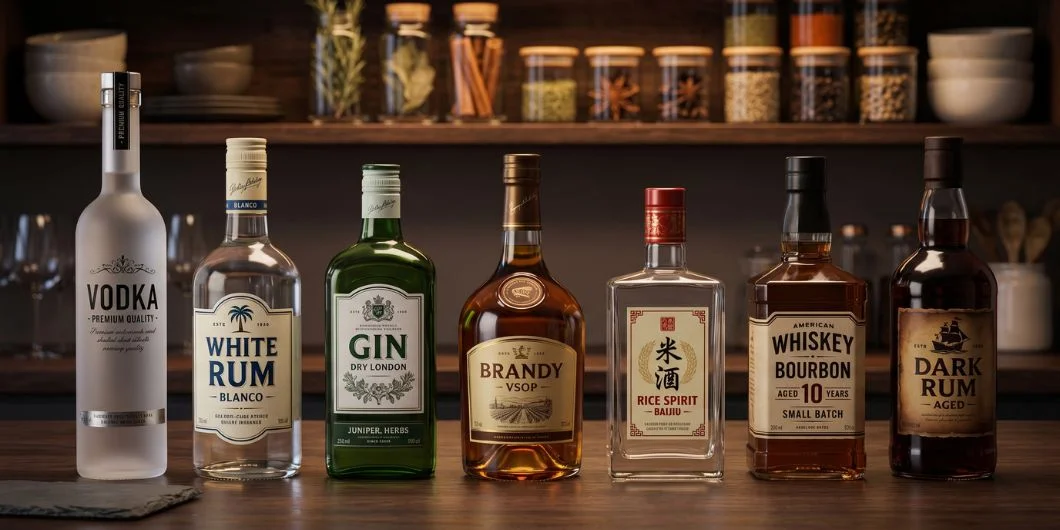
The foundation matters: neutral spirits highlight spices, while character bases add depth and complexity.
Choosing the Right Alcohol Base
The base spirit defines how spices are perceived. It is not just a carrier—it is an active component of flavor. The same spice blend can taste clean and precise in a neutral spirit, rich and rounded in brandy, or dense and complex in whisky.
Choosing the right base is about alignment. The spirit must support the spices, not compete with them. When chosen well, the base amplifies aroma, rounds edges, and creates cohesion. When chosen poorly, it introduces conflict and confusion.
Neutral spirits: clarity and precision
Neutral spirits (vodka, rectified spirit) are the most direct way to express spices and herbs. They contribute minimal flavor of their own, allowing each botanical to be clearly defined.
Best for: citrus, herbs, floral liqueurs, spice-forward recipes
Limitations: can feel thin or sharp without proper structure
Neutral bases are ideal when the goal is to showcase delicate or complex spice layering. They are also the safest starting point for developing new recipes.
However, because they lack inherent depth, they often require careful support from sweetness, body (e.g. glycerin or sugar), or a well-constructed spice base to avoid feeling flat.
Brandy: roundness and fruit integration
Brandy brings natural fruitiness, warmth, and subtle sweetness. It integrates well with spices that complement its profile, especially warm and aromatic ingredients.
Best for: stone fruits, berries, apples, pears, warm spice blends
Limitations: can soften sharp or fresh notes too much
Brandy works particularly well in liqueurs designed to feel rich and rounded. It supports warm spices and enhances fruit depth without needing excessive sugar.
However, delicate herbs or bright citrus may lose clarity if the base is too dominant.
Rum: sweetness, body, and tropical depth
Rum introduces natural sweetness, molasses or sugarcane notes, and a fuller body. It pairs exceptionally well with spices that enhance warmth and richness.
Best for: tropical fruits, coffee, cacao, vanilla, baking-style spice blends
Strengths: natural sweetness, depth, excellent compatibility with warm spices
Limitations: can overpower subtle aromatics, especially white or delicate herbs
Dark rum enhances deep, dessert-style liqueurs. Light rum allows more spice clarity but still adds softness compared to vodka.
Rum works well when the goal is a rich, indulgent profile rather than a sharp or highly aromatic one.
Whisky: complexity and structure
Whisky brings its own layers—oak, smoke, grain, vanilla, and spice. It is one of the most complex bases, and because of that, it requires careful pairing.
Best for: coffee, cacao, nuts, dried fruits, deep spice profiles
Strengths: strong character, built-in structure, long finish
Limitations: can clash with bright citrus or delicate herbs
Using whisky is less about adding spices and more about selecting spices that integrate into its existing profile. Cinnamon, vanilla, clove, and cacao often work well. Mint, basil, or light citrus may feel disconnected.
Whisky-based liqueurs tend to be heavier and more complex, often suited for sipping rather than mixing.
Other bases: exploring beyond the standard
Beyond the main categories, other spirits can be used creatively:
Gin: already botanical; best used when building on its existing profile
Tequila or mezcal: earthy, vegetal, or smoky; suitable for bold, unconventional liqueurs
Grappa: intense, aromatic, works well with herbs and floral notes
These bases require more precision because they already carry strong identities.
Alcohol strength (ABV) and its impact
The strength of the alcohol affects both extraction and perception.
40–50% ABV: balanced extraction, most versatile
50–70% ABV: faster, more aggressive extraction, risk of bitterness
Below 40%: softer extraction, may miss deeper compounds
Higher ABV extracts more efficiently but can also pull unwanted bitterness. Lower ABV produces softer, sometimes less complete results.
Many liqueur makers start extraction at higher strength, then dilute later to achieve balance.
How base affects spice expression
The same spice behaves differently depending on the base:
In vodka: cinnamon is clean, direct, and clearly defined
In brandy: cinnamon becomes warmer, softer, more integrated
In rum: cinnamon feels sweeter and more dessert-like
In whisky: cinnamon blends into existing oak and spice layers
This principle applies to all botanicals. The base changes not only flavor, but also perception.
Matching base to flavor profile
Choosing the right base becomes easier when you define the desired outcome.
Bright and fresh: neutral spirit
Warm and comforting: brandy or rum
Rich and dessert-like: dark rum or whisky
Herbal and complex: neutral spirit or grappa
Start with the target profile, then choose the base that supports it.
Common mistakes when choosing a base
Using a strong base that overwhelms delicate spices
Using a neutral base without enough supporting structure
Ignoring how ABV affects extraction speed
Choosing a base based on availability rather than compatibility
Each of these leads to imbalance that is difficult to fix later.
Practical approach
A reliable workflow for selecting a base:
Define the desired flavor profile and mood
Select spices and herbs that support that profile
Choose a base that enhances—not competes with—those ingredients
Test small batches before scaling
This approach reduces risk and improves consistency.
Key principle
The goal is harmony, not competition. The base spirit and the spices should feel like parts of the same composition.
When the base is chosen correctly, it does not stand out—it disappears into the structure while quietly supporting everything else.
Layering & Blending Techniques
Complex liqueurs are not created by adding everything into one jar and hoping for harmony. They are built in layers, where each component is extracted, evaluated, and placed with intent. Layering and blending are what transform a simple infusion into a structured, professional liqueur.
The core idea is simple: separate control leads to better balance. Instead of forcing all ingredients to behave under the same conditions, you allow each one to reach its optimal expression before combining them.
What layering actually means
Layering is about assigning roles to ingredients and controlling when and how they are introduced. A well-structured liqueur typically contains:
Top notes: bright, volatile aromatics (citrus peel, mint, cardamom)
Middle notes: body and warmth (cinnamon, vanilla, fruit core)
Base notes: depth and finish (oak, cacao, roots, clove, bitterness)
Each layer should be clear but not isolated. The goal is a smooth transition from aroma to finish, not a collection of disconnected flavors.
Sequential infusion (building in one vessel)
Sequential infusion means adding ingredients in stages to the same batch. This is one of the most practical and efficient techniques for home and small-batch production.
Instead of adding everything at once, you introduce ingredients based on their extraction speed and role.
Start with base ingredients and slow extractors (roots, dense spices)
Add moderate spices once the base develops
Finish with fast, delicate aromatics near the end
This approach prevents delicate ingredients from being over-extracted while allowing deeper components to fully develop.
Example workflow:
Day 1: fruit + cinnamon + root elements
Day 5–7: add vanilla and cardamom
Day 10+: add citrus peel or herbs for freshness
Each stage is tasted and adjusted before moving forward.
Separate infusion and blending
This is the most precise method and is often used in professional liqueur making. Each ingredient or group of ingredients is infused separately, then combined in controlled proportions.
Advantages of this method:
Full control over extraction time for each ingredient
Ability to adjust ratios after extraction
Reduced risk of ruining the entire batch
Example:
Infusion A: fruit base
Infusion B: warm spices (cinnamon, vanilla)
Infusion C: bitter or structural elements (gentian, root)
Infusion D: fresh aromatics (citrus, herbs)
These are then blended step by step, tasting after each addition until balance is achieved.
Blending ratios and control
Blending is where the final character of the liqueur is defined. Even a small adjustment can significantly change the result.
A structured blending approach:
Start with the main base (fruit or dominant infusion)
Add supporting layers in small increments
Taste after each addition
Stop before any single component becomes dominant
Precision is more important than speed. It is better to add in small steps than to correct an imbalance later.
Using micro-blends for fine tuning
Before committing to a full batch, experienced liqueur makers often create small test blends. This allows experimentation without risk.
Prepare small samples (e.g. 50–100 ml)
Test different ratios of components
Evaluate balance, aroma, and finish
Apply the best ratio to the full batch
This method is especially useful when working with strong spices or bitter botanicals.
Integration after blending
Freshly blended liqueurs often taste slightly disjointed. The components need time to integrate.
Resting allows flavors to merge and soften. Sharp edges fade, and the liqueur becomes more cohesive.
Short rest: a few days for simple blends
Longer rest: weeks for complex or spice-heavy liqueurs
Tasting before and after resting often reveals significant improvement.
Balancing after blending
Once the layers are combined, final adjustments may be needed.
Sweetness: rounds harsh edges and integrates flavors
Dilution: reduces intensity and improves drinkability
Additional aromatics: short secondary infusion for lift
Adjustments should be subtle. Large corrections usually indicate that earlier steps were not controlled.
Common layering mistakes
Adding all ingredients at once, losing control over extraction
Not assigning roles to spices, leading to confusion
Over-blending strong components, masking the main flavor
Skipping resting time after blending
These mistakes often result in liqueurs that feel heavy, unclear, or unbalanced.
Practical layering mindset
Think of liqueur construction like building a composition:
Start with a clear foundation
Add supporting elements carefully
Use contrast to create interest
Refine until everything feels connected
Each addition should improve the whole, not just add more flavor.
Key principle
Layering and blending are about control, not complexity. A liqueur with three well-balanced components will always outperform one with ten uncontrolled ingredients.
When each layer is intentional and every component has a purpose, the final result feels complete, balanced, and refined.
Fixing & Adjusting Infusions
Adjustments are not a sign of failure—they are part of the craft. Even well-planned infusions often need refinement. Ingredients vary in strength, extraction rarely behaves exactly as expected, and small imbalances can appear during or after maceration.
The key is to make controlled, minimal corrections. Large fixes usually indicate that something earlier went wrong. Small, precise adjustments can elevate a liqueur from rough to refined.
Diagnosing the problem first
Before making any correction, identify what is actually wrong. Most issues fall into a few clear categories:
Too strong: overwhelming spice, alcohol heat, or intensity
Too bitter: harsh, dry, lingering unpleasant finish
Too sweet: heavy, syrupy, lacking structure
Flat: no brightness, no movement, dull profile
Unbalanced: one element dominates the rest
Correcting the wrong problem can make the liqueur worse. Always taste carefully and isolate the issue before acting.
Dilution: controlling intensity
Dilution is one of the simplest and most effective adjustments. It reduces overall intensity, softens alcohol heat, and helps integrate strong flavors.
Add water or lower-ABV spirit gradually
Stir and rest before re-tasting
Monitor both flavor and mouthfeel
Dilution not only reduces strength—it also changes perception. Aromatics may open up, bitterness may soften, and the liqueur can become more drinkable.
However, over-dilution leads to a thin and weak result. Always adjust in small increments.
Sugar: balancing bitterness and structure
Sugar does more than add sweetness. It rounds edges, softens bitterness, and enhances aroma. It can transform a harsh infusion into something smooth and cohesive.
Simple syrup for neutral sweetness
Honey for floral depth
Brown sugar or muscovado for warmth and richness
Sweetening should be gradual. Add, mix, rest, and taste again. The perception of sweetness changes after integration.
Too much sugar hides problems rather than solving them. A balanced liqueur should still have structure beneath the sweetness.
Blending: softening and restructuring
Blending is one of the most powerful correction tools. Instead of trying to fix an infusion directly, you can combine it with another liquid to balance its profile.
Blend with a neutral base to reduce intensity
Blend with a fruit infusion to restore freshness
Blend with a sweeter component to soften bitterness
This approach is especially useful when a batch is too strong or too bitter. It preserves usable flavor while reducing dominance.
Adding fresh aromatics
If a liqueur feels flat or dull, a short secondary infusion can restore brightness.
Citrus zest for lift and freshness
Fresh herbs for green aromatic notes
Light spices (cardamom, coriander) for top notes
This infusion should be brief—often hours to a few days. The goal is to add a fresh layer without disturbing the existing balance.
Correcting bitterness
Bitterness is one of the hardest issues to fix completely, but it can be softened.
Add sweetness to reduce perceived bitterness
Dilute to lower intensity
Blend with non-bitter infusion
In severe cases, full correction may not be possible. The focus shifts to reducing impact rather than eliminating it.
Correcting sweetness imbalance
Too much sweetness can make a liqueur feel heavy and lifeless.
Add alcohol to reduce perceived sweetness
Introduce mild bitterness or spice for structure
Add citrus zest to lift the profile
Sweetness must always be balanced by contrast—bitterness, acidity, or spice.
Adjusting aroma vs taste
Aroma and taste are separate layers. A liqueur can smell excellent but taste flat, or taste balanced but lack aroma.
To improve aroma: add volatile aromatics (citrus, herbs, light spices)
To improve taste: adjust sweetness, bitterness, or body
Understanding this difference allows more targeted corrections.
Resting after adjustments
After any adjustment, the liqueur needs time to integrate. Immediate tasting can be misleading.
Short rest: 24–72 hours for small changes
Longer rest: 1–2 weeks for major adjustments
Flavors often soften and merge during rest, leading to a more cohesive result.
Working in small increments
All adjustments should be done gradually. This prevents over-correction.
Add small amounts
Mix thoroughly
Taste again
Repeat if needed
Precision at this stage is more important than speed.
Using test samples
Before adjusting the entire batch, test changes on a small sample.
Take 50–100 ml of the liqueur
Apply adjustment (sugar, dilution, blending)
Evaluate result
Scale adjustment to full batch
This reduces risk and allows experimentation.
When not to fix
Some infusions cannot be fully corrected. Severe over-extraction or extreme imbalance may limit options.
In these cases, consider:
Using the batch as a blending component
Repurposing it into cocktails
Learning from the process and adjusting future batches
Key principle
Small corrections can transform a flawed infusion into a refined product. The goal is not to force perfection, but to guide the liqueur toward balance.
Control, patience, and precision are what turn adjustment into mastery.
Time transforms: proper storage and aging allow flavors to integrate, soften, and evolve into a balanced profile.
Storage, Aging & Flavor Evolution
Time changes everything in liqueur making. What starts as a sharp, separated infusion can evolve into a smooth, integrated drink—or degrade into something dull and lifeless. Aging is not just waiting. It is a controlled process where flavors interact, soften, and stabilize.
Understanding how liqueurs evolve over time allows you to decide when to bottle, when to adjust, and when to stop. Some recipes improve dramatically with rest. Others peak early and decline if left too long.
What happens during aging
Aging is a chemical and sensory process. Several changes occur simultaneously:
Integration: individual flavors blend into a unified profile
Softening: harsh alcohol edges and aggressive spices mellow
Stabilization: volatile compounds settle into balance
Transformation: certain notes deepen, fade, or shift
This is why a freshly strained liqueur often tastes sharp or disconnected, while the same liqueur after a few weeks becomes smoother and more refined.
When aging improves a liqueur
Some liqueurs benefit significantly from aging, especially those with deeper, heavier components.
Warm spice liqueurs: cinnamon, clove, nutmeg integrate better over time
Root-based liqueurs: earthy elements soften and round out
Coffee, cacao, and nut liqueurs: gain depth and smoothness
Brandy or rum-based liqueurs: become more cohesive and mellow
These styles often improve over weeks or even months, as strong components settle and harmonize.
When aging reduces quality
Not all liqueurs benefit from time. Some rely on freshness and brightness, which can fade during storage.
Fresh herb liqueurs: mint, basil, lemon balm lose vibrancy
Citrus-forward liqueurs: zest can dull and become flat
Light aromatic infusions: delicate top notes may disappear
These liqueurs are often best consumed relatively fresh, once initial integration has occurred.
The resting phase after infusion
Immediately after straining, most liqueurs need a resting period before evaluation. This allows suspended particles to settle and flavors to stabilize.
Short rest: 3–7 days for simple infusions
Medium rest: 2–4 weeks for spice-heavy liqueurs
Long rest: 1–3 months for complex blends
Tasting too early often leads to incorrect adjustments, as the profile has not yet settled.
Storage conditions
Proper storage protects the liqueur from degradation and preserves its intended profile.
Light: store in dark conditions to prevent flavor breakdown
Temperature: keep cool and stable; avoid heat fluctuations
Air exposure: minimize oxygen contact after bottling
Container: use glass bottles with tight seals
Light and heat are the main enemies of delicate aromas. Even a well-made liqueur can lose quality if stored improperly.
Flavor evolution over time
Flavor does not remain static. It moves through stages, often becoming more unified but less vibrant.
Early stage: sharp, bright, slightly unbalanced
Mid stage: integrated, smooth, balanced
Late stage: softer, sometimes muted or flattened
The goal is to identify the peak—when the liqueur feels complete but still alive.
Monitoring and tasting
Regular tasting is essential. Aging should never be passive.
Taste after initial rest
Re-evaluate weekly or bi-weekly
Track changes in aroma, taste, and finish
Keep notes. This builds understanding of how different ingredients evolve and improves future recipes.
Filtering and clarity over time
During aging, fine particles may continue to settle. This can improve clarity naturally, but additional filtration may be needed.
Initial filtration removes large solids
Secondary filtration improves clarity
Cold stabilization (chilling) can help precipitate particles
Clear liqueurs are not just visually appealing—they often taste cleaner as well.
Bottling at the right moment
Knowing when to bottle is part of the craft. Bottling too early captures imbalance. Bottling too late risks losing freshness.
Signs the liqueur is ready:
Flavors feel integrated and stable
No harsh edges remain
Aroma and taste are aligned
No single element dominates
Long-term storage
Once bottled, most liqueurs are stable for extended periods, especially those with higher alcohol and sugar content.
High sugar + high alcohol = longer shelf life
Lower alcohol or fresh herb content = shorter peak window
Over very long periods, even stable liqueurs may slowly lose aromatic intensity.
Common aging mistakes
Assuming longer aging always improves quality
Ignoring loss of fresh or citrus notes
Storing in warm or light-exposed environments
Not tasting regularly during aging
Time can improve a liqueur—but only if it is monitored.
Key principle
Aging is not about waiting for perfection. It is about recognizing when the liqueur reaches its best expression.
Time should be used as a tool, not a gamble. The best liqueurs are not the oldest—they are the ones captured at the right moment.
Safety & Potency Considerations
Some botanicals used in liqueur making are not just flavorful—they are pharmacologically active. This means they can affect the body beyond taste. Used correctly, they add structure, complexity, and tradition. Used incorrectly, they can lead to unpleasant, overpowering, or even unsafe results.
Precision is not optional—it is essential. Unlike fruit or sugar, certain spices and herbs must be handled with awareness, restraint, and respect for their potency.
Understanding potency vs intensity
Not all strong flavors are dangerous, and not all mild flavors are safe. Potency refers to how a botanical affects the body, while intensity refers to how strong it tastes.
High intensity, low risk: cinnamon, ginger (strong flavor, generally safe)
Moderate intensity, higher potency: nutmeg, clove
Low intensity, high potency: wormwood, certain bitter roots
This distinction is critical. Some ingredients may not taste aggressive but still require strict dosage control.
High-risk botanicals to handle carefully
Certain ingredients are widely used in traditional liqueurs but require careful dosing due to their active compounds.
Nutmeg: contains myristicin; excessive use can cause unpleasant effects
Wormwood: contains thujone; used in very small quantities for bitterness
Clove: high in eugenol; powerful and easily overpowering
Tonka bean: contains coumarin; must be used sparingly
Gentian root: very bitter; safe but easy to overuse
Quassia: extremely bitter; requires micro-dosing
These botanicals are not forbidden—but they demand control. In most cases, less than a gram per liter is sufficient.
Safe dosage mindset
Safe usage is not about exact universal limits—it is about working within conservative ranges and avoiding excess. Always assume that the ingredient may be stronger than expected.
Start at the lowest effective dose
Increase gradually if needed
Never “guess” with potent botanicals
Measure precisely, do not estimate by eye
Using scales capable of measuring small quantities (0.01 g accuracy) is strongly recommended when working with powerful ingredients.
Micro-dosing as a safety technique
Micro-dosing is the safest way to handle potent botanicals. Instead of adding them directly to the main batch, create a separate concentrated extract.
Process:
Infuse the botanical in a small volume of alcohol
Strain and store as a concentrated extract
Add to the main liqueur drop by drop
This method prevents accidental overuse and allows precise control over both flavor and potency.
Alcohol as an extractor of active compounds
Alcohol is highly effective at extracting not only flavor, but also biologically active compounds. This makes dosage even more important.
Higher ABV extracts more compounds, including potent ones
Longer extraction increases both flavor and potency
Small ingredient changes can lead to large differences in effect
This is why even safe ingredients can become problematic if over-extracted.
Recognizing overuse
Excessive use of potent botanicals often shows both in taste and structure:
Harsh, lingering bitterness
Medicinal or chemical notes
Numbing or drying sensation
Overly dominant single flavor
These are early warning signs. If noticed, remove the source immediately and adjust the batch if possible.
Balancing potency with dilution and sweetness
If a liqueur becomes too intense, certain adjustments can reduce perceived strength:
Dilution: lowers concentration of active compounds
Sugar: softens harsh edges and reduces perceived bitterness
Blending: distributes strong components across a larger volume
However, these methods reduce impact—they do not remove the compounds. Prevention is always more reliable than correction.
Ingredient quality and consistency
Potency can vary depending on source, freshness, and storage conditions.
Fresh spices may be more intense than old stock
Dried herbs can concentrate compounds unevenly
Different origins may vary in strength
This variability reinforces the need for cautious dosing and regular tasting.
When to avoid certain botanicals
In some cases, it may be better to avoid specific ingredients altogether:
When working without precise measuring tools
When creating large batches without prior testing
When unfamiliar with the ingredient’s behavior
There are always alternative ingredients that can provide similar flavor without the same level of risk.
Practical safety workflow
A structured approach helps maintain control:
Research the ingredient before use
Start with minimal dosage
Infuse separately if highly potent
Taste frequently during extraction
Adjust gradually, not aggressively
This workflow reduces both flavor imbalance and safety concerns.
Key principle
Potent botanicals are powerful tools. They can elevate a liqueur with depth, bitterness, and complexity—but only when used with precision.
The difference between a refined liqueur and a problematic one is often measured in fractions of a gram. Respect the ingredient, measure carefully, and always prioritize control over intensity.
Pairing Spices with Fruits & Other Ingredients
Pairing is where creativity meets structure. The right combination of fruit, spice, and supporting ingredients can feel natural, balanced, and expressive. The wrong combination feels forced, confusing, or heavy.
Classic pairings provide a reliable foundation, but understanding why they work allows you to go beyond them with confidence.
Why pairings matter
Each ingredient contributes a specific type of flavor—sweetness, acidity, bitterness, warmth, freshness, or aroma. Pairing is about combining these elements so they support each other rather than compete.
Sweet fruit needs contrast (spice, acidity, or bitterness)
Sharp fruit benefits from warmth or sweetness
Heavy profiles need lift from citrus or herbs
Delicate ingredients require subtle pairing, not dominance
Good pairings create balance across the palate—from aroma to finish.
Classic pairings: proven structure
These combinations are widely used because they naturally balance each other.
Apple + cinnamon: warm, sweet, structured, comforting
Orange + clove: bright citrus with deep, spicy finish
Berry + vanilla: soft, rounded, smooth sweetness
Pear + cardamom: delicate fruit with floral lift
Cherry + almond (or tonka): rich, nutty depth
Plum + star anise: dark fruit with aromatic spice
These pairings work because they combine contrast and harmony. One ingredient supports, the other defines.
Building pairings by flavor role
Instead of memorizing combinations, think in roles. Each ingredient should contribute to a specific layer of the liqueur.
Main note: fruit, coffee, cacao, nut
Enhancer: spice that amplifies the main note
Contrast: sharp, bitter, or fresh element
Bridge: ingredient that connects layers (vanilla, cinnamon)
Example: Mango liqueur
Main: mango
Enhancer: cardamom
Contrast: ginger
Bridge: vanilla
This structured approach prevents random combinations and creates intentional flavor design.
Balancing sweetness, acidity, and spice
Fruit is often sweet and soft. Without balance, it becomes heavy. Spices and herbs provide that balance.
The goal is to avoid flatness. Every liqueur should have movement—entry, body, and finish.
Pairing with tropical fruits
Tropical fruits often have intense sweetness and aromatic richness. They benefit from sharpness and lift.
Mango: ginger, cardamom, lime zest
Pineapple: chilli, cinnamon, clove (lightly)
Banana: vanilla, nutmeg, cacao
Papaya: lime, ginger, subtle herbal notes
Sharp spices and citrus help prevent tropical liqueurs from becoming overly syrupy.
Pairing with dark and rich bases
Ingredients like coffee, cacao, nuts, and dried fruits require deeper, supporting spices.
Coffee: vanilla, cardamom, orange zest
Cacao: cinnamon, chilli, tonka
Nuts: vanilla, clove (minimal), honey
Raisins or dates: allspice, cinnamon, orange peel
These pairings emphasize richness while maintaining structure.
Using herbs in pairings
Herbs introduce freshness and complexity. They are especially useful for lifting fruit-based liqueurs.
Mint: citrus, berries, chocolate
Basil: strawberry, peach, citrus
Rosemary: orange, lemon, pear (use carefully)
Thyme: apple, lemon, honey-based liqueurs
Herbs should be used in short infusions to preserve freshness.
Creating contrast: the key to advanced pairing
The most interesting liqueurs often rely on contrast rather than similarity.
Sweet + bitter (orange + gentian)
Sweet + sharp (peach + ginger)
Rich + fresh (cacao + mint)
Warm + bright (apple + citrus zest)
Contrast prevents monotony and gives the liqueur dimension.
Common pairing mistakes
Choosing ingredients that all sit in the same flavor range (too warm, too sweet)
Adding spices without a clear role
Overpowering delicate fruit with strong spices
Ignoring the need for contrast
These mistakes lead to flat or confused profiles.
Developing your own pairings
To create original combinations, start with a clear idea of the final profile:
Decide the main ingredient
Define the mood (fresh, warm, dark, herbal)
Add one supporting spice
Add one contrasting element
Refine through tasting
This method produces more reliable results than random experimentation.
Key principle
Classic combinations provide reliable structure, but creativity comes from understanding balance. Every pairing should have purpose—either to enhance, contrast, or connect.
When ingredients are chosen with intention, the liqueur feels complete. When they are chosen randomly, it feels crowded. The difference is not the ingredients—it is the structure behind them.
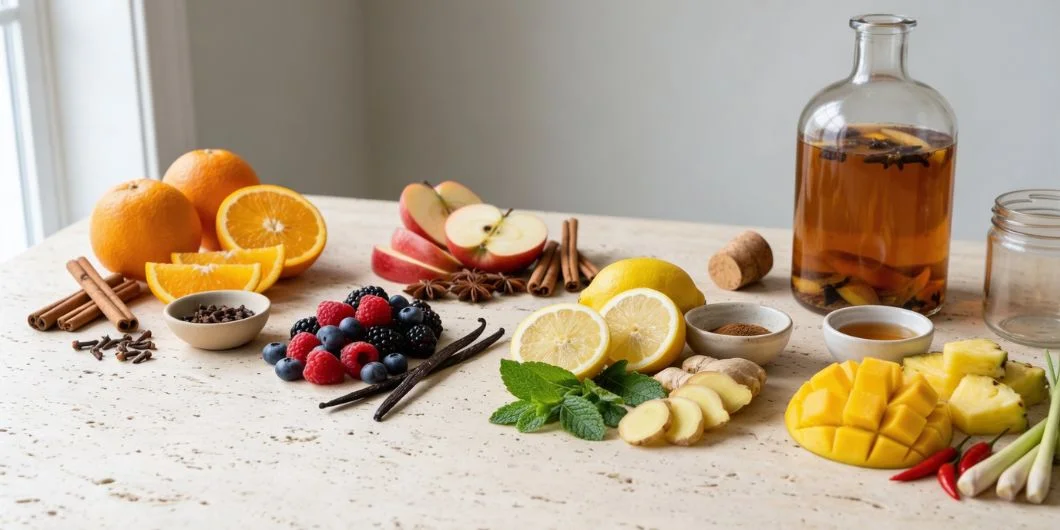
Flavor harmony: combining spices with fruits and botanicals to build balanced, expressive liqueurs.
Seasonal & Regional Spice Inspirations
Spices are not used in isolation—they are shaped by climate, culture, and tradition. What feels natural in one region or season may feel out of place in another. Understanding these patterns helps you design liqueurs that feel coherent, expressive, and grounded.
Seasonality is not only about ingredient availability. It is about how flavors are perceived. In colder seasons, people gravitate toward warmth and depth. In warmer climates, freshness and brightness dominate. Aligning your spice profile with these expectations creates more intuitive and enjoyable liqueurs.
Seasonal flavor logic
Each season suggests a different direction for flavor construction:
Spring: fresh, green, floral, lightly aromatic
Summer: bright, citrusy, herbal, refreshing
Autumn: warm, spiced, rounded, fruit-forward
Winter: deep, rich, intense, often bitter or complex
These are not strict rules, but they provide a reliable framework for designing liqueurs that match the mood of the season.
Spring profiles: light, green, and awakening
Spring liqueurs focus on freshness and subtlety. Heavy spices tend to overpower the delicate nature of early-season ingredients.
These liqueurs are often designed for slow sipping and layered complexity rather than freshness.
Regional spice traditions
Different regions have developed their own spice logic based on climate, trade, and culinary tradition. These profiles can serve as inspiration for liqueur design.
Tropical and Southeast Asian profiles
In warm climates, spices are often used to create brightness and contrast rather than heaviness.
Common spices: ginger, galangal, lemongrass, kaffir lime leaf, chilli
Fruits: mango, coconut, pineapple, papaya
Style: fresh, sharp, aromatic, lightly sweet
These liqueurs often feel vibrant and dynamic, with a focus on freshness.
European profiles
European liqueur traditions are heavily influenced by colder climates and seasonal preservation.
Common spices: cinnamon, clove, nutmeg, anise
Fruits: apple, cherry, plum, berries
Style: warm, structured, often sweet with balanced bitterness
These liqueurs tend to emphasize comfort, depth, and stability.
Mediterranean profiles
The Mediterranean approach combines brightness with herbal complexity.
Common elements: citrus peel, rosemary, thyme, fennel
This style often bridges freshness and depth effectively.
Middle Eastern and North African profiles
These regions are known for complex spice layering and aromatic richness.
Common spices: cardamom, rose, saffron, cinnamon
Supporting elements: dates, honey, nuts
Style: aromatic, warm, slightly sweet, layered
These profiles can inspire more exotic and perfumed liqueurs.
Combining seasonal and regional logic
The most interesting liqueurs often combine seasonal timing with regional inspiration.
Summer tropical liqueur with Southeast Asian spices
Autumn fruit liqueur with European spice profile
Winter liqueur with Middle Eastern aromatic complexity
This creates a sense of place while maintaining seasonal relevance.
Adapting to your environment
Your location and climate can influence your approach. Ingredients available locally or seasonally often produce more authentic results.
However, modern liqueur making also allows cross-cultural experimentation. The key is to maintain balance and avoid conflicting flavor signals.
Common mistakes
Using heavy winter spices in light summer liqueurs
Overloading tropical profiles with warm spices
Ignoring how climate affects flavor perception
Mixing incompatible regional styles without structure
These mistakes often lead to liqueurs that feel disconnected or out of place.
Key principle
Spices reflect both season and origin. When these elements align, the liqueur feels natural and complete.
When they conflict, even good ingredients can feel out of balance. Designing with season and region in mind adds depth, authenticity, and direction to your creations.
Practical Infusion Workflow
A good spice and herb liqueur starts before the first ingredient touches alcohol. The process should be intentional from the beginning: define the idea, choose the right base, prepare ingredients correctly, control extraction, then adjust and rest before judging the final result.
This workflow gives liqueur makers a repeatable structure. It reduces guesswork and makes each batch easier to improve, recreate, and scale.
Step 1: Define the concept
Start with a clear flavor direction. Do not begin by asking, “What spices can I add?” Begin by asking, “What should this liqueur feel like?”
Bright and fresh: citrus, mint, coriander, light herbs
Warm and cosy: cinnamon, vanilla, nutmeg, apple, plum
Dark and complex: cacao, coffee, clove, oak, bitter roots
Tropical and sharp: mango, pineapple, ginger, lime, cardamom
Herbal and bitter: wormwood, gentian, rosemary, fennel
A clear concept prevents overcrowding. Every ingredient should support the idea, not distract from it.
Step 2: Choose the base spirit
The base spirit sets the foundation. Neutral alcohol gives clarity, while brandy, rum, or whisky add their own character.
Vodka or neutral spirit: best for clean spice expression
Brandy: best for fruit, vanilla, cinnamon, warm profiles
Rum: best for tropical fruit, cacao, coffee, dessert spices
Whisky: best for darker, oak-led, complex liqueurs
The goal is harmony. If the base already has strong flavor, use fewer spices and let the spirit contribute to the structure.
Step 3: Select ingredients by role
Each ingredient should have a job. This keeps the recipe focused and prevents muddiness.
Main ingredient: fruit, coffee, cacao, nut, or dominant botanical
Top note: citrus peel, mint, coriander, cardamom
Middle note: cinnamon, vanilla, ginger, fennel
Base note: oak, clove, cacao nib, angelica, bitter root
If an ingredient does not have a clear purpose, leave it out. Simpler recipes are easier to control and often taste more refined.
Step 4: Prepare ingredients correctly
Preparation controls extraction speed and flavor quality.
Seeds: lightly crush to release oils
Roots: slice thinly or cut into small pieces
Barks: break into manageable pieces, not powder
Fresh herbs: gently bruise, never shred aggressively
Citrus: use zest only, avoid white pith
Avoid ground spices where possible. They extract too quickly, create sediment, and can make the liqueur taste dusty or harsh.
Step 5: Start the base infusion
Add the main ingredient and any slow extractors first. These need time to develop body and depth.
Fruit, dried fruit, nuts, cacao, or coffee can form the main base
Roots and barks can be added early if they are part of the structure
Very strong botanicals should be added separately or micro-dosed
Seal the jar, label it clearly, and store it in a cool, dark place. Record the date, alcohol strength, ingredient weights, and planned tasting schedule.
Step 6: Use staged infusion
Do not add everything at once unless the recipe is very simple. Add ingredients according to extraction speed.
Slow ingredients: roots, barks, dense spices — start early
Fast ingredients: citrus zest, mint, delicate herbs — add near the end
This protects fresh aromatics and prevents strong spices from dominating the final liqueur.
Step 7: Taste frequently
Tasting is the main control tool. Timelines are useful, but the palate decides when extraction is complete.
Taste daily for fast herbs and citrus
Taste every few days for moderate spices
Taste weekly for roots, barks, and long infusions
Look for balance, not maximum intensity. Remove ingredients when they reach the right level, even if the planned infusion time is not finished.
Step 8: Remove ingredients individually
Different ingredients peak at different times. If possible, remove them separately rather than straining the entire batch too early or too late.
Remove citrus when aroma is bright but not bitter
Remove herbs before they become grassy
Remove clove or star anise as soon as they are clearly present
Leave slow roots or barks longer only if they still taste clean
This gives much finer control than treating the infusion as one single process.
Step 9: Strain and filter
Once extraction is complete, strain the infusion carefully. Start with a coarse filter, then move to finer filtration if needed.
First strain: sieve or cloth to remove large solids
Second strain: fine filter to remove smaller particles
Optional: coffee filter for clearer liqueurs, but expect slower filtration
Do not squeeze herbs or soft solids aggressively. This can force bitter, cloudy, or vegetal compounds into the liquid.
Step 10: Sweeten gradually
Add sugar syrup only after the main extraction is controlled. Sweetening too early can hide bitterness and make it harder to judge the infusion accurately.
Use simple syrup for clean sweetness
Use honey for floral or herbal liqueurs
Use brown sugar or muscovado for dark, warm profiles
Add in small portions, then taste
Sweetness should support the flavor, not cover mistakes.
Step 11: Adjust strength and balance
After sweetening, check the overall structure. The liqueur may need dilution, additional sweetness, a small aromatic lift, or blending with another infusion.
Too strong: dilute carefully
Too bitter: sweeten, dilute, or blend
Too flat: add a short citrus or herb infusion
Too sweet: add alcohol, bitterness, or acidity through citrus zest
Make adjustments in small test samples before changing the full batch.
Step 12: Rest before final judgment
Freshly finished liqueurs often taste slightly sharp or disconnected. Resting allows sweetness, alcohol, spice, and aroma to integrate.
Simple liqueurs: rest for at least 3–7 days
Spice-heavy liqueurs: rest for 2–4 weeks
Complex dark liqueurs: rest for 1–3 months
Do not judge the final profile immediately after sweetening. Many liqueurs improve significantly after resting.
Step 13: Bottle and label
When the liqueur tastes integrated and stable, bottle it in clean glass bottles with tight seals.
Record the recipe name
Record bottling date
Note alcohol base, ingredients, and sugar level
Add batch number if you plan to repeat or improve the recipe
Good labeling turns every batch into useful knowledge for future recipes.
Step 14: Keep an infusion log
An infusion log is one of the most valuable tools in liqueur making. Memory is unreliable, especially when recipes develop over several weeks.
Ingredient weights
Alcohol type and ABV
Start and strain dates
Tasting notes
Adjustments made
Final result and improvements for next time
This allows you to repeat success and avoid repeating mistakes.
Practical workflow summary
The complete process can be reduced to a simple sequence:
Define the concept
Choose the base spirit
Select ingredients by role
Prepare ingredients correctly
Infuse in stages
Taste and remove ingredients individually
Strain and filter
Sweeten gradually
Adjust balance
Rest, bottle, and record
Key principle
A practical workflow gives structure to creativity. It does not make liqueur making rigid—it makes it repeatable, adjustable, and easier to improve.
Great liqueurs are rarely accidental. They are built through clear intention, controlled extraction, careful adjustment, and patient resting.
Pro Tips from Liqueur Alchemy
Professional results come from control, not luck. Spices and herbs are powerful ingredients, so small changes in weight, time, alcohol strength, or preparation can completely change the final liqueur.
The goal is to make every batch teach you something. A good liqueur maker does not only create recipes—they build a system for repeating success and avoiding the same mistake twice.
Start with small test batches
Small batches give you freedom to experiment without wasting ingredients or alcohol. They also make mistakes easier to understand and correct.
Use 100–250 ml test batches before scaling
Test one spice change at a time
Compare different infusion times side by side
Scale only after the profile is balanced
A small test batch can reveal more than a large uncontrolled infusion. It allows you to build confidence before committing to a full bottle.
Change only one variable at a time
If you change spice amount, alcohol base, sweetness, and infusion time all at once, you will not know what caused the result. Professional development depends on clean testing.
Work with one adjustment per trial. For example, keep the same fruit, alcohol, and sugar level, then test three different cinnamon dosages. This gives clear, useful information.
Measure everything precisely
Spices and herbs are too powerful for guesswork. A “pinch” can vary wildly from one batch to another. Use a digital scale, especially for strong botanicals.
Use grams, not spoons, where possible
Use a 0.01 g scale for potent spices and bitter herbs
Measure alcohol volume and ABV
Record syrup concentration and final dilution
Precision turns a lucky recipe into a repeatable recipe.
Build a spice library
Create small single-ingredient infusions to understand how each spice behaves on its own. This is one of the fastest ways to improve your palate.
Cinnamon in neutral spirit
Cardamom in neutral spirit
Clove in neutral spirit
Ginger in neutral spirit
Mint in neutral spirit
Taste them at different stages: after a few hours, after one day, after three days, and after one week. You will quickly learn which ingredients extract fast, which become bitter, and which need time.
Use separate extracts for strong ingredients
Powerful botanicals should be controlled separately. Instead of adding clove, wormwood, gentian, chilli, or rosemary directly into the main batch, create a small extract and blend it in gradually.
This technique protects the main liqueur and gives you far better control over intensity.
Taste in stages, not only at the end
Waiting until the end to taste is one of the biggest mistakes in infusion work. Taste throughout the process so you can remove ingredients before they become excessive.
Fast herbs: taste after a few hours
Citrus peel: taste daily
Warm spices: taste every few days
Roots and barks: taste weekly
Your palate is the main control instrument. Use it often.
Let the liqueur rest before judging
Freshly strained and sweetened liqueurs can taste sharp, separated, or unfinished. Resting allows alcohol, sugar, spice, and aroma to integrate.
Do not make final judgments immediately after filtering or sweetening. Give simple liqueurs a few days, and complex spice-heavy liqueurs several weeks.
Keep detailed infusion notes
A proper log is essential. Without notes, even a successful batch becomes difficult to repeat.
Recipe name and batch number
Ingredient weights
Alcohol type and strength
Start date and strain date
Tasting notes during infusion
Sweetener type and amount
Final adjustments
What to improve next time
Good notes turn every batch into practical knowledge.
Think in roles, not ingredients
Do not add spices only because they sound interesting. Give each ingredient a purpose.
Top note: aroma and brightness
Middle note: body and warmth
Base note: depth and finish
Contrast: bitterness, acidity, or sharpness
If an ingredient has no clear role, leave it out. Simpler recipes often taste more professional than crowded ones.
Stop before the flavor becomes obvious
A spice is often strongest after the liqueur rests. If cinnamon, clove, rosemary, or cardamom already feels dominant during infusion, it may become too strong later.
Remove strong spices slightly before they reach full intensity. Resting will often bring them forward.
Use sugar as a balancing tool, not a cover-up
Sugar can soften bitterness and round sharp edges, but it should not be used to hide poor extraction. If the infusion is harsh before sweetening, sugar may only make it sweet and harsh.
Correct extraction first. Then sweeten for balance and texture.
Trust clarity and aroma
A good liqueur should smell clean and defined. If the aroma feels muddy, dusty, stale, or medicinal, the flavor will usually follow.
Clean aroma often indicates controlled extraction. Muddy aroma often signals too many spices, poor preparation, or over-extraction.
Key principle
Work small, measure carefully, taste often, and write everything down. This is the foundation of repeatable liqueur making.
Creativity gives a liqueur personality. Precision gives it quality.
Final Thoughts: Turning Spices into Signature Creations
Spices and herbs are more than ingredients—they are tools of expression. They shape aroma, define structure, and control how a liqueur moves across the palate. When used with precision, they transform a simple infusion into something layered, intentional, and memorable.
Mastery does not come from using more ingredients. It comes from understanding how each one behaves—how fast it extracts, how it interacts with alcohol, how it evolves over time, and how it influences balance. A well-made liqueur is not built on complexity alone, but on control.
From recipe to signature
Following recipes is a starting point. Creating a signature liqueur requires going beyond them.
Understand each ingredient individually before combining them
Adjust recipes based on taste, not instructions
Refine through repetition rather than constant reinvention
Develop a consistent style and flavor direction
Your signature emerges when your choices become intentional and repeatable.
Balance over intensity
Strong flavor is easy to achieve. Balance is not. The most refined liqueurs are not the boldest—they are the most controlled.
A successful liqueur should move in stages:
Aroma invites
Flavor develops with clarity
Finish lingers without harshness
Spices and herbs are what guide that journey. Used correctly, they create progression. Used poorly, they flatten it.
Learning through iteration
Every batch, whether successful or flawed, adds to your understanding. Keep records, compare results, and refine your approach. Over time, patterns become clear.
Which spices extract faster than expected
Which combinations feel natural
Which adjustments improve balance
Which mistakes repeat and how to avoid them
Progress in liqueur making is gradual, but consistent effort produces noticeable improvement.
Creativity within structure
Creativity does not mean randomness. It means making informed decisions within a structured process.
Start with a clear concept
Choose ingredients with purpose
Control extraction and timing
Adjust with precision
This structure allows creativity to produce results that are both unique and balanced.
Developing your own style
Over time, your preferences will shape your work. Some makers favor bright and fresh profiles. Others prefer deep, spiced, or bitter liqueurs.
Instead of trying to replicate everything, focus on refining what resonates with you. This leads to consistency and recognition in your creations.
Key principle
Turning spices into signature creations is not about complexity—it is about intention. Every ingredient, every timing decision, every adjustment contributes to the final result.
When precision, balance, and creativity align, a liqueur becomes more than a combination of flavors. It becomes a crafted experience—one that reflects both technique and personal style.
FAQ - Frequently Asked Questions
Spices and herbs do not extract at the same speed. Delicate fresh herbs such as mint, basil, lemon balm, and tarragon can release their aroma within a few hours to a few days. Seeds and light aromatic spices often need several days, while dense roots, barks, and pods may need one to four weeks depending on alcohol strength and preparation.
The safest method is to taste the infusion regularly. Once the aroma is clear and pleasant, remove the ingredient. Leaving spices in alcohol for too long rarely adds elegance; it usually pulls more bitterness, woodiness, or medicinal notes. This is especially true for clove, cinnamon, wormwood, and strong dried herbs.
For better control, use staged infusion. Add slow ingredients first, then introduce fast extractors later. This keeps bright aromatics fresh while allowing deeper spices enough time to develop. Good liqueur making depends more on timing and tasting than fixed calendar rules.
Several spices and botanicals can become bitter when over-infused. Clove, cinnamon bark, star anise, wormwood, citrus pith, nutmeg, bay leaf, and some dried herbs are common examples. Bitterness is not always bad; in small amounts it gives structure, length, and a more adult finish to a liqueur.
The problem appears when bitter compounds dominate the aroma and sweetness cannot balance them. This often happens when strong spices are used in large quantities, crushed too finely, or left in alcohol for too long. High ABV alcohol can intensify this effect because it extracts deeper compounds more quickly.
To avoid harsh bitterness, use small doses, keep strong botanicals whole or lightly cracked, and taste often. Remove bitter ingredients early and continue the infusion with softer aromatics if needed. When working with powerful spices, micro-dosing is more reliable than trying to correct a heavy extraction later.
Whole spices are usually better for liqueur infusions because they extract more slowly and cleanly. They give the maker more time to control flavor development, and they are easier to remove when the desired intensity is reached. Whole cinnamon, cardamom pods, star anise, and peppercorns often produce clearer, more refined results.
Ground spices extract very quickly because they expose much more surface area to alcohol. This can be useful for fast experiments, but it increases the risk of bitterness, harshness, sediment, and cloudiness. Ground spices can also be difficult to filter completely, leaving a dusty texture or dull appearance.
A good compromise is to lightly crack, bruise, or split whole spices rather than grinding them into powder. This opens the ingredient enough to release aroma while keeping extraction manageable. For professional-looking liqueurs, clarity and control usually matter as much as flavor intensity.
Yes, multiple spices can be infused together, but the blend needs structure. The mistake is treating all spices as equal and adding them at the same time in similar amounts. A balanced liqueur usually has one leading note, one or two supporting notes, and a very small accent that adds lift or depth.
Spices extract at different speeds, so simultaneous infusion can be risky. Mint may be ready in a day, while vanilla or cinnamon may still be developing. Clove might overpower the batch before softer ingredients have a chance to appear. This is why complex recipes often benefit from staged infusion or separate extracts.
To build a clean blend, decide the role of each spice before adding it. Ask whether it gives warmth, brightness, bitterness, sweetness, or finish. If two ingredients perform the same role, reduce one. Complexity should feel layered, not crowded.
If a liqueur is too bitter, remove all solid ingredients immediately and filter the liquid. Do not continue extraction in the hope that the flavor will soften by itself. Some bitterness may mellow during resting, but strong over-extraction usually needs correction through blending, dilution, or sweetness.
Sweetening can reduce the perception of bitterness, especially when using sugar syrup, honey, or fruit syrup. Dilution with neutral spirit, vodka, or a compatible fruit infusion can also spread the bitterness across a larger volume. If the bitterness is pleasant but too intense, this method can rescue the batch.
If the flavor is harsh, hot, or medicinal, let the liqueur rest after adjustment before judging it again. A few weeks can integrate edges and soften alcohol heat. For severe bitterness, use the batch as a bitter accent in blending rather than serving it as the main liqueur.
Discover more guides, techniques, and ingredient insights from the Liqueur Alchemy Knowledge Hub. Explore articles that explain the science of flavor extraction, balance sweetness and alcohol, and help you craft better homemade liqueurs with confidence and creativity.