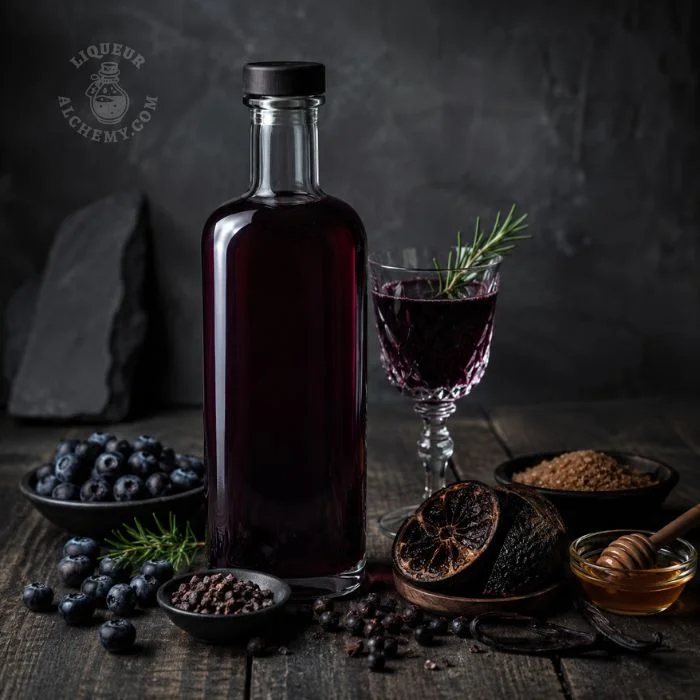
Why can a blueberry liqueur with cacao and black lemon taste bitter?
Troubleshooting Common Homemade Liqueur Problems and Fixes
Direct Answer
Bitterness usually comes from over-extracted black lemon, too much cacao, heavy crushing or insufficient resting.
Expanded Explanation
Bitterness usually comes from too much extraction rather than from the blueberries themselves. Black lemon can bring dry citrus peel, fermented lime notes and a pleasant dark edge, but too much contact time or too large a piece can make the liqueur taste medicinal. Cacao nibs can also add a powdery bitterness if they are overused.
Another common mistake is crushing all the blueberries too aggressively. This can release more skins, pulp and sediment, making the liqueur feel heavy and slightly rough. Lightly crushing only one-third of the fruit gives good colour and juice while keeping the texture cleaner and easier to filter.
To fix bitterness, remove the botanicals, filter patiently, and let the liqueur rest before making large corrections. Add honey or sugar in small portions, not all at once. A little lemon juice can brighten a flat liqueur, but it will not remove bitterness, so use sweetness, resting time and careful filtration as the main corrections.