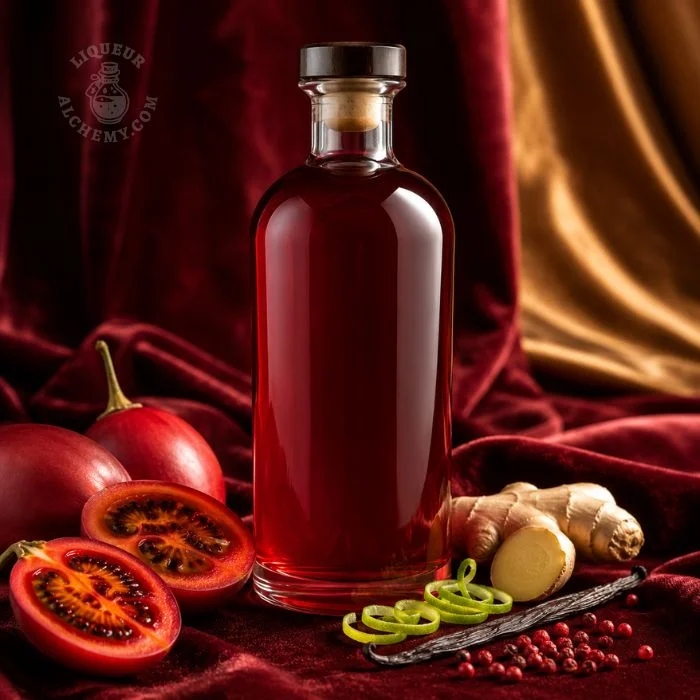
How does tamarillo influence the overall flavor profile of a liqueur?
Flavor Balance and Texture in Homemade Liqueurs
Direct Answer
Tamarillo adds tart brightness, exotic fruit depth, and structural freshness, giving a liqueur more lift, contrast, and complexity than many sweeter fruits.
Expanded Explanation
Tamarillo gives a liqueur a profile that is bright, tart, and distinctive, often sitting somewhere between red fruit, tropical freshness, and a subtle savory edge. It does not behave like a simple sweet fruit. Instead, it adds structure and contrast. A well-made tamarillo liqueur can feel lively on the palate, with a kind of sharpened fruit expression that keeps the sweetness from becoming heavy. This makes it especially interesting for makers who want a fruit liqueur with personality rather than a soft, dessert-like finish.
Its impact is often strongest in the opening and mid-palate. The first impression can be juicy and aromatic, followed by brisk acidity and a slightly earthy or botanical undertone depending on how it was infused. This gives the spirit movement and complexity. Tamarillo can make a liqueur feel more modern and layered because it naturally introduces tension between freshness and depth. In some builds it even helps spices or citrus taste more vivid by giving them a sharper frame to sit in.
The final effect depends on how it is balanced. With careful sweetening, tamarillo becomes elegant, refreshing, and memorable. If badly handled, it may feel sour, thin, or too assertive. But when managed well, tamarillo can shape the entire identity of the liqueur, making it taste brighter, more exotic, and more structured than many fruit infusions. It is especially valuable in recipes that need lift, contrast, and a little edge. In that sense, tamarillo does not merely add flavor. It influences the whole architecture of the drink.