What mistakes can make an orange liqueur with black lemon, cacao, and juniper taste muddy or overly bitter?
Troubleshooting Common Homemade Liqueur Problems and Fixes
Direct Answer
Muddiness usually comes from over-extracting several bitter ingredients at once or preparing them too aggressively. Careful crushing, clean straining, and gradual sweetening keep the profile precise.
Expanded Explanation
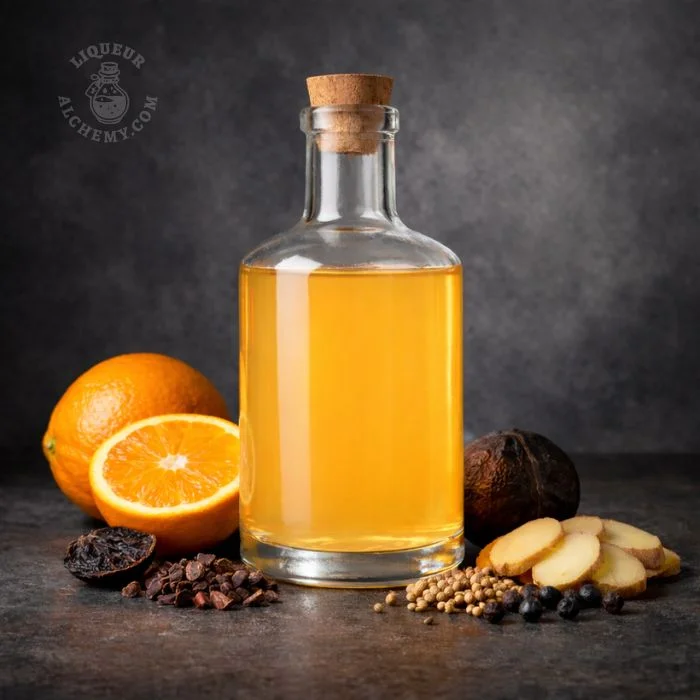
The most common mistake is pushing too many dark notes at once. Black lemon, cacao nibs, juniper, peppercorns, and citrus pith all contribute dryness or bitterness, but they do not all behave the same way. If several of them are over-extracted together, the liqueur can lose definition and taste muddy instead of layered.
Another problem is poor ingredient preparation. Too much pith, excessive crushing of seeds or peppercorns, or using pulpy juice can make the infusion cloudy and rough. Cacao nibs should support the finish, not overpower it. Juniper should add a dry aromatic lift, not turn the liqueur resinous. Even fresh ginger can become distracting if it starts dominating the citrus profile.
Sweetening too quickly can also hide the real balance of the infusion. If sugar is added before the liquid is properly strained and tasted, it becomes harder to judge whether the bitterness is elegant or simply excessive. Filter well, taste before adjusting sweetness, and allow enough rest after bottling. Many rough edges soften with time, but muddiness usually starts with extraction errors.