Raspberum

Raspberry & Dark Rum Liqueur with Cacao, Muscovado and Warming Spices

Raspberum is a rich raspberry liqueur built on dark rum, combining bright garden fruit with the deep sweetness of muscovado sugar. Cacao nibs provide a subtle bittersweet chocolate note, while cinnamon, vanilla and allspice add restrained warmth. Full-bodied and aromatic, it balances fresh berry character with darker, gently spiced flavours.

Main notes

  • Dark Rum
  • Raspberries

Ingredients

  • Dark Rum - 700 ml
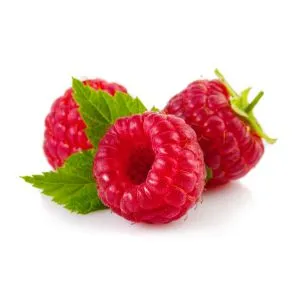
  • Raspberries - 700 g
  • Muscovado Sugar - 180 g
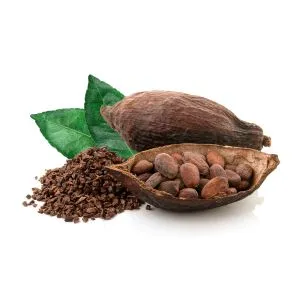
  • Cacao Nibs - 14 g
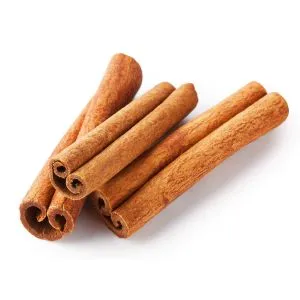
  • Cinnamon - ½ small stick
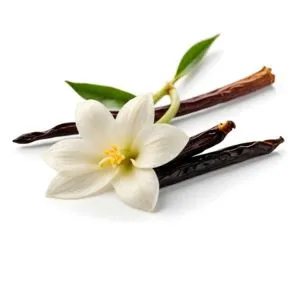
  • Vanilla - ¼ pod
  • Allspice - 2 berries

Preparation

  1. Sort the raspberries carefully, removing leaves, stems and any damaged fruit. Rinse gently if necessary and allow them to dry thoroughly.
  2. Place the raspberries in a clean, sterilised glass infusion jar and lightly crush roughly one-third of them to release their juice.
  3. Add the cacao nibs, cinnamon, split vanilla pod and lightly crushed allspice berries.
  4. Pour in the dark rum, making sure the raspberries and aromatics are well covered. Seal the jar tightly.
  5. Store in a cool, dark place for 14 days, gently turning the jar every couple of days. Taste periodically after the first week to monitor the cacao and spice extraction.
  6. Remove the cinnamon and allspice if their flavours become sufficiently pronounced, allowing the raspberries, cacao and vanilla to continue infusing if needed.
  7. Strain through a fine sieve without aggressively pressing the fruit, then filter again through fine muslin or a suitable filter for a cleaner finish.
  8. Add the muscovado sugar gradually to the strained infusion, stirring until completely dissolved. Taste and adjust only if necessary, keeping the raspberry and rum character prominent.
  9. Bottle and leave Raspberum to rest for at least 4 weeks in a cool, dark place so the fruit, cacao, rum and spices can integrate.
Download

The Story

Raspberum began with ripe raspberries gathered from my own garden and the idea of giving their bright summer character a darker, warmer setting. Instead of neutral vodka, dark rum brings notes of molasses, caramel and oak that naturally complement the fruit. Muscovado sugar deepens that richness, while cacao nibs add a dry chocolate edge. Cinnamon, vanilla and allspice sit quietly behind the raspberries, building warmth without turning the liqueur overly spiced. The result is a generous, full-bodied raspberry liqueur where fresh garden fruit meets dark rum, gentle cacao and warming spice—a bottle made for slower evenings and unhurried sipping.

Who is "Raspberum" Liqueur for?

Raspberum is for adventurous slow sippers who enjoy fruit liqueurs with a darker, more grown-up character. Its combination of vibrant raspberry, rich rum, cacao and warm spice suits relaxed evenings, after-dinner drinking and curious palates looking beyond traditionally sweet berry liqueurs.

"Raspberum" Liqueur Serving Suggestions

Serve Raspberum slightly chilled or at cool room temperature in a small liqueur or tasting glass. It is particularly suited to after-dinner sipping, when its ripe raspberry, dark rum, cacao and warming spice notes can unfold slowly. A winter evening brings out its richer character beautifully.

Why the Name "Raspberum"?

Raspberum brings its two defining characters directly into the name: raspberry and rum. The playful fusion reflects a liqueur in which neither ingredient is merely supporting the other. Garden raspberries provide the vivid fruit at its heart, while dark rum gives them an unexpectedly deep, warming backdrop. The slightly quirky name also suits the recipe’s character—familiar enough to understand immediately, but unusual enough to hint at something different in the bottle.

Testing Notes

The main consideration during testing is preventing cacao and spice from overwhelming the fresh raspberry character. Cinnamon and allspice can extract faster than the fruit, so tasting during maceration is important. Muscovado works particularly well with dark rum, although its intensity means sweetness should be assessed after filtration and again after the liqueur has rested.

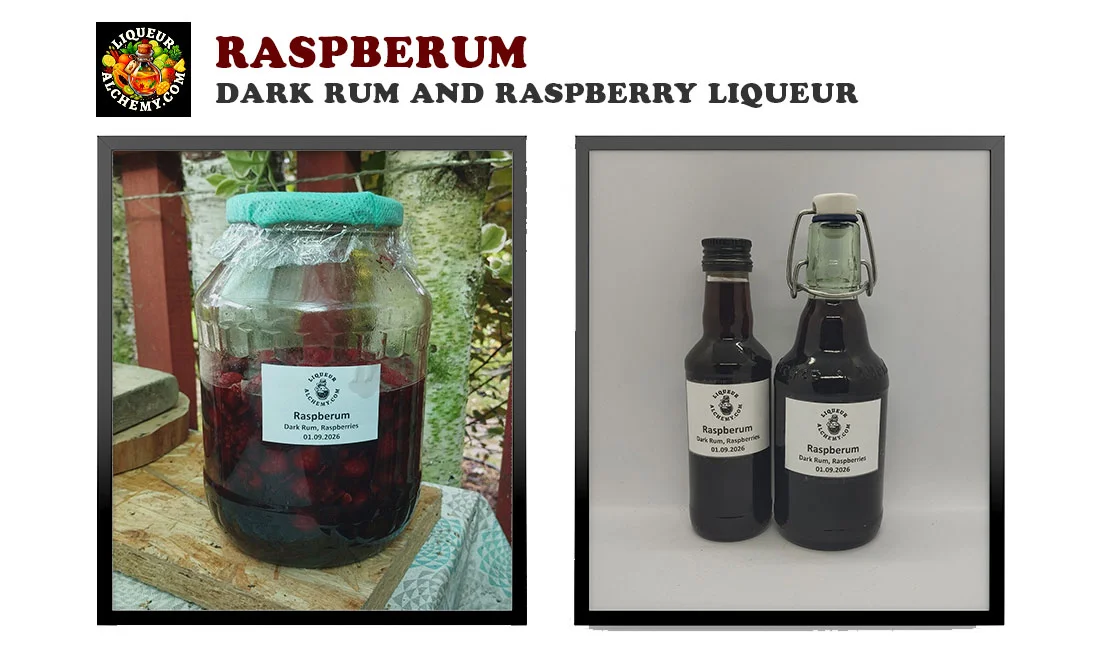
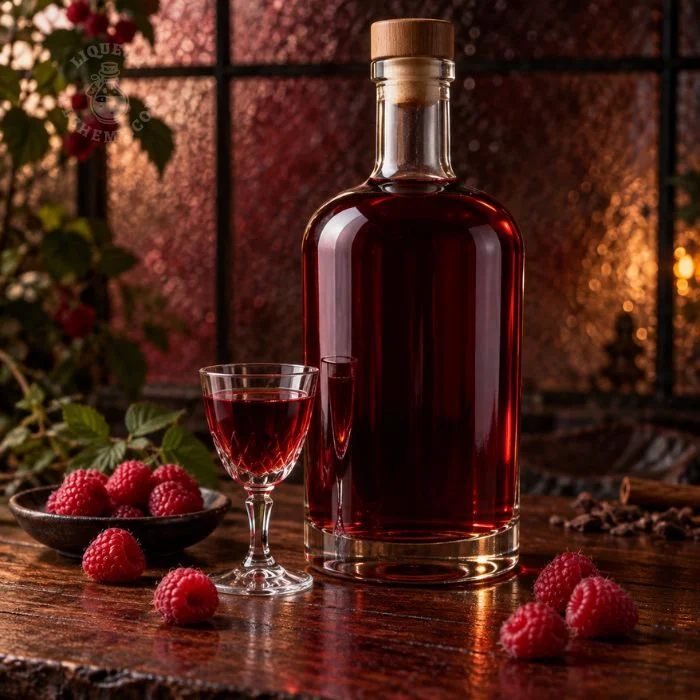
Raspberum liqueur during maceration and finished bottled liqueur

Raspberum Liqueur FAQ


Muscovado sugar contributes more than sweetness in this recipe. Its molasses notes reinforce the caramel, oak and dark-fruit qualities of the rum while giving the raspberries a deeper, rounder finish. Replacing it with plain white sugar will make the liqueur cleaner and brighter, but noticeably less rich and less integrated.

A good substitute is dark brown sugar used at roughly the same weight. Light brown sugar can also work, although it produces a softer result. Honey may replace a small portion of the sugar, but too much can mask the raspberry aroma and change the texture. Palm sugar is another option, though its earthy character should be used cautiously.

When substituting, add the sweetener gradually after filtration rather than committing to the full amount immediately. Dark rum already brings natural sweetness and the fruit contributes acidity, so balance matters more than matching the original weight exactly. Allow the liqueur to rest for several days before deciding whether additional sweetness is needed.

Raspberries usually give up their colour, aroma and juice quickly in alcohol, while cacao nibs and spices continue extracting for longer. For this recipe, begin tasting after about seven days and expect the main infusion to take roughly 10 to 14 days. The goal is a clear raspberry lead with cacao and spice supporting it rather than dominating.

Cinnamon and allspice should be watched especially closely because they can become woody, hot or medicinal if left too long. Remove them as soon as their flavour is clearly noticeable. Cacao nibs can usually remain longer, but excessive extraction may introduce bitterness and a dry cocoa finish that hides the fruit. Vanilla is slower and more forgiving.

Do not rely only on a fixed number of days because fruit ripeness, rum strength and spice freshness affect extraction speed. Taste every day or two during the later stage. Once the raspberry flavour is full and the supporting ingredients are balanced, strain promptly rather than waiting for a predetermined date.

The most common cause is over-extraction of cacao nibs, cinnamon or allspice. Dark rum already has a strong flavour base, so too much spice can quickly crowd out fresh raspberry. Crushed fruit can also release excessive pulp and seeds, especially if it is pressed hard during straining, creating a muddy texture and slightly bitter finish.

Another mistake is adding all the muscovado sugar before judging the finished infusion. Heavy sweetness can combine with rum, cacao and spice to make the liqueur feel dense and flat. Likewise, leaving damaged or overripe raspberries in the jar can introduce dull, fermented or cooked-fruit notes rather than a clean berry aroma.

Taste throughout infusion and remove individual spices when they reach the desired strength. Strain gently without forcing pulp through the filter, then sweeten in stages. If the finished liqueur is already too intense, additional filtered raspberry infusion or a small amount of unsweetened rum can soften the concentration before the final resting period.

Balance should be judged only after the fruit and aromatics have been strained because solids can make the infusion seem drier or harsher than the finished liqueur. Muscovado has a strong flavour as well as sweetness, so adding too much at once can bury raspberry freshness and exaggerate the heavier molasses character of dark rum.

If the liqueur tastes too sharp, dissolve a small additional amount of muscovado or simple syrup and add it in stages, tasting between additions. If it tastes too sweet or heavy, a measured amount of unsweetened dark rum can restore structure. A very small quantity of fresh lemon juice may brighten an overly rich batch, but it should not become noticeably citrusy.

After any adjustment, let the liqueur rest for several days before making another change. Raspberry acidity, cacao dryness and rum sweetness become more integrated with time, and a batch that initially seems slightly rough may settle naturally. Final balance should leave raspberry clearly identifiable, with cacao and spice appearing behind it rather than competing with it.

After filtration and sweetening, the liqueur benefits from at least two to four weeks of rest. Freshly mixed batches often taste separated, with rum, raspberry, cacao and spice appearing as distinct layers. Resting allows the muscovado to integrate, softens sharp alcohol edges and gives the cacao and warm spices a more natural place in the flavour profile.

Store the finished liqueur in clean, tightly sealed glass bottles in a cool, dark cupboard away from sunlight and major temperature changes. Clear bottles are acceptable if they are kept in darkness. Good filtration is important because fruit sediment left in the bottle can produce haze, flavour changes and additional settling over time.

The liqueur can be sampled during the resting period, but its best balance normally develops after several weeks. If sediment appears, carefully decant or filter again before final storage. Refrigeration is not usually necessary for a properly strained, spirit-based liqueur, although chilling before serving can sharpen the raspberry character and make the rich rum finish feel cleaner.

RALETED RECIPES OF LIQUEUR ALCHEMY


Explore more creations from Liqueur Alchemy that share similar flavours, techniques, or ingredients. These related recipes offer fresh ideas and inspired combinations to help you craft your next bold, homemade spirit.