
Plum Fiction

Prune plum vodka with orange and warmly spiced depth

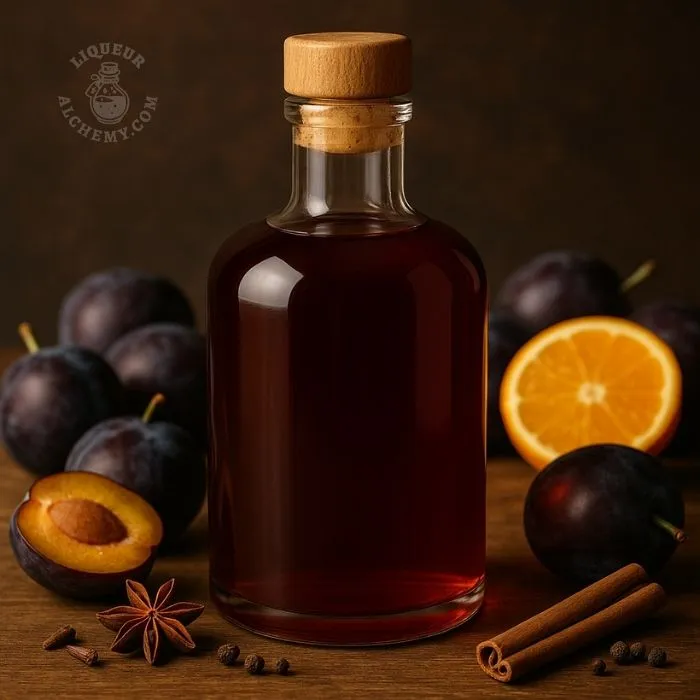
Plum Fiction offers a rich and complex flavor profile, blending the natural sweetness of ripe plums with the warm spices of cinnamon and cloves. The addition of orange zest adds a citrusy brightness, while the honey and sugars create a smooth, rounded finish. This liqueur is both comforting and intriguing, perfect for sipping or incorporating into cocktails.

Main notes

  • Vodka
  • Prune Plums

Ingredients

  • Vodka – 1 L
  • Plum (Prune) – 1 Kg
  • White Sugar – 100 g
  • Brown Muscavado Sugar – 100 g
  • Honey – 100 g
  • Orange – 1 (Juice + Zest)
  • Star Anise – 1 star
  • Cinnamon - ½ stick
  • Cloves - 5
  • Peppercorns (White) – 10

Preparation

  1. Rinse plums well, remove stems, and cut into halves or quarters, keeping the skins.
  2. Place plums in a clean, sterilized 1.5 L glass jar.
  3. Add orange juice, zest, both sugars, and honey, layering with the fruit.
  4. Drop in star anise, cloves, cinnamon, and peppercorns.
  5. Pour vodka slowly over the mixture to cover all ingredients.
  6. Seal tightly and shake gently to mix and dissolve sugars.
  7. Store in a cool, dark place for 4 weeks, shaking every few days at first.
  8. Taste after 4 weeks — adjust sweetness if needed with a little honey.
  9. Strain through fine cloth, bottle, and rest another week before serving.
Download

The Story

In the dim glow of a late autumn kitchen, Plum Fiction was born — a smooth, noir-style twist on the classic Polish plum spirit. Ripe prune plums steep in vodka with orange zest, honey, and muscovado sugar, unfolding a plot as dark and rich as midnight velvet. Spices like star anise, clove, and cinnamon add drama, while peppercorns bring a final surprise twist. Each sip tells its own story — deep, mysterious, a little sweet, a little dangerous — the kind of drink that lingers long after the credits roll.

Who is "Plum Fiction" Liqueur for?

For dessert-leaning sippers who love prune richness, orange perfume, and a confident spice stack. Perfect for winter evenings, after-dinner pours, and anyone who enjoys deep fruit with a warm, dramatic finish. Bold, plush, and unapologetically aromatic.

"Plum Fiction" Liqueur Serving Suggestions

Serve slightly cool in a small tulip or cordial glass. Best after dinner when you want dark fruit and orange glow. Let it sit a minute so spice softens and the prune opens. A tiny orange peel twist works well—avoid extra zest in the glass.

Why the Name "Plum Fiction"?

The name 'Plum Fiction' is a nod to the classic storytelling found in literature, evoking a sense of nostalgia and imagination. Just as a good story unfolds with unexpected twists, this liqueur surprises the palate with its layered flavors. It invites you to explore its depths, much like a captivating novel that keeps you turning the pages.

Testing Notes

During the development of Plum Fiction, it was important to balance the sweetness with the tartness of the plums. Initial tests showed that the spices needed careful measuring to avoid overpowering the fruit. After several iterations, the final recipe achieved a harmonious blend, with just the right amount of warmth and complexity to enhance the plum's natural character.

Plum Fiction Liqueur FAQ


Prunes already taste dark and dessert-like, so strong spices can quickly turn the profile into cough syrup. Cloves are the biggest risk for medicinal notes, star anise can dominate with licorice, cinnamon can become woody, and white pepper can bring a papery dryness if left too long.

Use staged removal. Pull cloves first once you smell warm clove oil, before any numbing dentist note appears. Pull star anise as soon as licorice is clearly noticeable. Keep cinnamon only until it reads like soft warmth, then remove it before barkiness. Pepper should be subtle; remove it when you feel drying heat on the finish.

If the drink already tastes medicinal, strain immediately and let it rest. A small dilution often helps more than adding extra sugar, because it reduces both spice concentration and bitterness density while allowing prune aroma to re-emerge.

Orange is perfect with prunes, but bitterness appears when pith or too much zest oil gets extracted. Juice adds acidity and brightness, while zest adds perfume and oil. If zest contact runs long, the profile can drift toward bitter marmalade and hide the prune richness.

Use pith-free zest strips and remove them once the aroma is bright and fresh. Keep juice as lift, not the main flavor driver. If it tastes bitter, do not add more orange; strain out zest and spices, then let it rest so bitterness softens.

If it feels dull rather than bitter, add aroma rather than acidity: a tiny fresh orange peel twist at serving works better than more juice in the bottle. Small dilution can also lift the nose without pushing it into sour territory.

Honey adds softness and viscosity, which makes prune feel plush and dessert-like. If you reduce honey too much, the drink can feel thinner and the pepper and spice dryness can become more noticeable. The goal is smooth richness without cloying heaviness.

If you reduce honey, compensate with slightly more concentrated syrup or a small amount of invert syrup to keep body. Sweeten in steps and taste chilled. If it starts feeling heavy, prefer a small dilution rather than cutting sweetness too aggressively at the end.

Resting helps enormously: prune, orange, and spices settle into a rounded profile as the syrup integrates. Many prune liqueurs taste sharper and less velvety right after sweetening, then become smoother after a few weeks.

RALETED RECIPES OF LIQUEUR ALCHEMY


Explore more creations from Liqueur Alchemy that share similar flavours, techniques, or ingredients. These related recipes offer fresh ideas and inspired combinations to help you craft your next bold, homemade spirit.