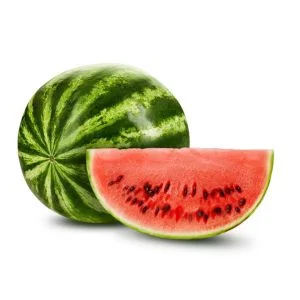
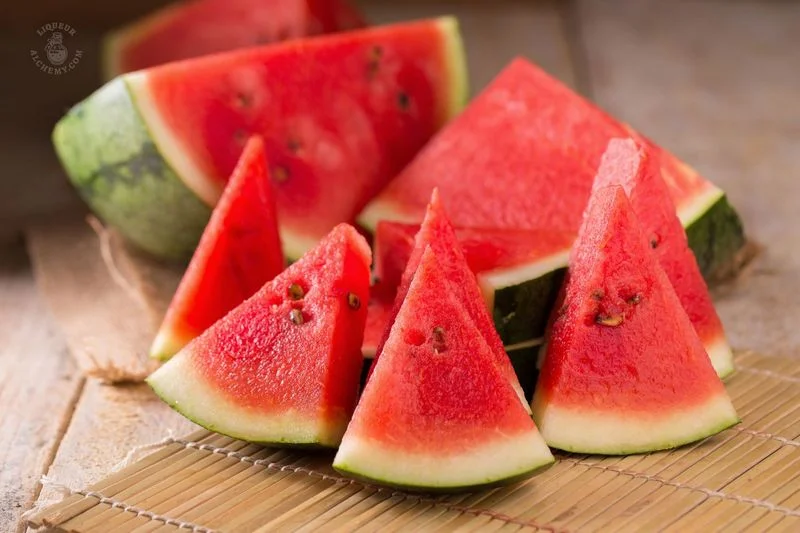
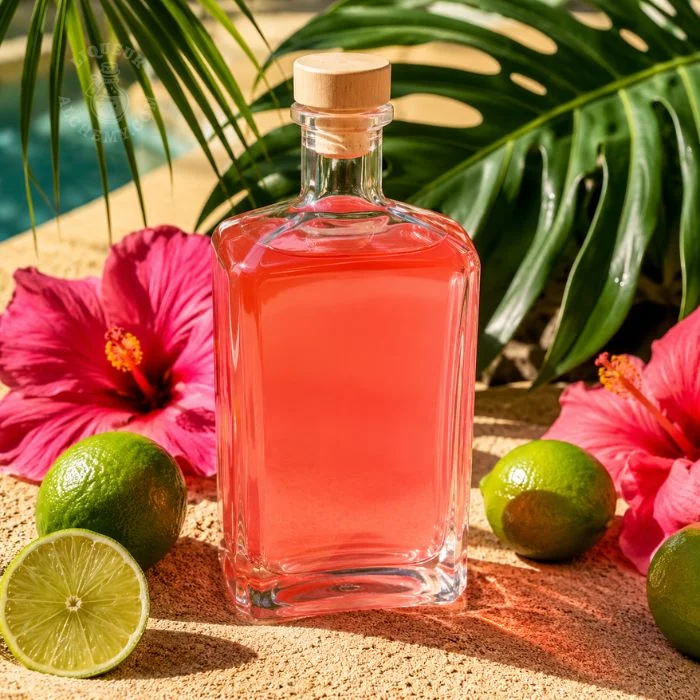
Watermelon can be replaced by fruits that offer a similar sense of juiciness, freshness and light summer character. Good substitutes include cantaloupe, honeydew melon, strawberries, white peaches, mango, cucumber-melon combinations or very ripe pears used in a lighter style. None of these fruits taste exactly like watermelon, but they can provide the same refreshing mood in a homemade liqueur. The best choice depends on whether the recipe needs soft sweetness, watery freshness, gentle aroma or a more tropical direction.
Melons are the closest substitutes when the goal is a pale, cooling fruit liqueur. Cantaloupe gives a stronger musky sweetness, while honeydew is cleaner, greener and more delicate. Strawberries add more colour and aroma, making the result brighter and fruitier than watermelon. Mango gives a fuller tropical body and a richer texture, but it moves the liqueur away from a crisp summer style. White peach or pear can replace watermelon when a soft, elegant fruit base is preferred, especially with vodka, honey and citrus.
When substituting, dosage and sweetness should be adjusted because each fruit behaves differently in alcohol. Stronger fruits may need less quantity or a shorter maceration, while very watery fruits may need support from sugar, lime or herbs. If the original recipe relies on watermelon for freshness, avoid heavy fruits that make the liqueur syrupy or jam-like. The replacement should keep the drink light, smooth and easy to sip, while still adding enough flavour to remain clear after filtering and resting.
View this Ingredient FAQ as a standalone page