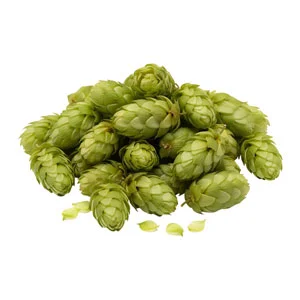
Hops

Hops in Liqueur Making: Floral Aroma, Herbal Depth and Bitterness

Hops bring a distinctive mix of floral, herbal, citrus, resinous and gently spicy notes to homemade liqueurs. Used sparingly, they add aromatic lift, balancing bitterness and a crisp, dry finish that can sharpen sweet fruit infusions. Hops work especially well with apple, rhubarb, quince, citrus and honey. Because their bitterness extracts quickly in alcohol, short controlled infusions are best. Add hops late, taste frequently, and remove them before bitterness overwhelms the other flavors.

Hops

Home / Ingredients / Flowers / Hops

Hops Flavor Profile

Floral, herbal, citrusy and resinous with fresh green notes, gentle spice and a pronounced clean bitterness.
Hops Impact on Liqueurs

Adds aromatic floral and herbal complexity, brightens fruit flavors, balances sweetness and creates a crisp, dry, pleasantly bitter finish.

How to Use Hops?

Use dried hops sparingly because alcohol extracts their bitter compounds quickly. Add them toward the end of maceration rather than leaving them with the fruit for the full infusion. Start with approximately 0.5-1 g per litre, taste after 12-24 hours, and remove once the desired aroma and bitterness are reached. Highly aromatic hop varieties may require even less. Store dried hops airtight, protected from light and preferably frozen to preserve their aroma.

Hops Pairing Suggestions

Vodka, Honey, Apple, Rhubarb, Japanese Quince, Grapefruit, Lemon, Elderflower, Coriander Seeds, Ginger
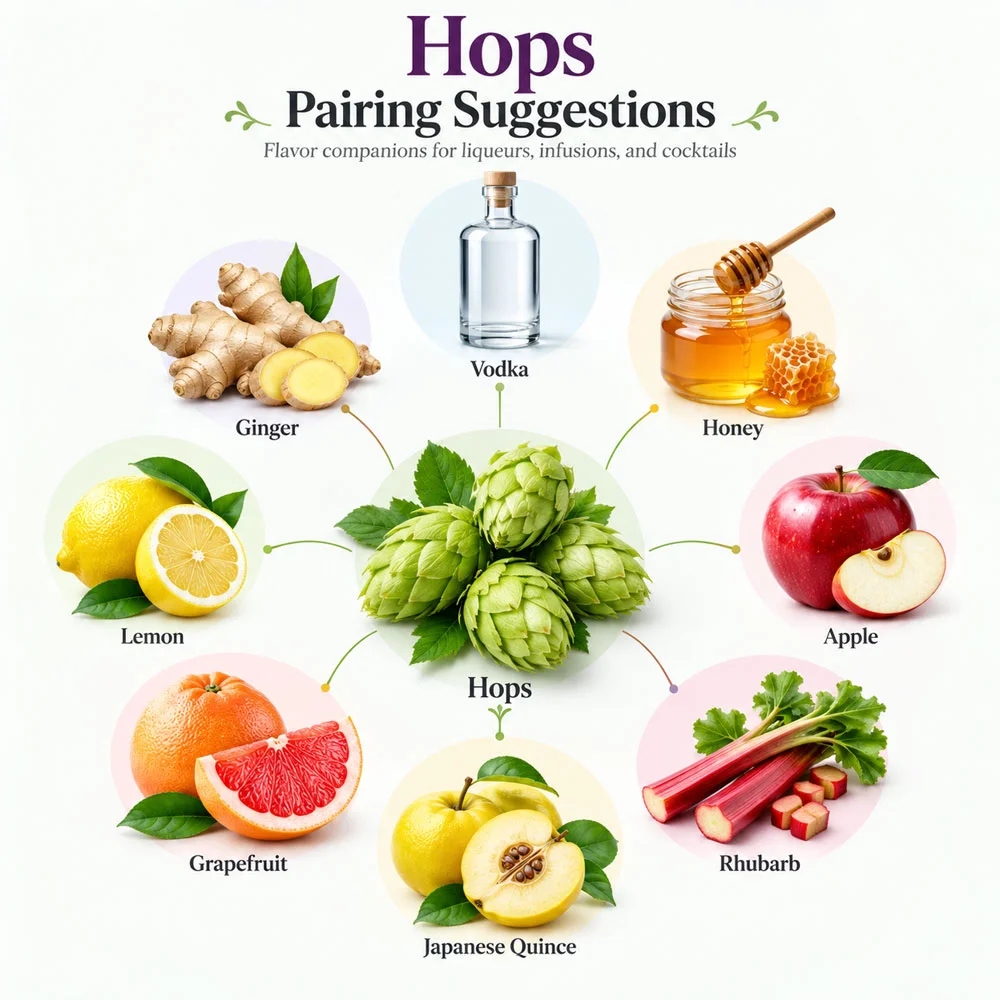
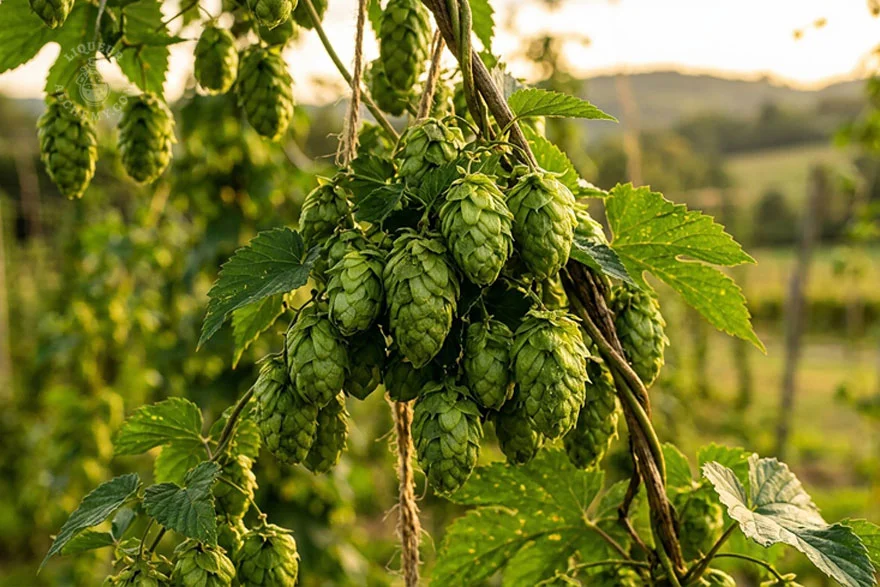
Hops pairing suggestions for liqueur making

Hops FAQ


Hops can release noticeable bitterness into alcohol surprisingly quickly because ethanol is an efficient solvent for many hop compounds. In a liqueur infusion, bitterness may become apparent within several hours, especially when dried hop cones or pellets have a large exposed surface area. After about 12 to 24 hours, the effect can already be strong enough to change the balance of a delicate fruit liqueur. The exact speed depends on hop variety, form, dosage, alcohol strength, temperature, and how frequently the infusion is agitated.

Unlike fruit, which often benefits from weeks of maceration, hops usually work better as a short secondary infusion. A practical approach is to add them toward the end of the main fruit maceration and begin tasting after 6 to 12 hours. Continue checking regularly until the desired floral, citrus, herbal, or resinous character appears. Removing the hops early gives much more control than attempting to correct excessive bitterness afterward.

For most homemade liqueurs, hops should be treated like a powerful botanical rather than a bulk ingredient. Start conservatively, particularly with strongly bitter or highly aromatic varieties. If more hop character is needed, the infusion can always be extended or a second small addition can be made. Once excessive bitterness has been extracted, dilution and additional sweetness may soften it, but they rarely restore the original balance completely.

There is no perfect one-for-one substitute for hops because hops combine aromatic oils, green herbal character, resinous notes, and distinctive bitterness. The best replacement therefore depends on what the hops were intended to contribute. For a mainly bitter role, gentian or another culinary bitter botanical can provide structure, although these ingredients can be considerably stronger and should not be substituted gram for gram. For fresh herbal character, rosemary, lemon verbena, or selected culinary herbs may be more appropriate.

If the recipe relies on the floral and citrus side of hops, elderflower combined with grapefruit or lemon peel can create a related aromatic impression without reproducing hop flavor exactly. Juniper can supply piney, resinous depth, while coriander seed can contribute citrus and botanical complexity. A combination is often more convincing than a single replacement because hops themselves have several overlapping aromatic dimensions. Choose substitutes according to the fruit and base spirit already present in the liqueur.

Whenever replacing hops, begin with a conservative dosage and infuse the substitute separately or add it late in maceration. Different botanicals extract at very different rates, so copying the original hop timing may create imbalance. Taste regularly and remove the replacement once it provides the missing structure or aroma. The objective should not be to imitate hops perfectly, but to preserve their function: balancing sweetness, increasing aromatic complexity, and providing a cleaner, drier finish.

For most homemade liqueurs, hops are best infused for hours or a few days rather than for the several weeks commonly used for fruit. A useful starting window is approximately 12 to 24 hours for dried hops, followed by tasting. Some highly aromatic varieties may deliver enough character sooner, while whole cones at a very low dosage may need longer. Alcohol strength, hop form, temperature, variety, and quantity all influence the extraction rate, so there is no universal finishing time.

The safest method is to add hops near the end of the main maceration. Begin tasting after about 6 to 12 hours and evaluate both aroma and bitterness. If the hop character is still weak, continue the infusion and check again periodically. Once the liqueur has the desired floral, citrus, herbal, or resinous lift, strain out the hops completely. Leaving them in simply to reach a predetermined number of days can sacrifice aroma balance and introduce unnecessary bitterness or coarse green flavors.

If you are uncertain about a new hop variety, make a small separate tincture first. This allows its extraction behavior to be assessed without risking the entire batch. The concentrated tincture can then be blended gradually into the finished fruit infusion. This technique is especially useful for delicate recipes based on pear, apple, elderflower, rhubarb, or quince, where a small excess of hop bitterness can easily overwhelm the main ingredient.

The most common cause of excessive bitterness is simply using too many hops or leaving them in alcohol for too long. Treating hops like fruit and macerating them for several weeks can produce a harsh result, especially when the recipe uses a high-bittering variety. Hop pellets can intensify the problem because their broken structure exposes a large surface area. Excessive crushing of whole cones, warm storage during infusion, and frequent aggressive agitation can likewise accelerate extraction beyond what was intended.

Another mistake is judging the hop contribution only by aroma. A batch may smell beautifully floral or citrusy while bitterness is already becoming too strong on the palate. Sweetness can temporarily disguise this during early tasting, particularly if syrup has already been added. Evaluate a sample at normal serving strength and pay attention to the finish. If bitterness continues building after the fruit flavor disappears, the hops are probably becoming too dominant and should be removed.

Prevention is easier than correction. Start with roughly 0.5 to 1 gram of dried hops per litre, add them late, and taste frequently. If a batch is already too bitter, removing the hops immediately is the first step. Additional fruit infusion, controlled dilution, or modest extra sweetness can sometimes rebalance mild excess bitterness. However, adding large amounts of sugar merely to hide severe bitterness often produces a liqueur that is simultaneously too sweet and still unpleasantly bitter.

Hops do not remove sugar from a liqueur, but their bitterness can change how sweetness is perceived. A sweet fruit infusion may taste cleaner, drier, and less syrupy after a carefully controlled hop addition because bitterness provides contrast to sugar. This can be particularly useful with ripe apple, plum, berry, or citrus recipes where sweetness otherwise dominates the finish. The effect is sensory balance rather than an actual reduction in sugar concentration.

Hop aroma can also reshape the fruit character. Citrus-forward varieties can reinforce grapefruit, lemon, quince, gooseberry, or rhubarb, while floral varieties can complement apple, pear, elderflower, and honey. Resinous or pine-like hops can create a more botanical profile and work with dark berries, juniper, or spices. If too much is used, however, the hop character can suppress delicate fruit aromas and make the liqueur seem greener, harsher, or more medicinal than intended.

Sweetening should therefore be finalized after evaluating the hop contribution whenever possible. Add hops conservatively, remove them at the desired intensity, allow the infusion to settle, and then reassess sugar or honey. A small sweetness adjustment may round the bitterness without hiding it. Avoid automatically adding large quantities of syrup when the liqueur tastes bitter; excessive hop extraction is better prevented through dosage and timing than corrected with sugar afterward.
Hops
Hops in Liqueur Crafting

More Flowers


LIQUEUR ALCHEMY TOOLS & RESOURCES


Design labels in minutes—beautiful, practical, and ready to print. Choose a tool below to generate bottle or ingredient labels that match your Liqueur Alchemy workflow.
Bottle Label Generator preview

Bottle Label Generator

Create clean bottle labels with your liqueur name, batch details, date — ready for printing and gifting.
Ingredient Label Generator preview

Ingredient Label Generator

Label jars, containers, and storage bags to maintain clear organization from preparation through infusion and serving.

Ingredient pairing cheat sheet for creating balanced homemade liqueurs

Ingredient Pairing Cheat Sheet

Discover flavor combinations that create balanced, complex, and unique homemade liqueurs.