Banana

Banana for Liqueur Infusions – Sweetness, Body & Pairings

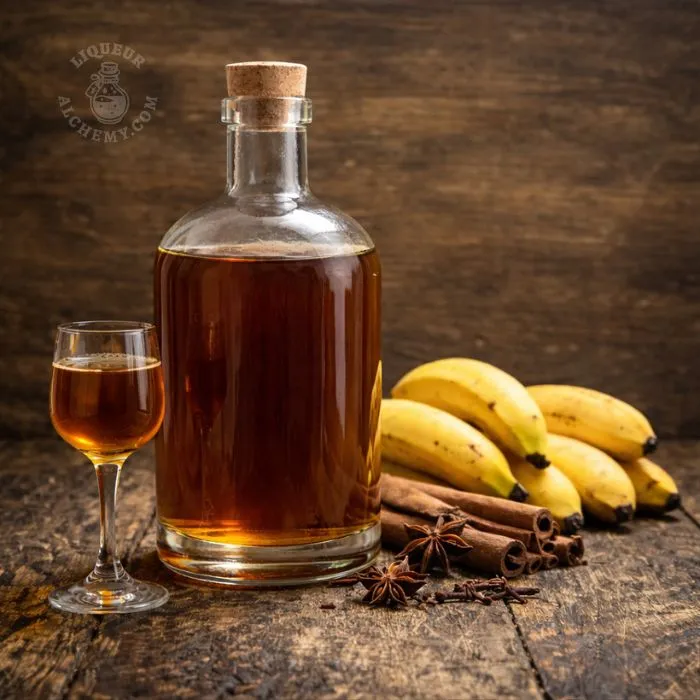
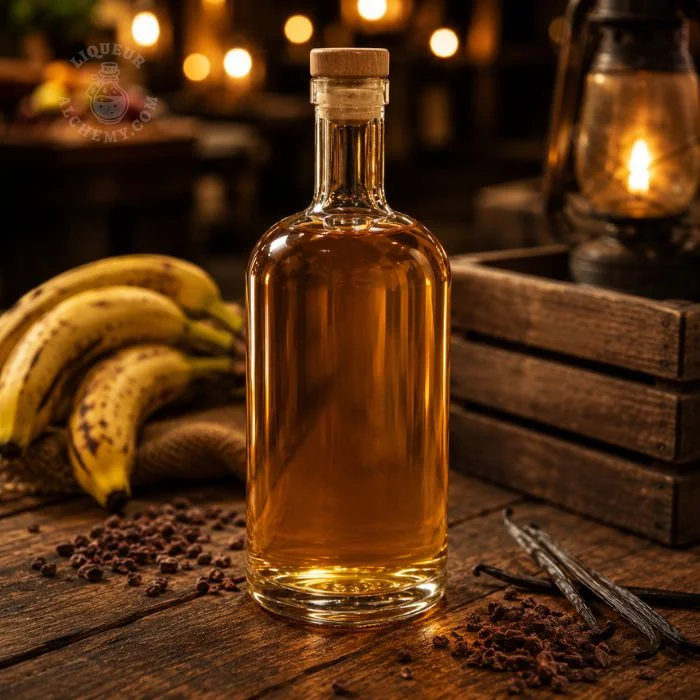
Banana brings mellow tropical sweetness, creamy texture, and a gentle fruity aroma that softens alcohol heat and builds body. Ripe bananas contribute natural sugars and a custard-like richness, making liqueurs feel round and dessert-forward. Light caramel notes appear when paired with rum or brown sugars, while spices add structure. Use ripe fruit and control infusion time to avoid cooked or vegetal notes. Ideal for rum, brandy, or vodka-based liqueurs.

Banana

Home / Ingredients / Fruits / Banana

Banana Flavor Profile

Soft tropical aroma, ripe sweetness, creamy mouthfeel, gentle caramel notes, low acidity.
Banana Impact on Liqueurs

Adds body and smooth sweetness, softening spirits and creating rich, dessert-style liqueurs.

How to Use Banana?

Use ripe sliced bananas; 400–700 g per 1 L. Infuse 2–4 weeks in rum, brandy, or vodka; strain well.

Banana Pairing Suggestions

Rum, Cane Sugar, Vanilla, Cacao, Coconut, Cinnamon, Coffee, Honey
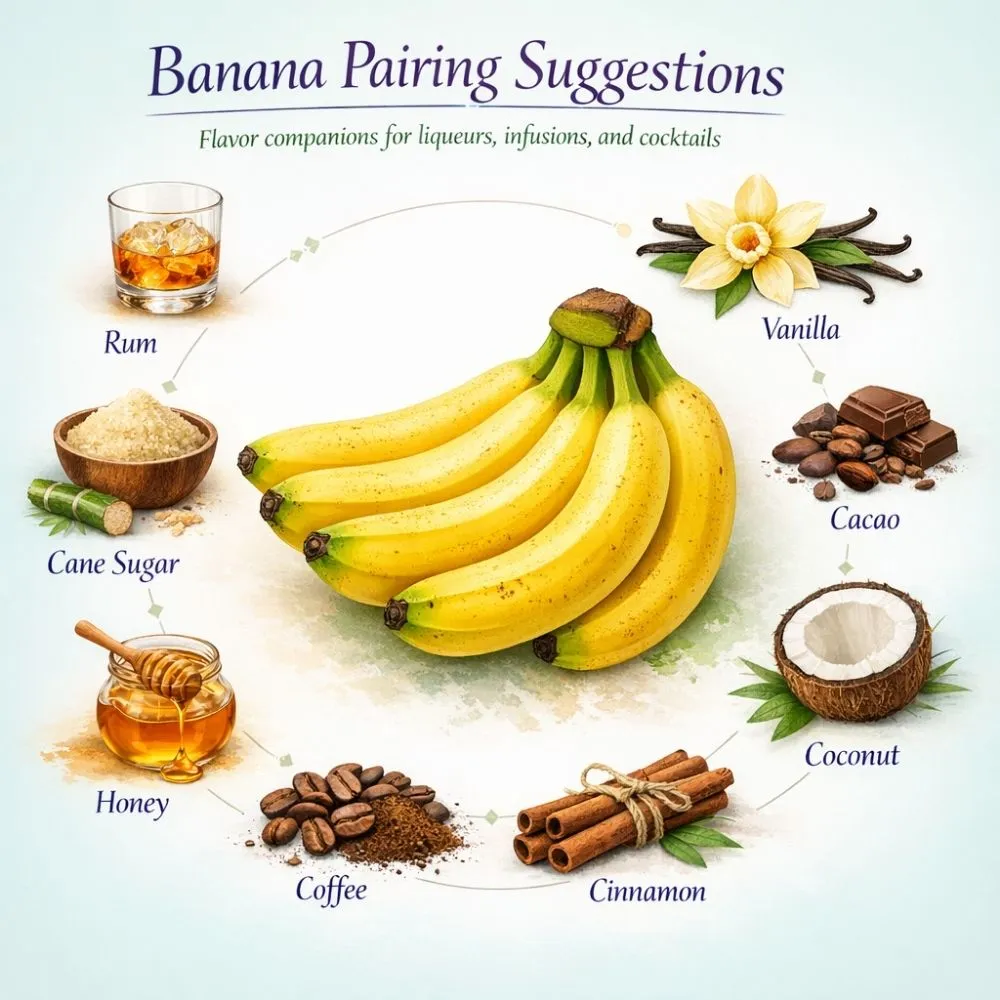
Banana pairing suggestions for liqueur making

Banana FAQ


Banana oxidizes fast, so keep prep clean and contact controlled. Use ripe bananas with good aroma (yellow with a few spots), peel, slice, and infuse at 40–50% ABV. Start tasting at day 2–3; many batches peak around 5–10 days before they drift toward cooked/overripe notes.

Dosage: 300–700 g banana per liter depending on intensity. Strain gently (don’t squeeze), then cold-settle 1–3 days and decant. Sweeten after straining; adding syrup early makes banana pulp harder to separate.

Common mistakes include blending bananas, using very overripe fruit, and leaving the jar warm. Flavor impact should be creamy banana aroma, not fermented mush. Store cool and dark; banana top notes fade, so smaller bottles help once opened.

Yes—dried banana can be easier to handle and can give a deeper, caramelized profile with less pulp mess. Choose unsweetened banana chips if possible; sweetened snacks can add artificial flavors and unpredictable sugar. Use 40–50% ABV and start tasting after 1 week.

Dosage: 80–200 g dried banana per liter, depending on intensity. Extraction may take 2–6 weeks for full depth. Strain, settle, then sweeten sparingly—dried banana can taste sweeter than expected.

Common mistakes include using flavored chips and steeping too warm, which can taste stale. Flavor impact: fresh banana is brighter and creamier; dried banana is deeper and more “banana bread.” Store cool and dark; both fade over time.

When using bananas for extraction, consider the method of preparation. Slicing or mashing bananas can increase surface area, promoting better extraction of flavors and sugars. However, avoid over-mashing, as this can lead to undesirable textures in the final product.

Another important factor is the duration of the extraction process. Bananas can impart their flavors relatively quickly, so monitoring the extraction time is crucial. Typically, a few days to a week is sufficient, depending on the desired intensity of flavor.

Lastly, the type of alcohol used for extraction can also affect the outcome. Neutral spirits may highlight the banana's sweetness, while higher-proof alcohols can extract more complex flavors, providing a well-rounded liqueur.

Yes, you can replace banana with other fruits in liqueur making. For instance, ripe peaches can provide a similar sweetness and texture, enhancing the overall flavor of your liqueur.

Another excellent substitute is pear puree, which offers a smooth consistency and mild sweetness. This can work particularly well in fruit-based liqueurs, maintaining a balanced flavor.

Lastly, consider using a combination of berries, such as strawberries or blueberries, for a unique twist. They add vibrant color and a different taste profile, making your liqueur stand out.

The dosage of bananas in liqueur making can vary based on the desired sweetness and flavor intensity. A general guideline is to use one medium banana for every 750ml of spirit. This ratio can be adjusted according to personal taste preferences.

If you prefer a stronger banana flavor, consider increasing the quantity to two bananas per 750ml. However, be cautious, as too much banana can lead to an overly sweet liqueur that may mask other flavors.

Always taste your liqueur during the infusion process. This allows you to find the right balance and adjust the dosage if necessary, ensuring a well-rounded final product.
Banana
Banana in Liqueur Crafting

More Fruits


RELATED RECIPES OF LIQUEUR ALCHEMY


Explore more creations from Liqueur Alchemy that share similar flavours, techniques, or ingredients. These related recipes offer fresh ideas and inspired combinations to help you craft your next bold, homemade spirit.

LIQUEUR ALCHEMY TOOLS & RESOURCES


Design labels in minutes—beautiful, practical, and ready to print. Choose a tool below to generate bottle or ingredient labels that match your Liqueur Alchemy workflow.
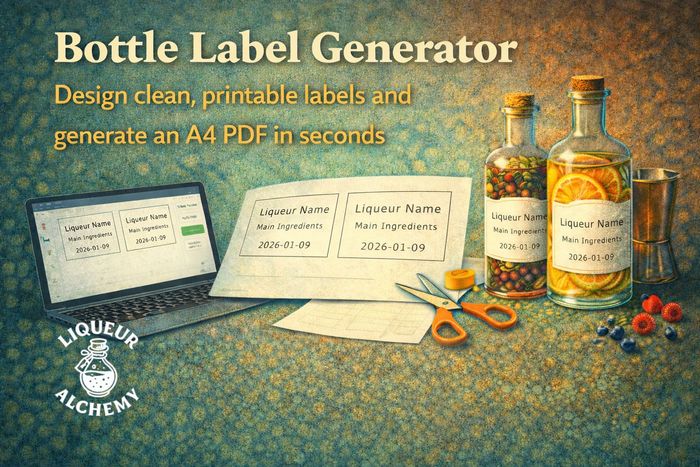
Bottle Label Generator preview

Bottle Label Generator

Create clean bottle labels with your liqueur name, batch details, date — ready for printing and gifting.
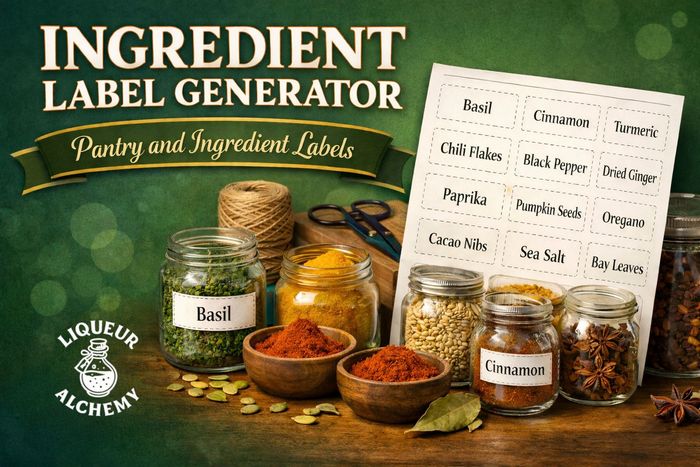
Ingredient Label Generator preview

Ingredient Label Generator

Label jars, containers, and storage bags to maintain clear organization from preparation through infusion and serving.
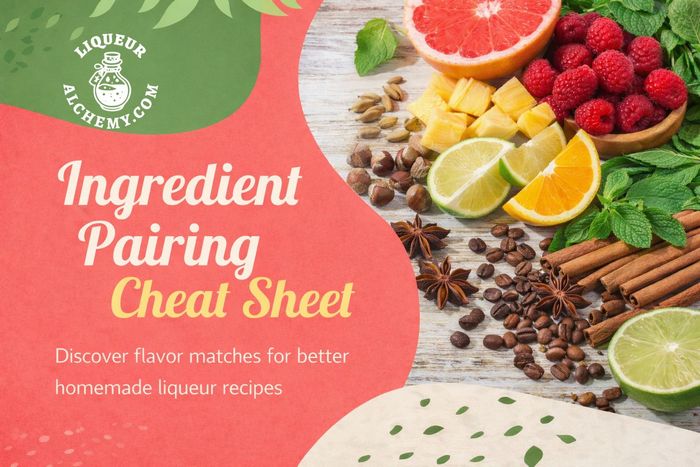
Ingredient pairing cheat sheet for creating balanced homemade liqueurs

Ingredient Pairing Cheat Sheet

Discover flavor combinations that create balanced, complex, and unique homemade liqueurs.