Mishri Sugar

Mishri Sugar in Liqueurs: Crystal Sweetness, Clarity, and Smoothness

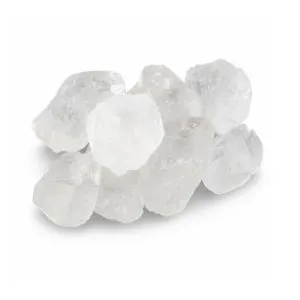
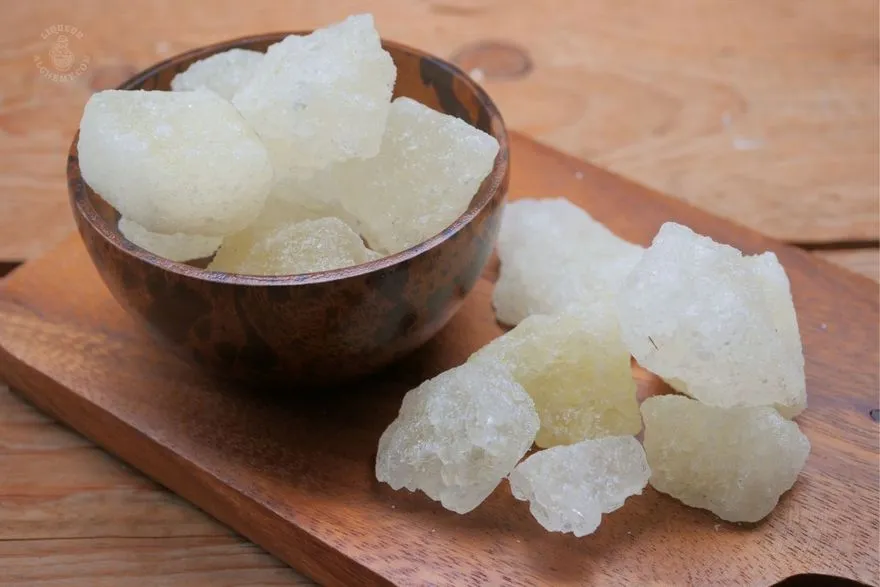
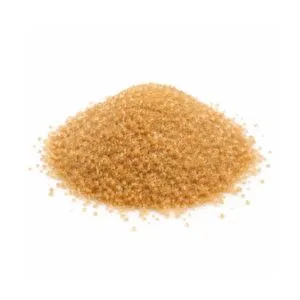
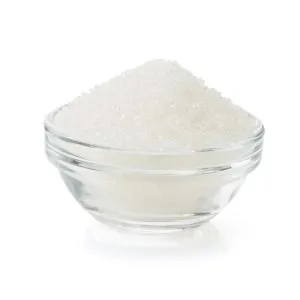
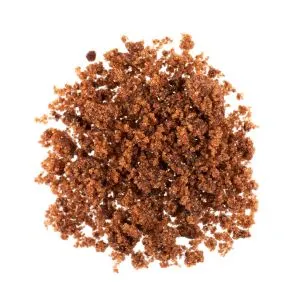
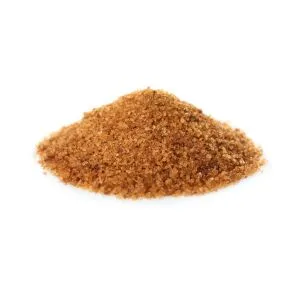
Mishri adds clean sweetness with a soft, faintly floral impression. It dissolves slower than granulated sugar, making it ideal as a syrup or early addition. In liqueurs it smooths alcohol burn while keeping aromas bright, perfect for citrus, tea, and delicate herbs. Crush before dissolving, sweeten in stages, and rest 1–3 weeks. Avoid hard boiling to preserve clarity.

Mishri Sugar

Home / Ingredients / Sugars & Sweeteners / Mishri Sugar

Mishri Sugar Flavor Profile

clean, lightly floral, crisp sweet
Mishri Sugar Impact on Liqueurs

Softens burn and keeps aromas bright with minimal flavor change.

How to Use Mishri Sugar?

Crush crystals and dissolve gently into syrup; add in stages and allow extra integration time.

Mishri Sugar Pairing Suggestions

Vodka, Honey, Saffron, Cardamom, Coconut, Almond, Pistachio, Black Pepper
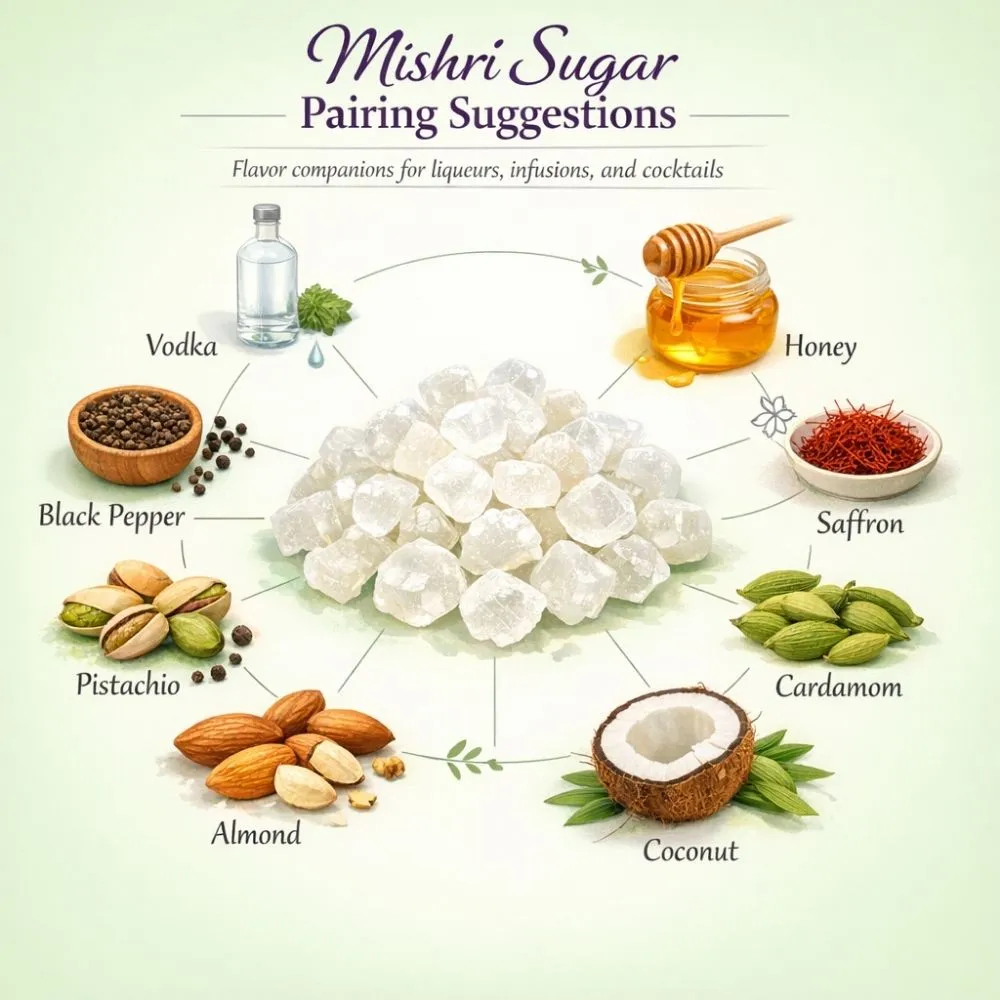
Mishri Sugar pairing suggestions for liqueur making

Mishri Sugar FAQ


Mishri (rock candy crystals) dissolves slower than granulated sugar because the crystals are larger and have less surface area. If you add it dry, you’ll often get a “crunchy” phase where sweetness seems inconsistent from sip to sip.

For consistent results, crush mishri to pea-sized pieces (or smaller) before using, or pre-make a syrup by gently warming water until the crystals fully dissolve, then cool completely. Add the syrup in stages, especially if you’re working above 40% ABV where dissolution is slower.

Common mistake: shaking aggressively right after adding crystals. That can trap micro-bubbles and make it look dissolved when it isn’t. Give it time, stir gently, and check after 24 hours.

Use the same starting ranges as white sugar (roughly 120–220 g per finished liter), but treat it like a “slow-release” sweetener. If you add it as whole crystals, it can take days to fully integrate—so your early taste tests won’t be accurate.

Crushing is strongly recommended. Even a quick smash in a bag with a rolling pin can cut dissolution time dramatically and makes the sweetness more even. If you want absolute consistency, convert it into syrup and dose by weight.

Common mistake: using mishri crystals in cold infusions and expecting quick results. Cold + high-proof = slow dissolve. Either warm a small portion as syrup or just give it more time before final tasting.

The extraction efficiency of Mishri sugar in liqueurs is influenced by several factors, including temperature, alcohol content, and infusion time. Warmer temperatures generally increase solubility, allowing the sugar to dissolve more quickly and release its flavors.

Alcohol content also plays a significant role; higher proof spirits can extract flavors more efficiently than lower proof options. This means that using a spirit with an appropriate alcohol content can enhance the overall extraction process.

Lastly, the duration of the infusion is crucial. A longer infusion time allows for a more complete extraction of flavors and sweetness from the Mishri sugar, resulting in a richer liqueur. Balancing these factors can lead to optimal results in your liqueur crafting.

The recommended dosage of Mishri sugar typically ranges from 5% to 15% of the total volume of your liqueur. This percentage can vary based on personal taste and the specific recipe you are following. Start with a lower amount to gauge sweetness.

For a balanced flavor, consider starting with around 10% of the total liquid volume. You can always adjust by adding more if necessary, but it’s harder to reduce sweetness once added. Taste as you go to find the perfect balance.

Keep in mind that Mishri sugar has a unique flavor profile, which can enhance your liqueur. Experimenting with different amounts can lead to delightful variations in your final product.

Yes, there are several vegan substitutes for Mishri sugar that can be used in liqueur making. One excellent option is agave syrup, which is plant-based and has a mild flavor. It dissolves easily and can enhance the sweetness of your liqueur without overpowering other ingredients.

Another alternative is maple syrup, which offers a distinct flavor profile that can add depth to your liqueur. While it might alter the taste slightly, it can create a unique blend that many find appealing. Just be mindful of the liquid content in your recipe.

Lastly, date sugar is a fantastic vegan option that provides a rich, caramel-like sweetness. It’s made from ground dried dates and can complement various flavors in your liqueur, making it a versatile choice for those looking for a plant-based sweetener.
Mishri Sugar
Mishri Sugar in Liqueur Crafting

More Sugars & Sweeteners


RELATED RECIPES OF LIQUEUR ALCHEMY


Explore more creations from Liqueur Alchemy that share similar flavours, techniques, or ingredients. These related recipes offer fresh ideas and inspired combinations to help you craft your next bold, homemade spirit.

LIQUEUR ALCHEMY TOOLS & RESOURCES


Design labels in minutes—beautiful, practical, and ready to print. Choose a tool below to generate bottle or ingredient labels that match your Liqueur Alchemy workflow.
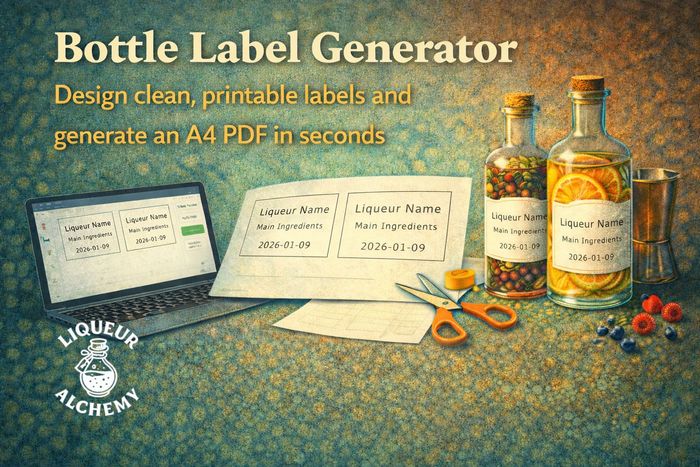
Bottle Label Generator preview

Bottle Label Generator

Create clean bottle labels with your liqueur name, batch details, date — ready for printing and gifting.
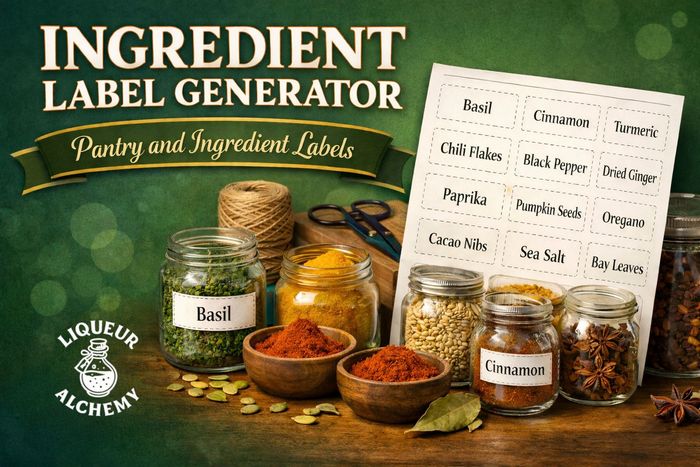
Ingredient Label Generator preview

Ingredient Label Generator

Label jars, containers, and storage bags to maintain clear organization from preparation through infusion and serving.
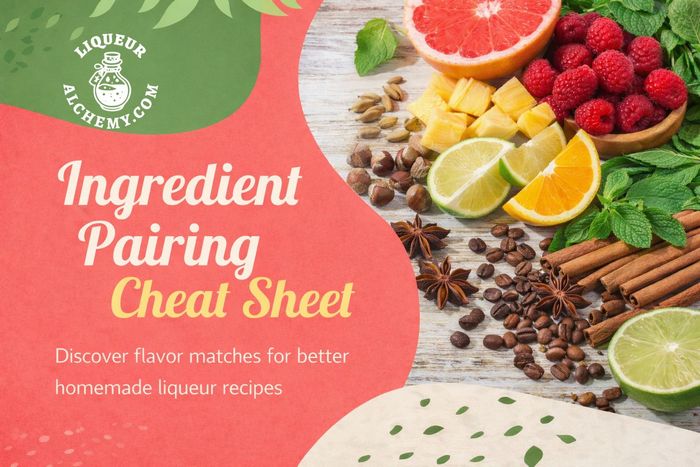
Ingredient pairing cheat sheet for creating balanced homemade liqueurs

Ingredient Pairing Cheat Sheet

Discover flavor combinations that create balanced, complex, and unique homemade liqueurs.