
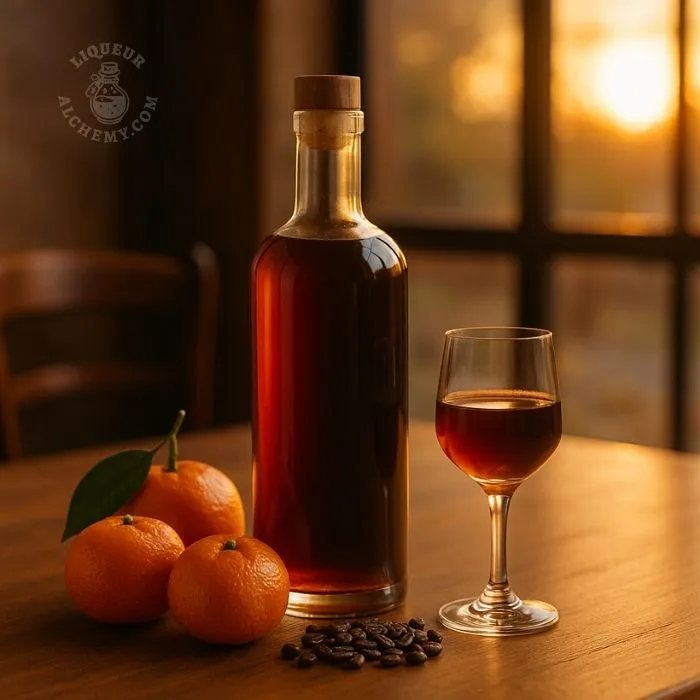
Espresso Clementine

Mandarin, coffee and spice vodka liqueur, espresso clementine

Espresso Clementine offers a unique blend of rich coffee and vibrant citrus flavors, creating a delightful balance between the deep, roasted notes of espresso and the bright, refreshing essence of mandarins. The subtle hints of spices and herbs add complexity, making this liqueur perfect for sipping or mixing in cocktails.

Main notes

  • Vodka
  • Mandarines
  • Coffee

Ingredients

  • Vodka – 1 L
  • Mandarines – 7 (400 ml Juice)
  • Cafe (Grinded) – 33g
  • Raisins - 50g
  • Honey - 110g
  • Cane Sugar – 100g
  • Vanilla - ½ stick
  • Star Anise – 1 star
  • Lemon Thyme – ½ tea spoon
  • Peppercorns (Black) – 5

Preparation

  1. Wash, zest, and juice seven ripe mandarins (≈400 ml juice), avoiding white pith to prevent bitterness.
  2. Combine mandarin zest and juice in a sterilized 2–2.5 L glass jar.
  3. Add ground coffee, raisins, honey, cane sugar, vanilla half-stick, star anise, lemon thyme, and peppercorns.
  4. Pour in 1 L of vodka, ensuring every ingredient is fully submerged.
  5. Stir gently with a wooden spoon until sugars and honey begin to dissolve.
  6. Seal tightly and store in a cool, dark place (20–25 °C).
  7. Shake the jar lightly every two days to blend flavors and oils.
  8. After two weeks, strain slowly through layered cheesecloth or a fine filter for clarity.
  9. Bottle and let mature another 5–7 days for a smoother, unified profile before serving chilled or over ice.
Download

The Story

Espresso Clementine is where morning meets twilight — a bold embrace of roasted coffee and radiant citrus. Deep, aromatic espresso grounds the spirit with warmth and richness, while the juice of sun-bright mandarins adds sparkle and vitality. Honey softens the edges, vanilla and star anise whisper of indulgence, and a touch of pepper awakens the senses. The result is a golden-amber liqueur alive with contrast — dark yet bright, bitter yet sweet, comforting yet daring — a creation that feels like sunrise poured into a glass after a long, passionate night.

Who is "Espresso Clementine" Liqueur for?

For coffee-and-citrus explorers who like espresso bite, mandarine perfume, and a sly herbal-spice sparkle. Ideal for late evenings, slow sips, and drinkers who enjoy layered aromatics with a smooth honeyed finish. Bold, modern, and unmistakably grown-up.

"Espresso Clementine" Liqueur Serving Suggestions

Serve slightly chilled in a small snifter or tulip so citrus rises first, then espresso follows. Best as an after-dinner nightcap. Let it sit a minute in the glass to open lemon thyme and vanilla. A thin mandarine twist is plenty.

Why the Name "Espresso Clementine"?

The name Espresso Clementine reflects the harmonious fusion of its key ingredients. 'Espresso' captures the bold, invigorating essence of coffee, while 'Clementine' pays homage to the sweet, zesty character of mandarins. Together, they evoke the warmth of a cozy café, inviting you to indulge in a moment of pleasure and relaxation.

Testing Notes

During the development of Espresso Clementine, balancing the sweetness of honey and cane sugar was crucial to achieving the desired flavor profile. The infusion period proved essential, as the complexity of flavors deepened significantly after two weeks. Straining through cheesecloth ensured clarity, allowing the vibrant colors and aromas to shine through in the final product.

Espresso Clementine Liqueur FAQ


Honey brings softness and body, but at higher levels it can mute bright citrus and make coffee feel heavier. If the result tastes sticky or “flat,” you’re dealing with density, not just sweetness. The goal is aromatic lift with a smooth finish.

First, taste chilled, because serving temperature changes perception a lot. If it’s sticky, try a small dilution (a bit more vodka or a tiny splash of water) to reduce viscosity and let citrus aroma rise. Then check acidity: if it’s still dull, a small boost of citrus zest aroma (pith-free) can lift without increasing sourness too much.

Resting matters. Honey-forward liqueurs often taste more integrated after a couple of weeks, and bitterness/roughness can fade. Make final sweetness tweaks only after rest; otherwise you risk chasing the balance and overshooting.

Ground coffee extracts quickly and can shift from “espresso” to “burnt” in a short window. Star anise is also powerful and can turn the profile into licorice-citrus syrup. With clementine/mandarine juice, the danger is a bitter, dry finish that hides the fresh citrus top notes.

Taste early and pull coffee first when the aroma is clear but not smoky or ashy. Then monitor star anise and remove it as soon as licorice is unmistakable. Keeping coffee and anise in contact too long usually creates bitterness that sweetness can’t fully hide.

If you overshoot, strain immediately and let it rest. Bitterness often softens with time. If it remains harsh, slight dilution works better than adding more honey, because heavier sweetness can make coffee bitterness feel even more “stuck” on the palate.

Lemon thyme is potent in alcohol and can turn soapy or perfumey if it sits too long. Peppercorns can go papery, woody, and drying with extended contact. In a citrus-coffee base, those effects stack quickly and can make the finish feel rough.

Treat lemon thyme like a short infusion: remove it as soon as you get a clear citrus-herb lift on the nose. Keep pepper as a background sparkle and remove it when you notice dryness on the tongue or a lingering pepper heat. Whole peppercorns are easier to control than cracked.

If the herb/spice already feels too loud, strain and rest before adjusting sweetness. Sweetness can “trap” perfumey notes and make them feel heavier. Once it has rested, a small dilution can re-open the citrus top and calm the sharp edges.

RALETED RECIPES OF LIQUEUR ALCHEMY


Explore more creations from Liqueur Alchemy that share similar flavours, techniques, or ingredients. These related recipes offer fresh ideas and inspired combinations to help you craft your next bold, homemade spirit.