What mistakes make a Cornelian cherry vodka liqueur too bitter, dry or astringent?
Troubleshooting Common Homemade Liqueur Problems and Fixes
Direct Answer
Excess orange pith, over-infused cinnamon, allspice or cacao, crushed stones and underripe fruit can cause bitterness or astringency. Taste early and correct only after the liqueur has rested.
Expanded Explanation
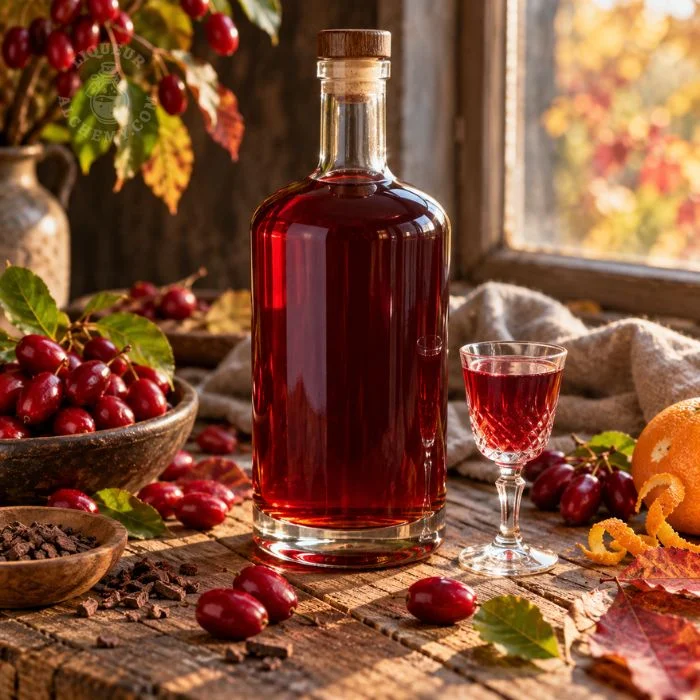
The most common cause is over-extraction from the supporting ingredients rather than the fruit itself. Too much orange pith, cinnamon left in too long, excessive allspice or prolonged contact with cacao nibs can create bitterness and dryness. Use only the coloured outer zest of the orange and begin tasting the infusion after three weeks so these ingredients can be removed individually.
Aggressive treatment of the fruit can also cause problems. Keep the Cornelian cherry stones intact and do not crush or grind them. Freezing and thawing is enough to help extraction. Damaged stones, over-macerated fruit or very underripe cherries can increase astringency and make the finish harsher than intended.
If the strained liqueur is slightly too dry, let it rest before correcting it because sharpness often softens over several weeks. After resting, add a small amount of simple syrup or diluted honey in measured stages, tasting between additions. Do not try to cover strong bitterness with a large dose of sugar, as that usually produces a drink that is both bitter and overly sweet.