
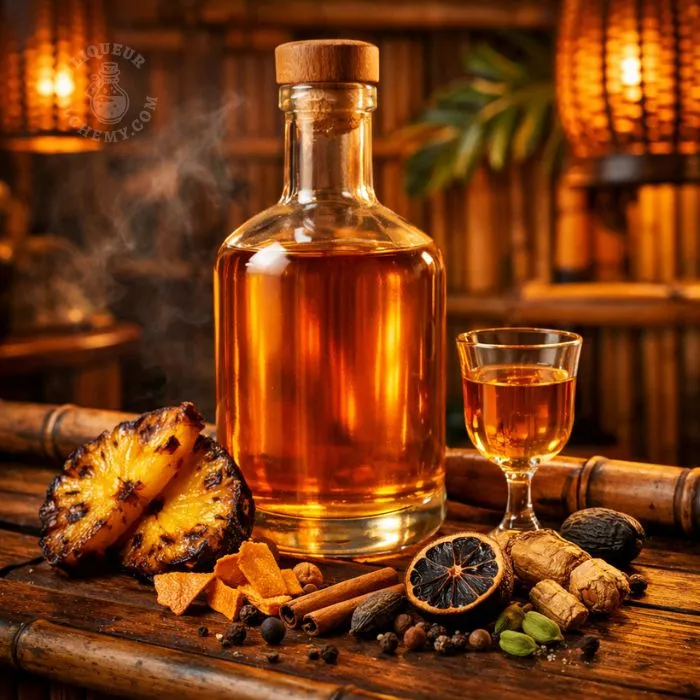
Ananas Fumé

Smoked Pineapple Liqueur with Orange Peel, Cardamom and Black Lemon

Ananas Fumé is a smoked pineapple liqueur infused with citrus peel, black lemon and aromatic spices. The profile balances caramelized tropical fruit with gentle smoke, dry citrus brightness and warm spice complexity. Smooth vodka carries the flavors, creating a layered liqueur that is both vibrant and contemplative.

Main notes

  • Vodka
  • Smoked Pineapple

Ingredients

  • Vodka – 1 L
  • Pineapple (smoked) – 750 g
  • Orange peel (dried) – 5 g
  • Black lemon (loomi) – ½ whole
  • Black cardamom – 1 pod
  • Cinnamon – 3 g
  • Allspice – 1.2 g
  • Dried ginger root – 1.5 g
  • Cloves – 2 whole
  • Green cardamom – 2 pods
  • Black peppercorns – 3

Preparation

  1. Cut the smoked pineapple into small chunks, keeping the charred edges for extra aroma.
  2. Lightly crush the black lemon (loomi) to expose the inner flesh.
  3. Crack the black cardamom pod and green cardamom pods gently.
  4. Break the cinnamon stick into smaller pieces.
  5. Add pineapple, orange peel, black lemon, cardamoms, cinnamon, allspice, ginger root, cloves and peppercorns to a large glass jar.
  6. Pour the vodka over the ingredients, ensuring everything is fully submerged.
  7. Seal the jar and shake gently. Store in a cool, dark place.
  8. Infuse for 5–7 days, tasting daily after day four to monitor spice intensity.
  9. Strain through a fine sieve, then filter through coffee paper for clarity. Bottle and rest for 2–3 weeks before serving.
Download

The Story

Ananas Fumé is a smoky tropical liqueur built around the deep aroma of fire-kissed pineapple. Inspired by evening markets and charcoal grills, the fruit is gently smoked before meeting vodka and a quiet chorus of spice. Orange peel brings brightness, black lemon adds dry citrus depth, while cardamom, cinnamon, ginger and pepper shape a warm aromatic backbone. The result is a layered spirit where sweetness, smoke and spice move together in balance. It opens with ripe pineapple and caramelized edges, then slowly reveals citrus bitterness and warming spice. Smooth yet intriguing, Ananas Fumé captures the feeling of tropical dusk—warm air, glowing embers and fruit slowly roasting over fire.

Who is "Ananas Fumé" Liqueur for?

Ananas Fumé is for curious drinkers who enjoy bold flavors and slow exploration. Perfect for those drawn to smoky aromas, tropical fruit and layered spice. It suits evening conversations, experimental palates and anyone who appreciates handcrafted spirits that reveal new notes with every sip.

"Ananas Fumé" Liqueur Serving Suggestions

Serve Ananas Fumé slightly chilled in a small liqueur glass to highlight its smoky pineapple aroma and warm spice finish. It works beautifully as an after-dinner sip or paired with dark chocolate desserts. For a lighter option, pour over ice and add a splash of soda to open the tropical notes.

Why the Name "Ananas Fumé"?

The name Ananas Fumé comes from the French words for pineapple and smoke. It reflects the heart of the liqueur: pineapple slowly kissed by smoke before being infused with citrus and spice. The name evokes a refined yet mysterious character, suggesting both tropical warmth and the darker aromatic depth created by fire.

Testing Notes

During testing, smoked pineapple quickly became the dominant aroma, so the spice levels were kept restrained to maintain balance. Black lemon proved especially effective for adding dry citrus depth without overwhelming the fruit. Infusion beyond seven days intensified cardamom and clove too much, so careful tasting from day four produced the best results.

Ananas Fumé Liqueur FAQ


If you cannot get black lemon, the best substitution is a restrained mix of dried orange peel and a very small amount of fresh lemon zest added early in the infusion. Black lemon gives dry citrus, slight bitterness and a deep, almost tea-like aroma, so replacing it with only fresh lemon can make the result too sharp and bright. A better approach is to combine dried citrus for structure with a little fresh zest for lift, then taste sooner because the replacement extracts faster than loomi.

For black cardamom, use a tiny amount of smoked tea, a fragment of extra cinnamon, or a very small pinch of clove plus green cardamom if you need to rebuild that dark aromatic depth. Green cardamom alone is not a direct substitute because it is fresher, sweeter and more floral, while black cardamom is drier, smokier and more rugged. If you replace black cardamom with more green cardamom, reduce the amount and shorten contact time so the liqueur does not become perfumed.

The most common mistake with substitutions is replacing missing ingredients one-for-one without considering extraction strength. Fresh zest, extra clove and extra ginger can quickly overpower smoked pineapple and flatten the tropical profile. When substituting, build in layers, strain earlier if the spice line starts dominating, and let the bottle rest for at least two weeks before judging the final balance because citrus bitterness and smoke edges soften with time.

View this Liqueur FAQ as a standalone page

For this combination, smoked pineapple usually has enough flavor in about 5 to 7 days, but the exact timing depends on how heavily the fruit was smoked, how small the pieces are, and how active the charred edges are in the jar. Start tasting from day 4 because pineapple releases fruit, smoke and acidity relatively quickly, especially when cut into small chunks. The goal is to capture ripe tropical body and gentle smoke before the darker spice notes move forward.

The first ingredients most likely to push the infusion too far are clove, black lemon, black cardamom and ginger root. These should be watched closely once the vodka has picked up strong pineapple aroma and a warm spice frame. If the liquid starts tasting woody, medicinal, dusty, or too dry on the finish, strain immediately even if the fruit itself could have gone longer. In many cases, the best result comes from removing the solids around day 5 or 6 and letting the strained liqueur settle rather than chasing more intensity in the jar.

A common recipe-specific mistake is assuming smoky fruit needs a long maceration to taste rich. In reality, extended contact can make the char feel ashy and can drag too much bitterness from peel, loomi and spice husks. Once strained, rest the liqueur for 2 to 3 weeks before making final adjustments because the smoke, citrus and spice line become more integrated during the finishing stage, often making a slightly sharp young infusion taste balanced later.

View this Liqueur FAQ as a standalone page

The best way to sweeten this style is gradually, using a light simple syrup added in small measured stages rather than a heavy syrup added all at once. Smoked pineapple already brings perceived sweetness, so too much sugar can blur the dry citrus, flatten the spice structure and make the smoky notes feel muddy. Add a little syrup, stir, wait, taste, and stop when the pineapple tastes rounder but the finish still feels dry enough to carry the orange peel and black lemon.

If the liqueur tastes too sharp or too smoky after straining, first let it rest before correcting it aggressively. A short resting period often softens the edges naturally, especially with black lemon, ginger and charred fruit. If it still feels too dry after resting, add sweetness in small increments; if it feels too sweet, balance it with a tiny amount of fresh vodka rather than more citrus or spice, which can disturb the profile and create a disconnected finish.

One of the biggest finishing mistakes is bottling immediately after straining and judging the final profile on the same day. This style improves with a 2 to 3 week rest in a cool, dark place, which helps the smoke settle into the pineapple instead of sitting on top of it. Store it tightly sealed away from heat and light, and if sediment appears after resting, refilter once for a cleaner texture and a more polished final bottle.

View this Liqueur FAQ as a standalone page

RALETED RECIPES OF LIQUEUR ALCHEMY


Explore more creations from Liqueur Alchemy that share similar flavours, techniques, or ingredients. These related recipes offer fresh ideas and inspired combinations to help you craft your next bold, homemade spirit.