Why Homemade Liqueurs Can Taste “Watered Down” After a Few Months?
“Time doesn’t dilute liqueur — it reshapes balance and perception.”
Many homemade liqueurs taste beautifully balanced when first bottled, then seem softer or “watered down” after a few months. In most cases, alcohol has not disappeared. What changes is the relationship between sweetness, acidity, aroma, and alcohol perception as the liqueur continues evolving in the bottle.
Slow processes such as alcohol integration, sugar inversion, ester formation, and mild oxidation can reduce sharpness and make fruit and sweetness feel more dominant. Understanding these changes helps you sweeten more carefully, judge aging more accurately, and correct batches that lose structure over time.
·
Home /
Knowledge Hub /
Why Homemade Liqueurs Can Taste “Watered Down” After a Few Months?
Time doesn’t dilute liqueur — it reshapes balance and perception.
Many home liqueur makers notice a strange shift after bottling. A fruit liqueur tastes balanced when it’s first finished: the alcohol feels supportive, the sweetness feels controlled, and the flavor has structure. Then, after a few months in storage, it starts to taste “watered down.”
What makes this confusing is that nothing obvious has happened. The fruit flavor is still present, the sweetness is still present, and there’s no sign of spoilage, fermentation, bubbling, haze, or pressure. Yet the alcoholic bite feels muted, as if the drink has been diluted.
This usually triggers a few big questions. Did alcohol evaporate through the bottle? Did something chemically remove ethanol from the mixture? Or was the liqueur oversweetened at the end, and time simply revealed it?
Liqueur Alchemy viewpoint: In most properly stored liqueurs, alcohol doesn’t vanish. The drink evolves, and your palate reads it differently as chemistry reshapes sweetness, acidity, aroma, and “heat.”
Alcohol does not vanish in a sealed bottle
If your liqueur is stored in sealed glass and left unopened, ethanol doesn’t meaningfully evaporate. At around 20% ABV, you’re also outside the comfort zone for fermentation, because most yeasts fail well below that range and bacteria are generally inhibited.
So if nothing leaked and nothing was added, the alcohol percentage is effectively the same as the day it was bottled. What changes is not the ABV, but the perceived balance between alcohol warmth, fruit intensity, sugar sweetness, and acidity.
In other words, “watered down” is often a sensory interpretation, not a physical event.
Alcohol integration and the softened burn
Freshly blended liqueurs often taste sharper than they will later, especially if syrup was added close to the finish. Early on, ethanol can feel separate from the rest of the liquid, which makes the alcohol seem more obvious and more “present.”
Over weeks and months, ethanol integrates into the overall matrix of sugars, acids, and aromatic compounds. This doesn’t remove alcohol; it smooths the sensation of alcohol. The same ABV can feel less hot, less spiky, and less aggressive.
That softening is one reason aged spirits feel smoother than young spirits. fruit liqueurs don’t age like whiskey in a barrel, but they do mellow. And when the burn fades, many people interpret the change as dilution.
1) A “young” liqueur can feel hotter than its ABV suggests.
2) A rested liqueur can feel gentler even when ABV is unchanged.
3) The smoother it gets, the easier it is to mistake that for weakness.
Sweeten conservatively. Your palate today isn’t your palate in 8 weeks.
Sugar inversion and rising sweetness
fruit liqueurs are naturally acidic because fruit contains carboxylic acids such as citric, malic, or tartaric acid. That acidity doesn’t just affect taste — it changes sugar behavior over time.
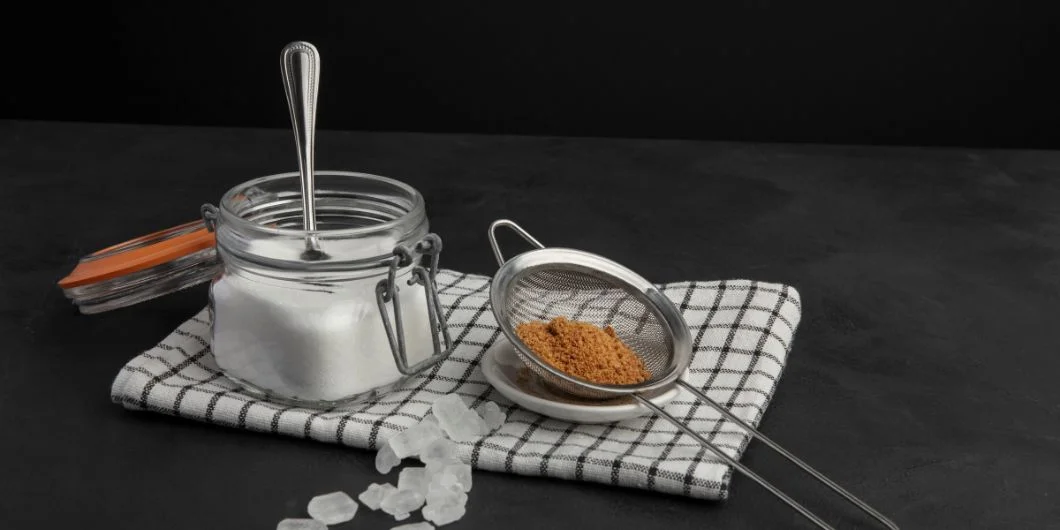
In acidic conditions, sucrose can slowly break down into glucose and fructose. This process is called inversion, and it matters because fructose in particular tastes sweeter than sucrose. The liqueur can become perceptually sweeter even though you didn’t add more sugar.
As sweetness rises, alcohol warmth becomes less noticeable. Alcohol is easiest to detect when a drink is relatively dry and bright. Increase sweetness and soften acidity, and the alcohol recedes into the background.
Practical takeaway: Sweetness often “creeps forward” with time. That’s why sweetening to the edge right after straining can become too much a month later.
Esterification and aroma development
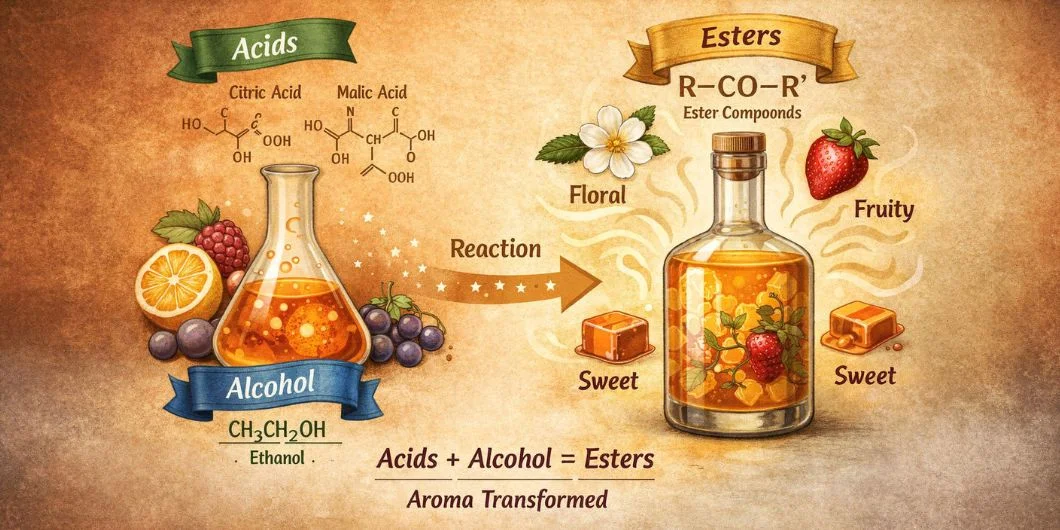
Alcohol and fruit acids can slowly react to form esters. In a lab this reaction is pushed with strong acids and heat. In a bottle at room temperature, it happens gradually over months.
Esters are powerfully aromatic. Many fruity, floral, candy-like, and creamy notes are ester-driven. As ester formation increases, the liqueur can smell more “fruit-forward” even as the palate feels smoother.
Two changes occur at the same time. Acidity is reduced as acids are converted, and aroma complexity increases as esters build. Lower acidity reduces sharpness, and higher aroma shifts attention away from ethanol warmth.
Acid decreases: the drink feels rounder and less “bright.”
Aroma increases: the fruit seems louder and more perfumed.
Perception shifts: alcohol feels less dominant, even if ABV is stable.
Oxidation in closed bottles
Even a closed bottle contains oxygen in the headspace. Over time, small oxidative reactions can subtly reshape the flavor. This isn’t spoilage — it’s slow, normal chemistry.
Oxidation can reduce bright top notes, soften some tannins or phenolics, and slightly flatten the “lift” that makes a liqueur feel vivid. Warm storage accelerates these changes, so a cupboard in a warm home will evolve faster than a cool cellar shelf.
Oxidation doesn’t remove alcohol, but it can reduce structure. When structure drops, alcohol feels less anchored and less noticeable.
The silent culprit: post-infusion over-sweetening
One of the most common real-world reasons for “watered down” liqueur is simply this: it was sweetened a little too much right after the infusion was strained.
Early on, alcohol bite is sharper. That sharpness can make the drink feel harsher than it will later, encouraging you to add more syrup until it tastes comfortable. But once the liqueur rests, alcohol integrates and sugar inversion increases perceived sweetness.
Weeks later, you may end up with a liqueur that is sweeter than the alcohol can carry. The result isn’t truly diluted — it’s just unbalanced. Fruit and sweetness dominate, and ethanol support becomes quiet.
Rule of thumb: If you sweeten “perfectly” on day one, it can be too sweet by week six. Leave yourself room.
Does aging improve or soften liqueurs?
Both outcomes are possible, depending on the ingredients and the build. Some liqueurs improve dramatically with time because ester formation and integration create a smoother, richer profile. Classic examples include deeply colored fruit liqueurs and high-tannin berries.
Other liqueurs can lose brightness. Delicate fruits, fresh citrus, and very floral profiles may flatten or shift in a direction that feels less energetic. This isn’t wrong — it’s just evolution.
Whether aging helps depends on fruit type, sugar level, acidity, alcohol percentage, oxygen exposure, and storage temperature.
Acids and alcohol slowly form esters, shifting aroma forward and heat backward.
Can you add alcohol later?
Yes. Blending is a legitimate method, and it’s often the simplest fix when a liqueur has become too sweet or too soft after resting.
The best approach is to add alcohol in small steps. A small increase can shift the balance quickly, and the mixture should be allowed to rest again so it reintegrates before you judge it.
1) Add a small measured amount of vodka/rum (start low).
2) Stir or shake gently to homogenize.
3) Rest for 7–14 days, then re-taste before adjusting again.
Tip: If you can, write down batch volumes. Corrections are easier when you can repeat them.
Restoring structure without increasing ABV
Sometimes the liqueur doesn’t need more alcohol — it needs more structure. Structure is the contrast that keeps sweetness and fruit from feeling flat. It often comes from acidity, bitterness, tannin, and spice.
A small addition of acid (such as citric or malic, diluted and added carefully) can restore brightness. A bitter citrus tincture can bring back a firm finish. A short spice re-infusion can add backbone and reintroduce complexity.
The goal is not to make the liqueur harsher. The goal is to bring back tension so the alcohol feels supportive again.
The real lesson
What feels like dilution is usually evolution. Fruit acids convert. sugars shift in sweetness. esters form. oxidation softens edges. alcohol integrates. the sensory spotlight moves.
Homemade liqueurs are not static liquids. They’re living chemical systems that continue changing long after bottling, especially in warm storage.
The craft lesson is simple: measure when you can, sweeten conservatively, rest before final decisions, and accept that “smooth” can feel like “weaker” even when the ABV is unchanged.
Mastery mindset: Alcohol rarely disappears. Balance changes — and once you understand why, you can control it.
FAQ - Frequently Asked Questions
In a properly sealed glass bottle, alcohol loss is usually tiny. Ethanol is volatile, but it can’t “escape” in meaningful amounts unless there’s a weak seal, a compromised cap, a porous closure, or temperature cycling that pumps vapors in and out. If you’re using cork, low-quality swing-tops, or reused caps, you’re more likely to see gradual vapor exchange.
What people often experience is not evaporation but aroma changes. Over time, the sharp alcoholic smell can reduce and fruit/spice notes can oxidize or shift, so the liqueur seems less boozy even though the ABV hasn’t moved much.
To minimize risk: use new caps or quality swing-top gaskets, store upright (especially for high-sugar liqueurs), keep bottles cool and away from sunlight, and reduce headspace. If you suspect a leaky seal (sticky neck, lowered fill line, oxidized taste), re-bottle into a fresh sanitized bottle with a reliable closure.
That “bite” is a mix of ethanol volatility, sharp aromatics, and trigeminal sensations (the same system that feels chili heat). When a liqueur is fresh, alcohol-driven notes are loud and pointy; with time, volatile compounds redistribute, harsh edges soften, and the spirit feels more integrated.
Sugar also plays a role: sweetness can mask burn, and as flavors marry, the balance shifts toward roundness. In fruit liqueurs, pectin, acids, and extracted compounds settle into a smoother profile, which can make the same ABV feel noticeably gentler.
This is usually a good sign — “mellowing” is the point of aging. If it becomes too soft, you can restore liveliness by adding a small amount of high-proof base spirit, brightening with a tiny acid addition, or re-infusing briefly with citrus peel or a light spice to bring back lift and definition.
Sugar doesn’t chemically “become sweeter” in the bottle under normal conditions, but your tongue can perceive it that way. As sharp alcohol notes and bright acids soften over time, sweetness can move forward in the flavor balance. The same grams of sugar can taste more prominent when the counterweights fade.
Fruit liqueurs also shift aromatically: fresh, zesty top notes can diminish and deeper, jammy notes can grow. When brightness drops, the profile can read as sweeter and heavier, even if nothing changed analytically.
If an aged liqueur starts tasting too sweet, you have options: add a small amount of neutral spirit to thin sweetness while keeping strength, add a tiny amount of acid (citric/lemon) to restore snap, or blend with a drier batch. Going forward, aim for balance at bottling — not just “sweet enough” but also enough acidity/spice/citrus to hold the structure over time.
If you add too much syrup, the liqueur can taste diluted immediately — but it can also feel “more diluted” later as it ages. That’s because sweetness and water can mask intensity, and as the alcohol bite and bright aromatics mellow, there’s less structure left to balance the syrupy body.
Another factor is expectation: a fresh, boozy liqueur can carry extra sweetness because the sharpness fights back. Months later, once the edges soften, the same sweetness can dominate and the drink reads as flatter and weaker.
The fix is usually structural: adjust with a measured addition of base spirit to bring ABV and backbone up, or blend with an unsweetened/high-proof concentrate of the same infusion. For future batches, sweeten in stages, rest a few days, then taste again before bottling — it’s much easier to add syrup than to remove it.
Yes — you can adjust a liqueur after aging, and it’s a common way to restore backbone. Adding the same base spirit (or a neutral spirit that won’t fight the flavor) can lift structure, reduce cloying sweetness, and sharpen definition. The key is to do it gradually and keep notes so you don’t overshoot.
Make small, measured trials first: pull a 100 ml sample, add 2–5 ml spirit, taste, then scale up if it’s right. Remember that adding alcohol can initially make aromas feel more volatile; give the adjusted batch at least a few days (sometimes a couple of weeks) to re-integrate.
If your liqueur is already beautifully aromatic but just “too soft,” consider alternatives before a big ABV jump: a tiny acid addition, a pinch of salt, or a short re-infusion with peel/spice can restore snap with less impact on balance. When you do add alcohol, re-check sweetness afterward — the perception will shift.
Discover more guides, techniques, and ingredient insights from the Liqueur Alchemy Knowledge Hub. Explore articles that explain the science of flavor extraction, balance sweetness and alcohol, and help you craft better homemade liqueurs with confidence and creativity.