Why does pineapple liqueur with black pepper sometimes turn bitter or too sharp?
Troubleshooting Common Homemade Liqueur Problems and Fixes
Direct Answer
Bitterness or sharpness usually comes from over-extraction, too much crushed spice, or lime pith. Taste early, strain on time, and keep the pepper and zest under control.
Expanded Explanation
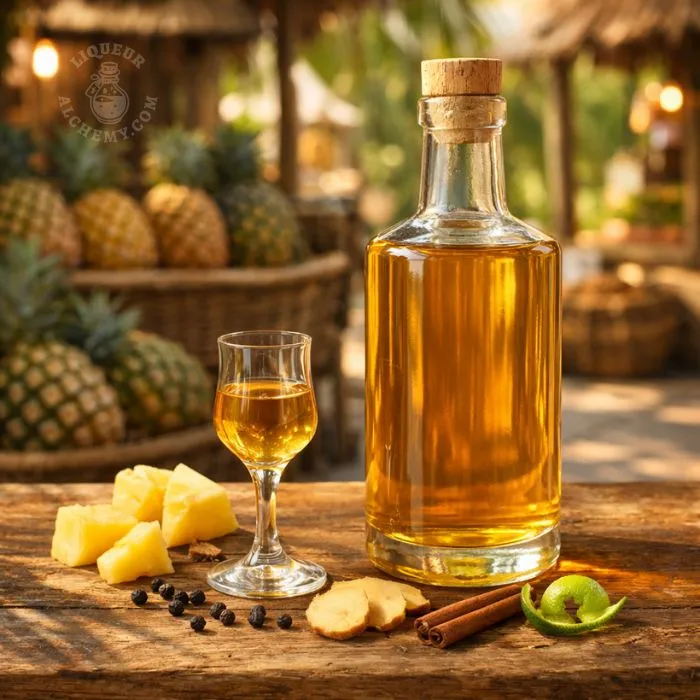
The most common reason is over-extraction. Pineapple, black pepper, ginger, cinnamon, and lime zest all release different compounds at different speeds, and if they remain in alcohol for too long, the result can shift from bright and warming to sharp, woody, or bitter. Lime pith is a frequent hidden problem, because even a small amount of white pith can add an unpleasant edge during maceration.
Another cause is using too much crushed pepper or breaking the spices down too finely. Light crushing is enough to open the peppercorns, but heavy crushing exposes more surface area and speeds up extraction fast. The same principle applies to cinnamon and ginger. If the ingredients are damaged too aggressively, the liqueur can gain heat and roughness before the pineapple has fully settled into balance.
To avoid this, use only the zest and not the pith, crush the peppercorns lightly, and start tasting before the two-week mark is over. If the batch already tastes too sharp after straining, a short resting period can soften it slightly. In some cases, a small increase in sugar can also round the edges, but this works best only after the harsh ingredients have been removed.