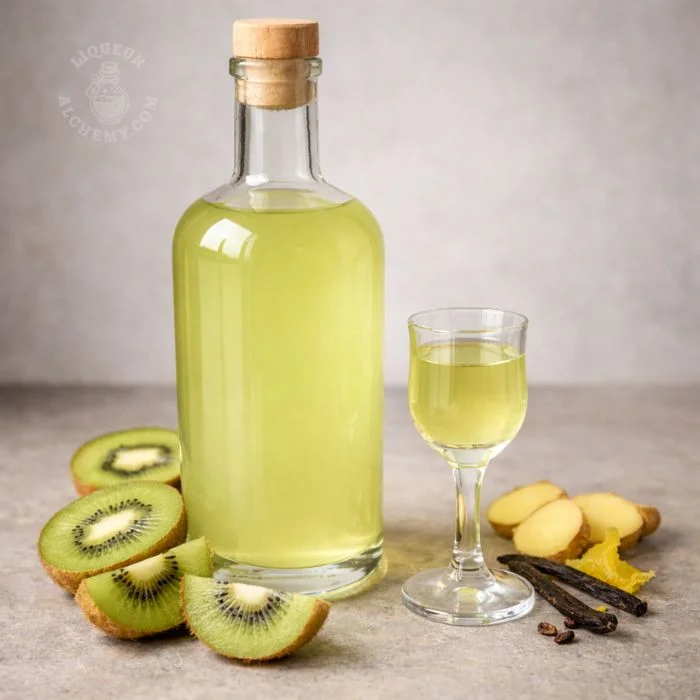
Why does a kiwi liqueur turn cloudy, thick, or slightly muddy after straining and sweetening?
Troubleshooting Common Homemade Liqueur Problems and Fixes
Direct Answer
Cloudiness usually comes from kiwi pulp, over-pressing, or sweeteners revealing suspended solids, and it improves with settling and slower fine filtration.
Expanded Explanation
Kiwi contains a lot of fine pulp, fruit solids, and natural compounds that easily pass through a coarse sieve. Even when the liquid looks fairly clean at first, it can become cloudy again after sugar, honey, and lemon juice are added. Sweeteners slightly change the structure of the liquid, and suspended particles that seemed minor during straining can suddenly become more visible, giving the liqueur a muddy or hazy appearance.
Another common cause is pressing the fruit too hard. A light press helps recover flavour, but heavy squeezing forces out excess pulp that is difficult to remove later. Over-crushing at the start can make the problem worse, because the kiwi breaks down too much during maceration. Honey can also add a faint haze if it is not fully dissolved, especially in a cooler room where it blends more slowly into the strained spirit.
The best fix is patience and layered filtration. Let the strained liquid settle, then pass it through cloth or a coffee filter more than once if needed. It also helps to dissolve sweeteners thoroughly before bottling. A slight haze is not a flaw in a fruit liqueur, but careful handling at the crushing, straining, and finishing stages will produce a cleaner and more polished result.