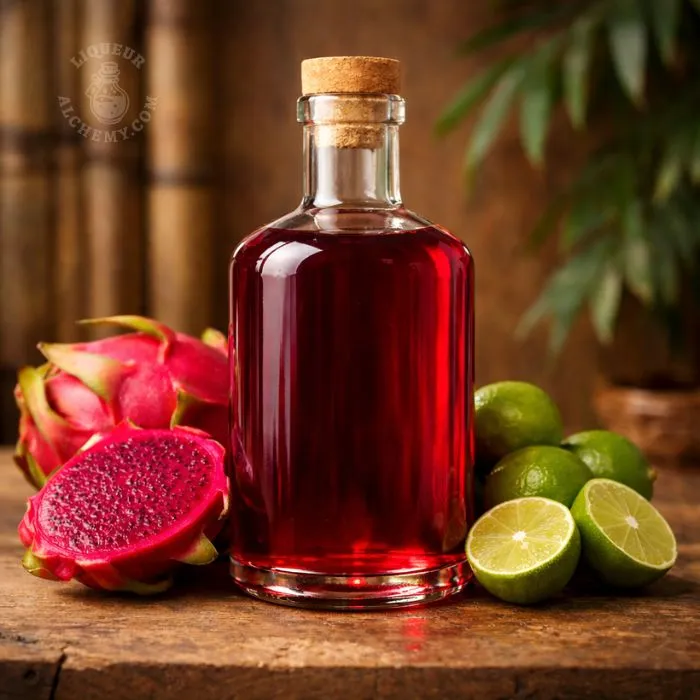
Why does a dragon fruit and key lime liqueur turn bitter or thin after infusion?
Troubleshooting Common Homemade Liqueur Problems and Fixes
Direct Answer
Bitterness usually comes from lime peel or pith extracting too long, while a thin result often comes from dragon fruit’s delicate flavour and insufficient body or resting time.
Expanded Explanation
The most common cause of bitterness is excessive contact with citrus peel, especially when too much white pith is included or the halved key limes are left in too long. Rice spirit extracts peel compounds efficiently, and what begins as bright citrus can quickly become sharp, bitter, or drying. This is even more noticeable in a recipe built around delicate fruit, because dragon fruit does not have the intensity to hide those rough edges.
A thin result usually comes from the opposite problem: not enough body to support the acidity and aromatics. Dragon fruit is naturally subtle, so if the fruit quantity is too low, the honey too restrained, or the liqueur is bottled before resting, the final flavour can feel watery even when the alcohol level is correct. The ingredients may be present, but the mid-palate will seem hollow.
To avoid both issues, keep the zest clean, watch the citrus timing carefully, and do not rush the finishing stage. A small amount of honey helps round the texture, while proper resting allows the sharp lime top notes to settle into the fruit and spirit. Good filtering also matters, because suspended pulp and peel fragments can continue extracting bitterness after the main infusion has been strained.