Why can fennel and coriander make a fruit liqueur taste too heavy or medicinal?
Troubleshooting Common Homemade Liqueur Problems and Fixes
Direct Answer
Fennel and coriander can turn heavy or medicinal when crushed too finely or left to infuse too long. Light cracking and regular tasting keep the spice layer supportive rather than dominant.
Expanded Explanation
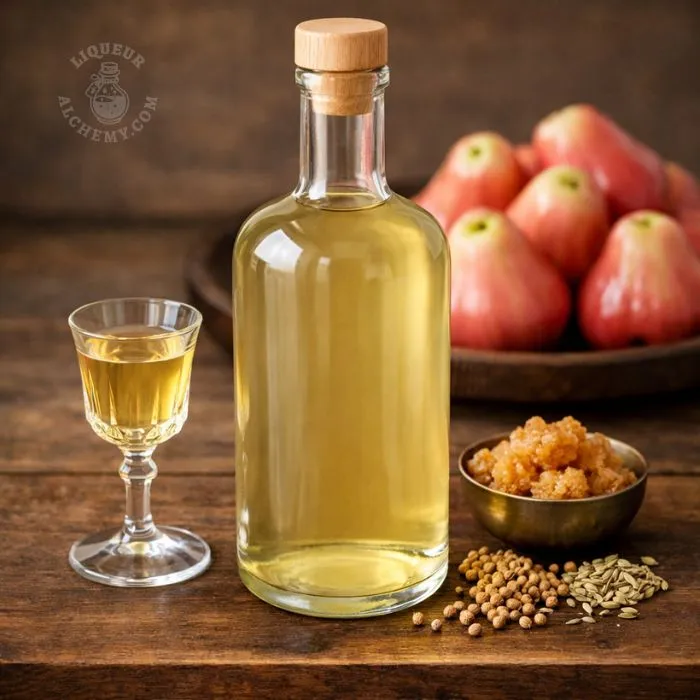
Fennel and coriander are useful here because they connect beautifully with gin, but both can become intrusive if handled too aggressively. Fennel brings sweet-anise lift and coriander adds citrusy spice, yet when over-extracted they can push the drink away from crisp fruit and into a denser, more medicinal territory. This is especially noticeable in recipes built around delicate produce such as rose apple.
One common mistake is crushing the seeds too finely or using pre-ground spices. Fine particles release flavour very fast, create extra sediment and make it harder to stop extraction at the right moment. Another mistake is extending the maceration too long in the hope of boosting fruit intensity, which often does the opposite by letting the spice fraction dominate the jar.
To avoid this, lightly crack the seeds rather than grinding them to powder, and keep tasting through the infusion period. If the nose begins to lean toward anise, woody citrus peel or a dry spice cabinet note instead of fresh green fruit, strain immediately. A restrained seed extraction gives structure, while an excessive one can flatten the fruit and harden the finish.