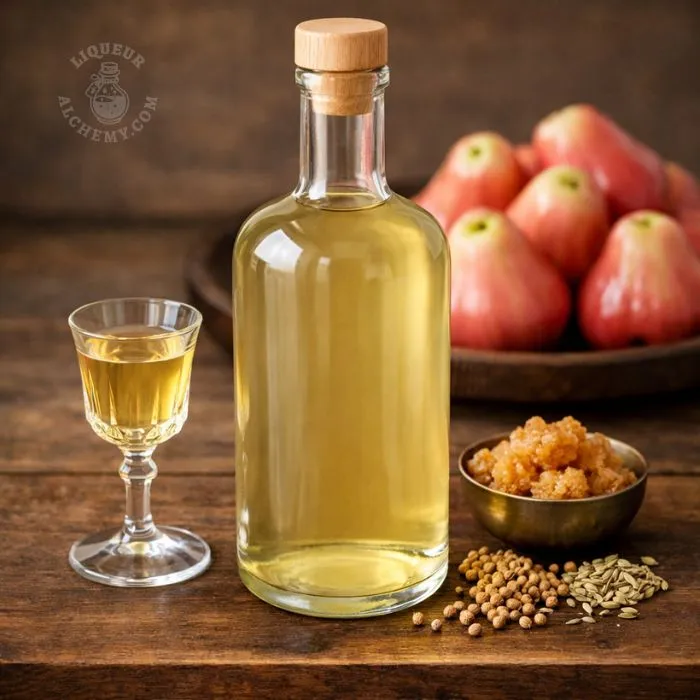
How do you adjust sweetness without hiding the fresh rose apple character?
Flavor Balance and Texture in Homemade Liqueurs
Direct Answer
Add jaggery after straining and adjust gradually so the sweetness supports rather than hides rose apple. Rest the liqueur before making a final correction, because sweetness integrates over time.
Expanded Explanation
The key is to treat sweetness as a structural adjustment rather than a main flavour. Rose apple has a gentle, watery, green-fruity profile that disappears easily under too much sugar, especially when the base is already aromatic from gin, fennel and coriander. The goal is not to make the liqueur obviously sweet, but to round the edges and carry the fruit longer across the palate.
Jaggery should be added only after straining, which is exactly right for this recipe because it lets you control the final balance more precisely. Start by dissolving the full measured amount only if you want a warmer, richer style; otherwise reserve part of it, mix, taste, and then decide whether more is needed. If the finish feels sharp or thin, a little more sweetness can help, but if the fruit starts tasting muted or syrupy, you have gone too far.
Let the sweetened liqueur rest for at least a few days before making a final judgment. Freshly dissolved sweetener can make the liquid seem heavier than it will taste after integration. Many makers correct too early and oversweeten, when in reality the flavours simply needed time to settle and come back into balance.