How can I adjust the sweetness without hiding the pineapple and pepper balance?
Flavor Balance and Texture in Homemade Liqueurs
Direct Answer
Sweeten after straining and taste before using the full sugar amount. Too much sugar can flatten the pineapple, mute the pepper, and make the liqueur feel heavy.
Expanded Explanation
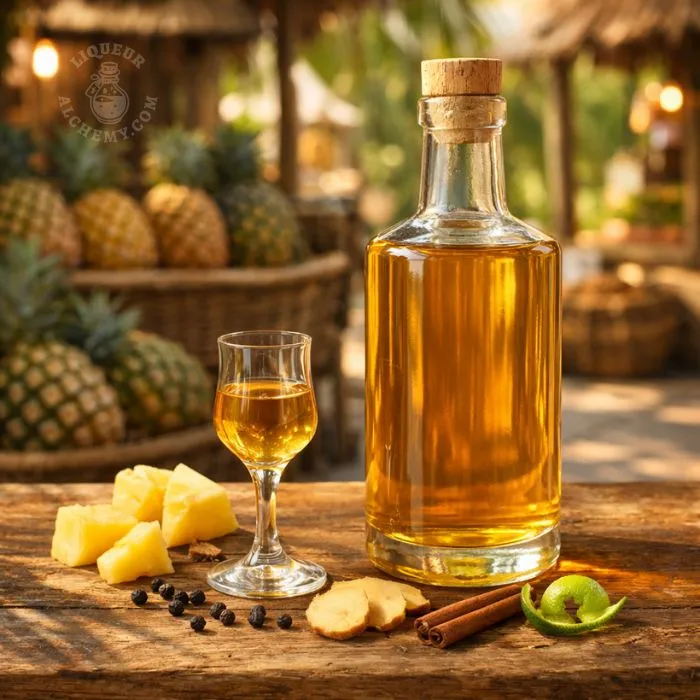
This recipe works best when the sugar supports the pineapple rather than turning it into a syrupy dessert liqueur. The listed amount of cane sugar gives a balanced result for many batches, but pineapple sweetness varies a lot depending on ripeness. A very sweet fruit may need less sugar, while a sharper or less ripe pineapple may benefit from a little more to smooth the finish.
The safest way to control balance is to add sugar after straining, then taste before deciding whether the full amount is needed. Black pepper, ginger, and lime zest all create lift and structure, so over-sweetening can flatten that contrast and make the liqueur feel heavy. If the batch tastes lively and aromatic, do not assume it needs more sugar just because the fruit note is bright rather than confectionery.
If the finished liqueur feels too sharp, increase sweetness gradually in small steps and mix thoroughly before tasting again. If it feels too sweet, chilling it well can improve the perception of balance, but long term the better fix is starting with less sugar next time. For this style, the best result is usually a finish that stays juicy, warm, and lightly spiced rather than thick and sugary.