Can I use fresh or canned pineapple, and what changes in the finished liqueur?
Ingredients and Sweeteners That Shape Liqueur Flavor
Direct Answer
Fresh pineapple gives a brighter, cleaner liqueur, while canned pineapple creates a softer, sweeter, more cooked fruit profile. If canned fruit is used, reduce sugar and taste carefully before finishing.
Expanded Explanation
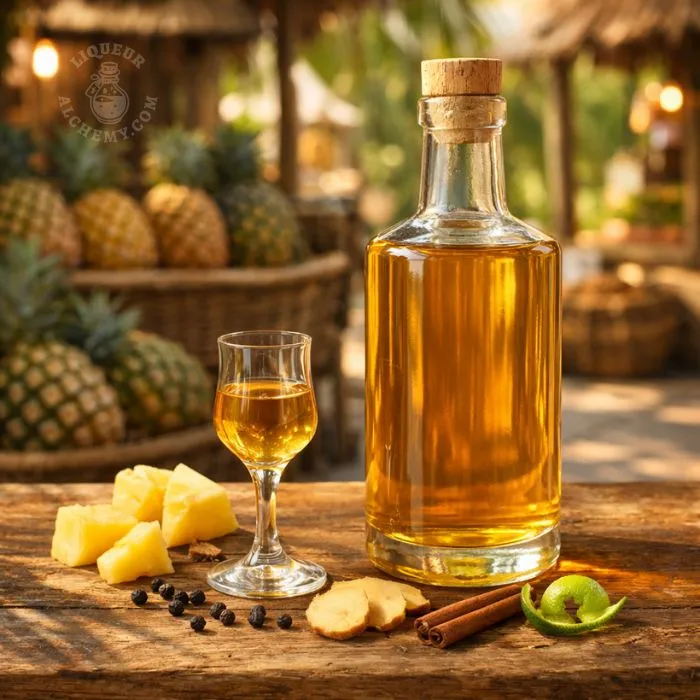
Fresh pineapple is usually the better choice for this recipe because it gives a brighter aroma, a cleaner tropical profile, and a more natural balance between sweetness and acidity. It also works especially well with black pepper, ginger, cinnamon, and lime zest, because those supporting ingredients stay clearer and more defined when the fruit tastes fresh rather than cooked or syrupy.
Canned pineapple can still be used if that is what you have, but it will usually make the liqueur softer, sweeter, and slightly heavier in character. If the fruit is packed in syrup, it may also push the final drink toward a jammy or dessert-like direction, which can reduce the crisp contrast that black pepper and lime zest are meant to provide. Pineapple in juice is a better backup than pineapple in heavy syrup.
If using canned pineapple, reduce the cane sugar at the start or sweeten only after straining and tasting. You may also want to shorten the maceration slightly if the canned fruit already tastes very soft and processed. The cleanest result for this particular recipe still comes from ripe fresh pineapple cut into chunks and infused until the fruit is expressive but not tired.