
Plum Rumble

Dark Rum Prune Plum Liqueur with Cacao, Coffee and Muscovado Sugar

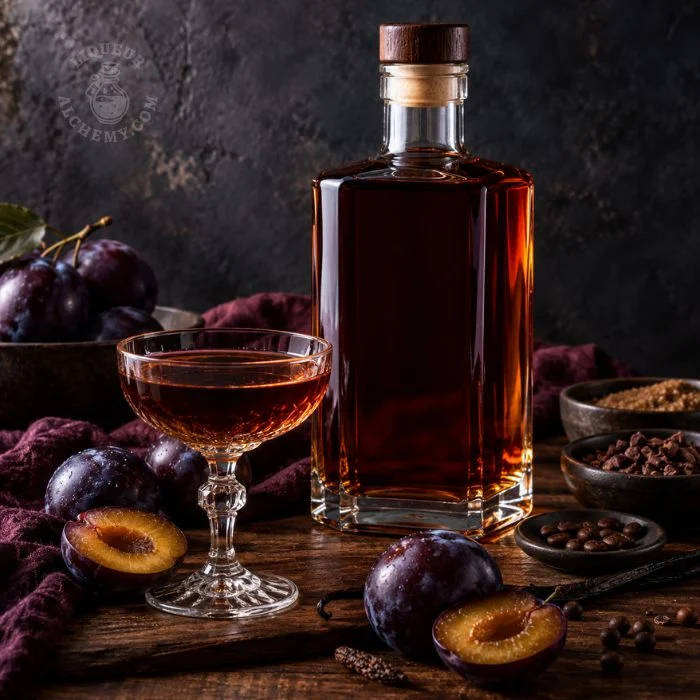
Plum Rumble is a deep, full-bodied prune plum liqueur built on dark rum. Muscovado and coconut sugar give it caramel depth, while cacao nibs and coffee contribute roasted bitterness. Vanilla and allspice provide warmth, with long pepper adding a subtle aromatic heat to the rich, dark-fruit finish.

Main notes

  • Dark Rum
  • Prune Plums

Ingredients

  • Dark Rum — 700 ml
  • Prune Plums — 700 g
  • Muscavado Sugar — 130 g
  • Coconut Sugar — 50 g
  • Cacao Nibs — 12 g
  • Coffee Beans (Black) — 8 beans
  • Vanilla — ¼ pod
  • Allspice — 3 berries
  • Long Pepper (Pippali) — 1 pepper

Preparation

  1. Sort the prune plums carefully, discarding any damaged fruit, then rinse gently and dry thoroughly.
  2. Cut the plums in half, remove the stones, and roughly quarter the larger pieces to expose more flesh.
  3. Place the prepared plums in a large sterilised glass jar and add the muscovado sugar and coconut sugar.
  4. Add the cacao nibs, coffee beans, split vanilla pod, lightly crushed allspice berries and half a small long pepper.
  5. Pour in the dark rum, making sure the fruit and aromatics are well covered, then seal the jar tightly.
  6. Store in a cool, dark place for 5 weeks, gently turning the jar every few days during the first two weeks to help dissolve the sugars.
  7. Taste periodically from around the second week. Remove the coffee, long pepper or other spices early if their roasted or spicy character begins to dominate the plum.
  8. When the flavour is rich and balanced, strain through a fine sieve, then filter again through muslin or a fine filter to remove fruit sediment and cacao particles.
  9. Bottle the finished liqueur and allow it to rest for at least 4 weeks before serving, giving the rum, plum, cacao and spice flavours time to integrate.
Download

The Story

Plum Rumble began with prune plums collected from my auntie’s garden, where the fruit ripens into deep purple sweetness at the end of summer. Their rich, slightly tart character called for something darker than vodka, so dark rum became the foundation. Muscovado and coconut sugar deepen the natural plum flavour with notes of molasses and caramel, while cacao nibs and black coffee beans bring roasted bitterness. Vanilla softens the edges, allspice adds warmth, and long pepper leaves an intriguing aromatic heat. The result is a dark, full-bodied liqueur where ripe garden plums meet rum, cacao and coffee in a slow, warming rumble.

Who is "Plum Rumble" Liqueur for?

Plum Rumble is for adventurous slow sippers who enjoy dark fruit, roasted flavours and warming spice. Its combination of prune plum, rum, cacao and coffee suits curious palates, relaxed evenings and anyone drawn to liqueurs with a deeper, less conventionally sweet character.

"Plum Rumble" Liqueur Serving Suggestions

Serve Plum Rumble slightly chilled or at cool room temperature in a small liqueur or tasting glass. It is especially suited to after-dinner sipping, when its ripe plum, dark rum, cacao, coffee and gentle peppery warmth can unfold slowly.

Why the Name "Plum Rumble"?

The name Plum Rumble reflects the liqueur’s combination of familiar plum sweetness and darker flavours moving underneath it. Prune plums provide the first juicy impression, followed by waves of rum, molasses-like muscovado, cacao and roasted coffee. Allspice and long pepper add a final warm vibration. “Rumble” captures that gradual progression: deep, slightly unruly and full of character rather than polished into simple sweetness.

Testing Notes

The main balance to watch is between the prune plums and the roasted ingredients. Coffee can become dominant surprisingly quickly, while cacao develops more gradually. Long pepper should remain a background warmth rather than obvious heat. Taste during infusion and remove individual aromatics when necessary. Additional resting should soften sharper roasted notes and integrate the sugars.

Plum Rumble Liqueur FAQ


Muscovado and coconut sugar are important because they reinforce the dark rum and prune plum character without making the liqueur taste simply sugary. Muscovado brings molasses, caramel and slight bitterness, while coconut sugar adds a softer toasted sweetness. Replacing both with white sugar will produce a cleaner but noticeably lighter flavour profile.

If substituting, dark brown sugar is the closest replacement for muscovado, while light brown sugar can replace coconut sugar. Keep the total sugar weight close to the original 180 g, but remember that different sugars vary in intensity. Honey can be used for part of the sugar, although too much may soften the roasted cacao and coffee notes.

When changing sweeteners, start slightly lower than the full amount and adjust after filtration. The prune plums contribute natural sweetness during maceration, so judging the final balance before the fruit has infused can lead to an overly sweet result.

Prune plums usually benefit from a longer infusion than the stronger aromatics. A total maceration of about four to six weeks gives the rum time to extract the fruit's deep colour, acidity and dried-fruit character. The jar should be kept in a cool, dark place and gently turned during the early stages to help dissolve the sugars.

Coffee beans, long pepper and allspice should be monitored much earlier. Begin tasting after seven to ten days because roasted coffee and pepper can move from subtle to dominant quickly. Cacao nibs and vanilla are generally slower and can often remain longer, although their intensity should still be checked regularly.

There is no need to remove every ingredient at the same time. If one aromatic reaches the desired strength first, strain it out and allow the plums and milder ingredients to continue infusing. This staged approach gives much better control over the final balance.

Excess bitterness usually comes from leaving coffee beans, cacao nibs or long pepper in the rum for too long. Dark rum already contains roasted, caramelised notes, so these ingredients can build on each other quickly. If the plum flavour seems buried beneath coffee or cacao, the aromatics have probably extracted beyond the intended level.

Remove the strongest ingredients immediately and strain the liqueur if necessary. Do not try to correct heavy bitterness by adding a large amount of sugar at once, because that can make the drink simultaneously bitter and cloying. A small addition of simple syrup or a little extra plum infusion can soften the edges more naturally.

Resting also helps. After filtration, give the liqueur several weeks in the bottle before making major corrections. Sharp coffee, cacao and spice notes often integrate with the fruit and rum over time, producing a rounder and less aggressive finish.

The best time to judge sweetness is after the main infusion has been strained. Prune plums release both sugar and acidity, while cacao, coffee and dark rum contribute bitterness, so the liqueur can taste less sweet during maceration than it will after resting. Adding extra sugar too early is a common cause of an overly heavy finish.

If the finished liqueur is too dry, prepare a small amount of simple syrup and add it gradually, tasting after each addition. For a darker flavour, a syrup made with brown sugar can work well, but it should not overpower the plum. If the liqueur is too sweet, a small amount of additional unsweetened rum can restore balance.

After every adjustment, allow the bottle to rest for several days before judging again. Sweetness, alcohol warmth and roasted flavours change as they integrate, and a correction that seems too small immediately may become sufficient after a short settling period.

After filtration, the liqueur should ideally rest for at least three to four weeks before drinking. Freshly strained batches can taste disjointed, with coffee, cacao, pepper and rum appearing as separate layers. Bottle ageing gives these stronger flavours time to merge with the prune plum and dark sugars.

Store the finished liqueur in clean, tightly sealed glass bottles in a cool, dark cupboard away from direct sunlight and large temperature changes. Because the fruit solids have been removed and the base is high-proof rum, refrigeration is normally unnecessary. A small amount of fine sediment may settle naturally over time.

For the cleanest finish, filter again before bottling if the drink remains cloudy or contains cacao particles. Once opened, keep the bottle well sealed and avoid introducing water or food particles. Properly filtered and stored, the flavour should remain stable for a long period and may continue to soften with age.

RALETED RECIPES OF LIQUEUR ALCHEMY


Explore more creations from Liqueur Alchemy that share similar flavours, techniques, or ingredients. These related recipes offer fresh ideas and inspired combinations to help you craft your next bold, homemade spirit.