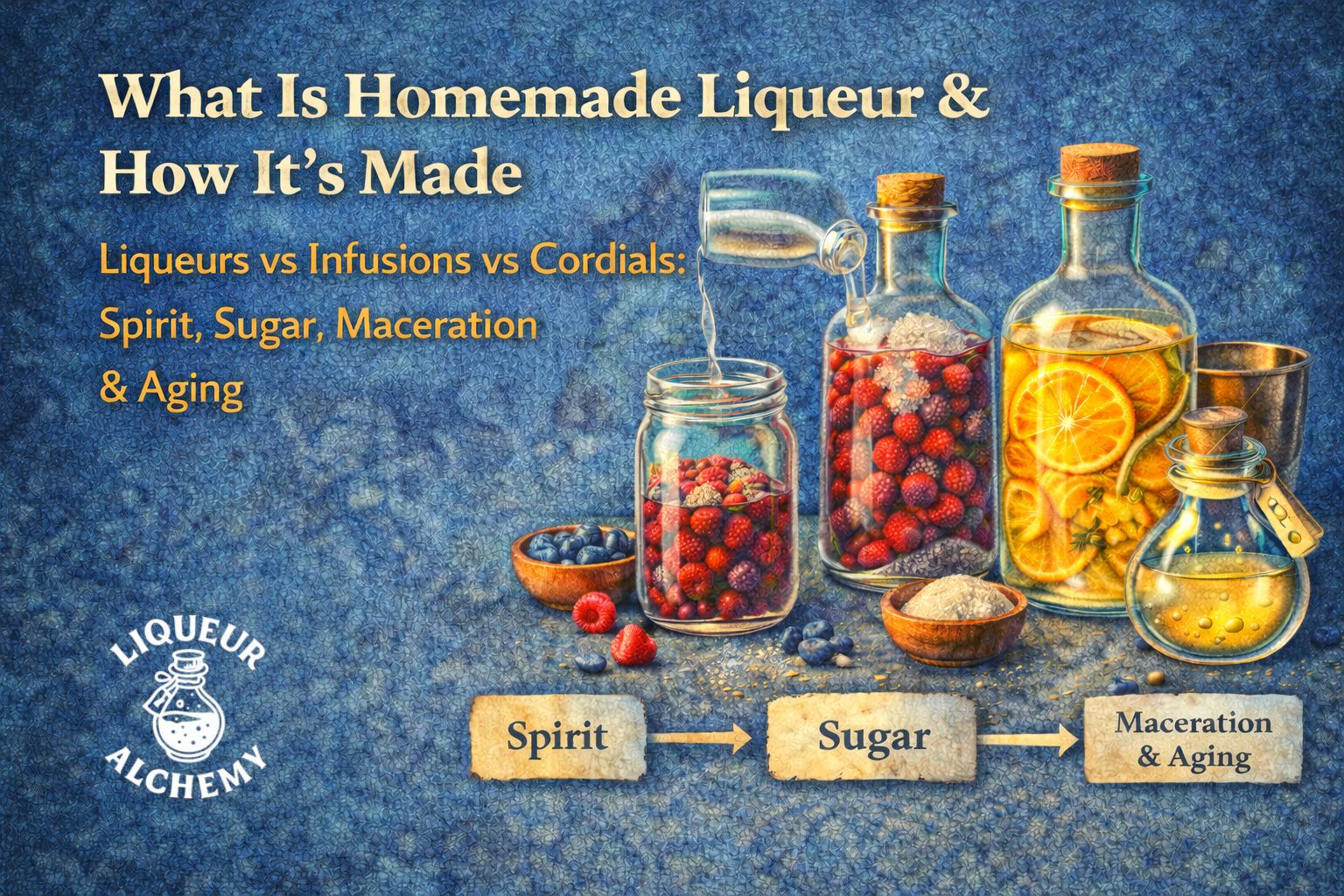
Homemade liqueur making is one of the most rewarding ways to explore flavor, aroma, and creativity through alcohol. With the right base spirit, carefully chosen ingredients, and a clear understanding of extraction, balance, and ageing, beginners can create bottles that feel personal, refined, and full of character. This guide explains the practical foundations of liqueur making in a way that is structured, approachable, and useful from the very first batch.
Inside this starter guide, you will learn how liqueurs work, which tools and jars to use, how different alcohol bases behave, and how fruits, vegetables, herbs, spices, nuts, seeds, and sweeteners shape the final result. It also covers safety, shelf life, filtering, bottling, and common mistakes, while giving you simple starter recipes to build confidence and begin your own liqueur alchemy journey.
On this page
Liqueur alchemy is the craft of transforming alcohol, ingredients, and sweetness into a balanced flavored spirit. At its core, homemade liqueur making is a simple process: flavor ingredients are infused into alcohol, sweetness is added to shape the taste, and the mixture rests until the flavors integrate.
The craft blends culinary creativity with extraction science. Fruits release acids and aromatic oils, spices provide volatile compounds, herbs contribute bitter and green notes, while sugars soften alcohol and bind flavors together.
Liqueur Alchemy viewpoint: A liqueur is not simply sweet alcohol. It is a balanced composition where aroma, sweetness, and structure work together.
Liqueur making rewards patience. Most infusions require days or weeks, and aging improves many styles. Expect experimentation, adjustments, and occasional surprises.

Nearly every homemade liqueur follows a simple structure composed of four essential elements: alcohol, flavor, sweetness, and time. When these components are balanced correctly, they produce a drink that is aromatic, smooth, and cohesive rather than harsh or overly sugary. Understanding how these elements interact is the key to successful liqueur making.
The process may look simple, but small adjustments in ingredients, alcohol strength, or sweetness can dramatically change the final result. A well-crafted liqueur allows the main ingredient to shine while supporting notes add depth and complexity.
Alcohol dissolves aromatic oils, acids, and flavor compounds from ingredients through a process called maceration. As ingredients sit in the spirit, the alcohol gradually pulls these compounds into solution. The strength of the alcohol, the size of the ingredients, and the infusion time all influence how efficiently flavors are extracted.
High-proof alcohol extracts flavors quickly but may pull harsher compounds if left too long, while lower-proof spirits create gentler, softer infusions. Finding the right balance between strength and time is one of the practical skills of liqueur making.
Sugar plays a structural role in liqueurs beyond simple sweetness. It reduces perceived alcohol heat, enhances aroma perception, and adds body to the liquid. This is why a properly balanced liqueur feels smooth and rounded rather than sharp or watery.
Different sweeteners also influence flavor. White sugar provides clean sweetness, honey introduces floral notes, while brown sugar, jaggery, or palm sugar contribute caramel or molasses tones that can complement darker spirits and spices.
While some liqueurs focus on a single ingredient, many of the most interesting examples rely on layered flavors. A fruit base may be supported by subtle spices, citrus peel for brightness, herbs for freshness, or vanilla for warmth and roundness.
This layered approach creates depth and complexity, allowing the liqueur to evolve on the palate. The goal is not to overpower the main ingredient but to build a balanced profile where each component contributes to the overall harmony of the drink.
Homemade liqueur making does not require a professional distillery or specialized equipment. Most beginners can start with a few reliable kitchen tools, provided they are clean, practical, and suitable for working with alcohol, fruit, herbs, spices, sugar, and glass bottles. Good equipment does not create flavor by itself, but it makes the process safer, cleaner, and easier to repeat.
The purpose of these tools is simple: hold ingredients securely during infusion, allow accurate measuring, support clean filtering, and make bottling straightforward. When your setup is organized, you can focus on flavor, balance, and timing rather than dealing with spills, sediment, or unclear measurements.
Precision and cleanliness play an important role in homemade liqueur making. A jar that seals properly protects the infusion and prevents aroma loss, while proper filtering improves clarity and texture. Measuring tools allow you to repeat successful recipes and refine them over time.
Organized equipment also supports experimentation. When your tools are reliable and your measurements consistent, you can test different ingredients, alcohol bases, and sweeteners with confidence.
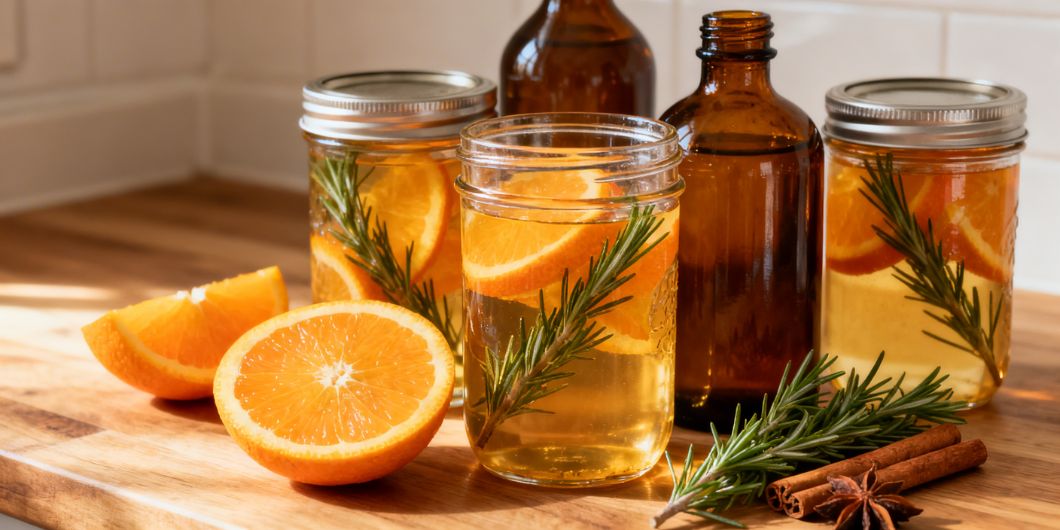
Glass jars are preferred because they are non-reactive, easy to clean, and do not retain flavors from previous batches. Clear jars also allow you to monitor color changes, sediment formation, and overall extraction progress.
Jar size should match the recipe. Small jars are useful for test infusions, while larger jars are better for fruit liqueurs where ingredients need space to remain fully submerged in alcohol.
Bottles play a role not only in presentation but also in storage. Dark bottles can help protect light-sensitive liqueurs, while clear bottles showcase vibrant colors such as ruby berry, golden spice, or emerald herb liqueurs.
For gifting, cork bottles provide a traditional look. For everyday storage, screw caps or swing-top closures tend to be more practical and reliable.
Filtering removes solid ingredients after infusion. A coarse strainer removes large pieces of fruit or spice, while cloth filters or coffee filters remove finer particles. Some liqueurs benefit from resting briefly before final filtration so sediment can settle naturally.
Absolute clarity is not always necessary. Nut liqueurs, spice liqueurs, and honey-based recipes may remain slightly cloudy due to natural oils. What matters most is flavor balance and a clean pour.
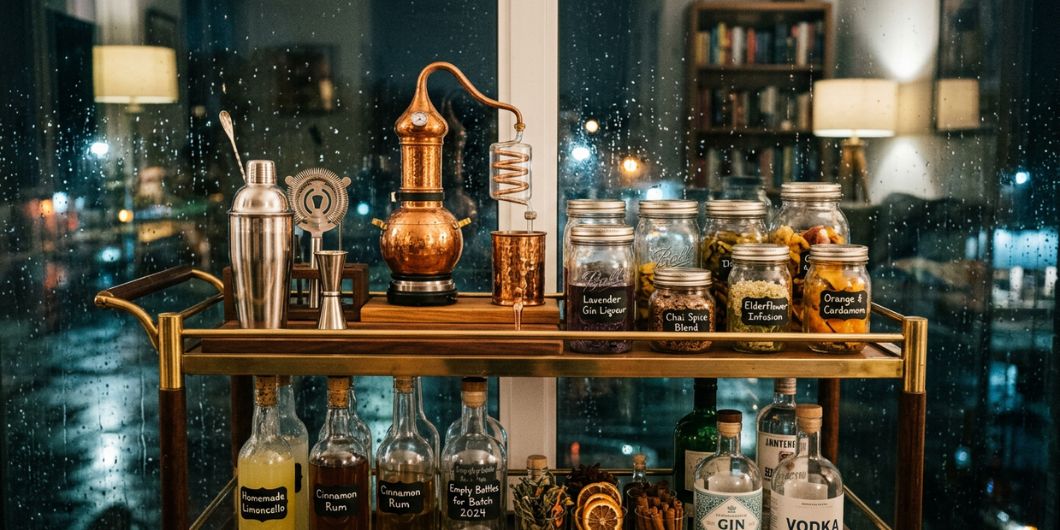
The base spirit determines both extraction efficiency and flavor character. It does not simply carry the ingredients; it actively shapes how aromas are pulled from fruit, herbs, spices, nuts, and botanicals, and it also influences the final texture, strength, and finish of the liqueur. Choosing the right alcohol base is one of the most important early decisions in homemade liqueur making because even the same ingredients can produce very different results depending on the spirit used.
Some spirits are neutral and allow the infused ingredient to take the lead, while others bring their own sweetness, wood notes, spice, or fruit character. For beginners, it helps to think of the alcohol base as the foundation of the recipe. If the spirit is too dominant, it can bury delicate ingredients. If it is too light, it may fail to support bold spices, nuts, or dried fruit. The best choice depends on the style of liqueur you want to build.
Vodka is the most common and beginner-friendly base for homemade liqueurs because its flavor is relatively neutral. This makes it ideal for recipes where you want the infused ingredients to remain the clear focus, especially in fruit, citrus, floral, and herb liqueurs. Berries, plums, cherries, orange peel, mint, basil, and lavender all work well in vodka because the spirit does not compete heavily with their aroma.
Vodka also makes recipe testing easier. Since it contributes little flavor of its own, it allows you to evaluate how well the ingredients, sugar level, and infusion time are working together. For many makers, vodka becomes the default base when developing a new recipe before experimenting later with more character-driven spirits.
Rum adds more personality than vodka and often brings natural notes of sugarcane, vanilla, caramel, and light tropical warmth. These qualities make it especially well suited to liqueurs built around pineapple, banana, coconut, mango, citrus peel, cinnamon, clove, allspice, coffee, cacao, or toasted nuts. Even before sweetener is added, rum often gives a liqueur a rounder and softer impression.
White rum is usually lighter and cleaner, making it useful when you want tropical character without too much weight. Dark or aged rum contributes deeper notes and can create richer, more dessert-like liqueurs. Because rum already carries sweetness and warmth, it often needs slightly more restraint with sugar than a neutral spirit would.
Whiskey introduces oak, grain, caramel, vanilla, and sometimes smoke or spice depending on the style. It is a stronger personality base, so it works best when paired with ingredients that can stand beside it rather than disappear under it. Dried cherries, figs, raisins, apple, vanilla, coffee, pecan, walnut, cinnamon, clove, star anise, and orange peel are classic examples that pair well with whiskey.
A whiskey-based liqueur usually feels deeper and more structured than a vodka-based one. Bourbon can bring sweetness and vanilla, rye can add spice and dryness, and Scotch can introduce smoke or malt complexity. Because whiskey already contains strong flavor layers, it is often better to keep the recipe focused and avoid overcrowding it with too many competing ingredients.
Brandy pairs naturally with fruit because it is already made from fermented fruit, most commonly grapes. Its profile often includes warmth, softness, dried fruit character, and subtle oak depending on the style and age. This makes it an excellent choice for plum, cherry, apricot, pear, fig, prune, raisin, orange, and spiced fruit liqueurs.
Compared with vodka, brandy adds more body and a more mature feel to the final liqueur. It often produces elegant, rounded results that seem integrated more quickly, especially when combined with warm spices or honey. If you want a fruit liqueur with a richer, more traditional character, brandy is often one of the best bases to choose.
Neutral grain spirits, often bottled at much higher proof than vodka, are used when strong extraction power is needed. Their main advantage is efficiency: they pull aroma, oils, and flavor compounds quickly and thoroughly, especially from citrus peel, spices, herbs, seeds, and botanicals. This makes them useful for concentrated infusions, tinctures, and recipes where precise dilution will happen later.
The downside is that very high-proof alcohol can also extract harsher or more bitter compounds if the infusion is too aggressive or runs too long. For beginners, neutral grain spirit can be powerful but less forgiving than vodka. It is best used when you understand the ingredient well, want more control over final strength, or plan to blend the infusion with syrup or water after extraction.
Rice spirits are widely used in many parts of Asia and can provide a delicate, distinctive base for homemade liqueurs. Depending on the style, they may be light and clean or slightly earthy and aromatic. They work particularly well with local fruits, herbs, ginger, pepper, pandan, tea, citrus peel, and floral ingredients because they often bring structure without dominating the infusion.
Rice spirits can also give a liqueur a strong sense of place. When paired with regional ingredients, they help create recipes that feel rooted in local tradition rather than copied from Western spirits culture. For makers interested in Asian fruit liqueurs or travel-inspired recipes, rice spirit can be one of the most expressive bases to explore.
Beyond the common bases, many homemade liqueurs become more interesting when they use local or regional spirits. Fruit brandies, cane spirits, agave spirits, herbal distillates, palm spirits, and village-made alcohols can all create distinctive results. A local base often contributes cultural context as well as flavor, and that can transform a recipe from generic to memorable.
When using local spirits, it is worth tasting them on their own first. Some are clean and versatile, while others have strong earthy, smoky, grassy, or fermented notes that will shape the recipe significantly. A good local spirit can make a liqueur more original, but it should support the main ingredients rather than distort them unintentionally.
Alcohol proof has a direct effect on extraction. Higher alcohol levels generally dissolve oils and aromatic compounds more efficiently, especially from citrus peel, spices, herbs, and seeds. This is why stronger spirits can produce faster and more intense infusions. At the same time, very high proof can pull bitter, woody, or harsh notes if the ingredient is delicate or the infusion is left too long.
Lower-proof spirits extract more gently and can be a better choice for soft fruits, flowers, and lighter herb infusions. In practical terms, there is no single perfect strength for every liqueur. Stronger alcohol increases extraction power, while moderate alcohol often gives better control and smoother results. Matching proof to ingredient type is one of the most useful habits a liqueur maker can develop.
Dilution after infusion allows better control over final strength, sweetness, and texture. This is especially useful when a liqueur is first made with a stronger spirit to improve extraction and then softened later with syrup or water. By separating extraction from final adjustment, you gain much more control over the finished balance.
Dilution can also help open aroma and reduce harshness. A liqueur that tastes too sharp immediately after infusion may become much more rounded once it is diluted and rested. The important point is to dilute with intention rather than guesswork. Small adjustments, followed by tasting, usually produce better results than trying to set the final balance in one step.
The easiest way to choose a base is to ask what role the spirit should play. If you want the ingredient to dominate, choose a neutral spirit such as vodka. If you want warmth, sweetness, or depth from the base itself, consider rum, whiskey, or brandy. If you want strong extraction and plan to dilute later, high-proof neutral alcohol may be the best tool.

Ingredients define the identity of a homemade liqueur more than anything else. The alcohol base provides structure and extraction power, but it is the fruit, herbs, spices, nuts, seeds, vegetables, and sweeteners that determine aroma, color, texture, and overall style. Choosing ingredients well is not only about flavor preference; it is also about understanding how each type behaves in alcohol, how quickly it extracts, and how it interacts with sweetness, acidity, bitterness, and time.
Some ingredients deliver bright top notes within days, while others require weeks to release depth and warmth. Fresh ingredients often bring vivid aroma and freshness, dried ingredients bring concentration and richness, and sweeteners shape how the final liqueur feels on the palate. Learning the role of each ingredient group is one of the most important steps in becoming a more confident and creative liqueur maker.
Fruits are the most common liqueur ingredients because they offer a natural combination of aroma, acidity, color, and sweetness. Citrus, berries, stone fruits, orchard fruits, and tropical fruits can all produce very different results depending on their water content, sugar level, aromatic intensity, and ripeness. In liqueur making, fruit can be used fresh, zested, lightly dried, frozen, roasted, or combined with herbs and spices to create more layered profiles.
Berries such as raspberry, blackberry, strawberry, and blackcurrant often produce vibrant, aromatic liqueurs with rich color and a soft fruit-driven character. Citrus fruits such as orange, lemon, lime, pomelo, and grapefruit contribute peel oils, brightness, and refreshing lift. Stone fruits such as cherry, plum, apricot, and peach bring roundness and depth, while tropical fruits such as pineapple, mango, salak, passion fruit, or banana often create fuller, more exotic profiles with natural sweetness and lush aroma.
Fruit preparation matters. Chopping increases surface area and speeds extraction, zesting captures aromatic oils without too much bitterness from white pith, and lightly crushing berries helps release juice and flavor. At the same time, too much bruising or overlong infusion can create jammy, cooked, or bitter notes, especially in delicate fruits.
Fresh seasonal fruit usually provides the best flavor intensity because it is harvested closer to peak ripeness. When fruit is in season, its sugar, aroma, and acidity are generally better balanced, which leads to stronger extraction and more expressive liqueurs. Seasonal buying also allows you to work with ingredients at their most affordable and most characteristic stage.
Out-of-season fruit can still be useful, but quality varies more. Frozen fruit can be an excellent alternative for berries and some stone fruits because freezing breaks cell walls and can actually help release flavor into alcohol. The key is to start with fruit that tastes good on its own. If it is bland, watery, or tired before infusion, the liqueur will rarely improve it.
Vegetables are less common than fruit in liqueur making, but they can create distinctive, savory, earthy, or gently sweet profiles that stand out from more familiar styles. Chili peppers, beetroot, carrot, pumpkin, cucumber, sweetcorn, and even tomato can be used in carefully designed recipes. Their strength lies not in obvious sweetness, but in texture, earthy aroma, freshness, spice, and unexpected depth.
Chili peppers are often used in small amounts to build warmth and a slow finish rather than dominant heat. Beetroot can contribute earthiness and a vivid red-purple tone, carrot can bring mild sweetness and root depth, and pumpkin works well when paired with spice-focused profiles such as cinnamon, nutmeg, clove, or vanilla. Cucumber and celery can be used for fresher, more botanical styles when supported by herbs or citrus.
Vegetable liqueurs require more restraint than fruit liqueurs because vegetal notes can turn muddy if too many ingredients are combined or if the infusion runs too long. They work best when the recipe has a clear direction and a strong supporting structure from citrus, spice, herb, or sweetener.
Dried fruits are powerful ingredients because drying concentrates both flavor and sugar. Raisins, dates, figs, prunes, dried apricots, and dried cherries often produce liqueurs with deeper color, fuller body, and a more rounded sweetness than fresh fruit. They are especially useful in colder-weather recipes, dessert-style liqueurs, holiday blends, and darker spirits such as rum, brandy, or whiskey.
The drying process reduces water and intensifies the fruit’s natural character, which means dried fruit can add richness even in relatively small quantities. A liqueur made with dried figs or dates may develop notes of caramel, honey, molasses, and dark fruit, while dried apricot or dried cherry can give concentrated fruitiness with more structure than their fresh equivalents.
Because dried fruits are more concentrated, they often need less infusion time than expected to create a full-bodied result. They also pair especially well with warm spices, vanilla, coffee, cacao, orange peel, and toasted nuts. At the same time, very sweet dried fruits can push a liqueur toward heaviness if the recipe also uses too much sugar. Balance is important.
It also helps to check whether dried fruit contains added oil, sulfur, preservatives, or extra sugar, as these can affect clarity and flavor. Unsulfured, minimally treated fruit generally gives cleaner results. When needed, a quick rinse or gentle chop can help dried fruit infuse more evenly.
Nuts provide oils, richness, and deep roasted aromas that can make a liqueur feel luxurious and dessert-like. Almond, hazelnut, walnut, pecan, pistachio, and macadamia are among the most useful choices. Nut liqueurs often develop round texture, warm aroma, and a lingering finish, especially when paired with vanilla, coffee, cacao, caramel, cinnamon, or dark spirits.
Unlike fruit, nuts are not about brightness or acidity. Their strength lies in body, aroma, and toasted complexity. Almond can deliver a marzipan-like character, hazelnut brings warmth and sweetness, walnut can be more earthy and tannic, while pistachio creates a softer, creamy profile. Because nuts contain oil, they may also create some haze in the final liqueur, which is normal in many styles.
Light roasting often improves nut liqueurs by intensifying aroma and drawing out richer toasted notes. A gentle roast can deepen flavor without making the nuts bitter. This is especially effective with hazelnuts, almonds, pecans, and walnuts. Roasting also reduces raw, green notes that may otherwise remain in the finished liqueur.
Care is important, however. Over-roasting can create burnt bitterness that becomes stronger during infusion. Nuts should smell fragrant and warm, not scorched. In many cases, the best results come from a light roast followed by chopping or crushing, which increases surface area and improves extraction.
Seeds contribute some of the most concentrated and recognizable flavors in liqueur making. Coffee, cacao, vanilla, tonka, cardamom, coriander seed, fennel seed, and even sesame can transform a recipe with relatively small quantities. These ingredients often deliver strong aromatic identity and can anchor a liqueur more firmly than fruit alone.
Coffee beans create roasted bitterness, depth, and a dry aromatic finish. Cacao nibs add chocolate character without as much sweetness as finished chocolate. Vanilla brings warmth, smoothness, and a sense of integration that often makes a liqueur feel fuller and softer. Coriander, fennel, and cardamom seeds can introduce brightness, spice, and subtle botanical lift.
Because seeds are often potent, they benefit from measured use and regular tasting. A small amount can create elegant background complexity, while too much can dominate the liqueur quickly. In many recipes, seeds are best used as supporting ingredients rather than the entire focus.
Spices provide complexity, warmth, lift, and aromatic depth. They are essential in many classic and modern liqueurs because they can transform a simple fruit infusion into something more layered and memorable. Cinnamon, cardamom, clove, allspice, star anise, black pepper, nutmeg, mace, ginger, and saffron are all valuable depending on the style you want to create.
Warm spices such as cinnamon, clove, nutmeg, mace, and allspice often suit brandy, rum, whiskey, dried fruits, nuts, and honey. Brighter spices such as cardamom, coriander, ginger, or pink pepper can lift citrus, herbs, tea, and tropical fruit. Pepper can add subtle heat and structure, while saffron and vanilla bring luxury and roundness. Used well, spices can add depth without overshadowing the main ingredient.
Spices extract quickly and can become dominant if left unchecked. Whole spices usually produce cleaner and more controlled results than powders, which can muddy both flavor and texture. It is usually better to under-spice at first and build complexity gradually than to over-extract and lose balance.
Multiple spices can create layered aromatic profiles, but good spice blending depends on hierarchy. Most successful spice liqueurs have a clear lead note supported by secondary and background spices. For example, cinnamon may lead while clove, orange peel, and cardamom provide structure around it. Without a clear hierarchy, the blend can become confused and crowded.
A practical approach is to choose one dominant spice, one or two supporting notes, and one brightening or binding ingredient such as citrus peel or vanilla. This creates complexity without chaos. The aim is not to include every spice you enjoy, but to create a blend where each component has a clear purpose.
Herbs bring freshness, greenness, bitterness, floral lift, and botanical complexity. Mint, basil, rosemary, thyme, lemon verbena, tarragon, sage, chamomile, lavender, and many other herbs can produce beautiful liqueurs when handled carefully. Herb liqueurs often feel brighter and more aromatic than spice-heavy styles, and they can range from refreshing and light to medicinal and intensely bitter.
Fresh herbs usually provide greener and more vibrant notes, while dried herbs can offer a more concentrated and slightly muted profile. Some herbs work best as the main focus, while others are more effective in support. Mint and basil can shine in cleaner, citrus-led liqueurs, while rosemary, thyme, and sage often pair well with honey, citrus peel, or darker spirits. Floral herbs such as chamomile and lavender can add elegance, but they require restraint because they can easily become soapy or overpowering.
Herbs extract quickly and should be monitored closely. Delicate fresh herbs may need only a few days, while woody or dried herbs can tolerate longer contact. Over-infusion can produce harsh bitterness, grassy heaviness, or medicinal notes that mask the more attractive aspects of the plant.
A good method is to taste herb infusions regularly and remove the herbs once the desired aroma is reached, even if other ingredients need more time. In mixed recipes, this can mean adding herbs later, removing them early, or running separate infusions and blending them afterward for better control.
Sweeteners define the structure of a liqueur. They do much more than make the drink sweet: they soften alcohol heat, add body, influence texture, shape the finish, and help different flavors feel more integrated. The type of sweetener you choose can also introduce its own aroma, color, and character, which is why sweetener selection matters as much as choosing the fruit or spice.
Some sweeteners are clean and almost invisible, while others actively reshape the recipe. A berry liqueur sweetened with white sugar will taste different from the same liqueur sweetened with honey or jaggery. Even if the sweetness level is similar, the final impression may range from bright and crisp to dark, earthy, floral, or caramel-like.
White sugar is usually the easiest choice for beginners because it gives predictable sweetness without shifting the flavor profile too much. Brown sugar, jaggery, and palm sugar are better when you want sweetness to contribute character as well as balance. Honey can be excellent in herbal, citrus, spiced, and nut liqueurs, but it can also dominate delicate fruit if used too heavily.
Balanced sweetness supports aroma and body without masking flavor. A good liqueur should not taste like sugar first and ingredients second. Instead, sweetness should round the edges, soften bitterness or acidity where needed, and make the final drink feel cohesive. The ideal level depends on the style: fruit liqueurs may need enough sugar to support acidity, spice liqueurs often need body to soften alcohol heat, and herb liqueurs may need sweetness to keep bitterness elegant rather than aggressive.
The best approach is to sweeten gradually and taste after each adjustment. A liqueur that seems too dry at first may become more integrated after resting, while one that tastes pleasantly sweet on day one may feel heavy after a few weeks. Time changes perception, which is why patience is part of sweetness control as much as measurement is.

Maceration is the process of soaking ingredients in alcohol so that aromatic compounds, oils, acids, pigments, and other flavor elements dissolve into the spirit. This is the core technical process behind most homemade liqueurs. Alcohol acts as both a preservative and a solvent, pulling character from fruits, herbs, spices, nuts, seeds, and botanicals over time. The result is not simply flavored alcohol, but a structured extract that can later be balanced with sweetener, dilution, and ageing.
Although the principle is simple, successful infusion depends on several variables working together: ingredient type, preparation method, alcohol strength, temperature, infusion time, and tasting control. Some ingredients release bright aroma within a day or two, while others need weeks to build depth. Understanding extraction helps you avoid common beginner problems such as bitterness, weak flavor, muddy profiles, or harsh finishes.
In a basic maceration, ingredients are submerged in alcohol and stored in sealed jars away from direct sunlight. During this time, the alcohol slowly extracts flavor and aroma from the solids. The ingredients should remain fully covered to reduce oxidation, prevent spoilage risk in lower-strength mixtures, and ensure even extraction across the batch.
Maceration can be done with whole, sliced, crushed, zested, chopped, roasted, or lightly bruised ingredients depending on what you want to extract. A whole cinnamon stick behaves differently from crushed cinnamon pieces, and whole berries extract more slowly than cut fruit. Increased surface area usually speeds extraction, but it can also pull harsher compounds more quickly, so preparation should match the style of liqueur you want to create.
Alcohol is effective because it dissolves many compounds that water alone cannot extract as efficiently, especially essential oils and aromatic molecules found in citrus peel, herbs, spices, seeds, and botanicals. It also extracts color, sugars, acids, and tannins to varying degrees depending on the ingredient and the proof of the spirit. This is why a high-proof neutral spirit can pull a more concentrated and aromatic extract than a softer lower-proof base.
Not every compound is desirable in large amounts. The same extraction power that captures bright orange oils or warm vanilla aroma can also pull bitterness from pith, woody harshness from over-steeped spices, or greenness from herbs left too long. Good liqueur making is not just about extracting more; it is about extracting the right things in the right proportions.
Temperature affects how quickly extraction happens. Warm environments usually accelerate the process because compounds move and dissolve more readily, but this extra speed can come with trade-offs. Faster extraction may also draw out harsher, more bitter, or more cooked-tasting notes, especially in delicate fruits, fresh herbs, and floral ingredients.
Cooler and more stable conditions generally allow more controlled extraction. For most homemade liqueurs, room temperature in a dark cupboard works well. Extreme heat should be avoided because it can distort aroma, encourage unwanted oxidation, and create less refined results. The goal is steady extraction, not forced speed.
How ingredients are prepared before they go into the jar has a major impact on the final liqueur. Fruit may be sliced, crushed, or zested. Herbs may be left whole or gently bruised. Spices may be used whole for cleaner extraction or lightly cracked for stronger intensity. Nuts are often chopped or roasted, while dried fruits are sometimes cut to expose more surface area.
The general rule is simple: more exposed surface area means faster extraction. That can be useful, but it must be controlled. Finely chopped citrus peel, powdered spices, or heavily crushed herbs can make filtration harder and may produce cloudy, muddy, or over-extracted liqueurs. Clean, thoughtful preparation usually leads to better flavor and easier bottling later.
There is no single ideal infusion time because ingredients behave very differently in alcohol. Delicate herbs can peak in only a few days, while nuts and dense dried fruits often need weeks. The best approach is to use time as a guideline, then taste regularly and stop the infusion when the flavor reaches the profile you want.
Regular tasting is one of the most important habits in liqueur making. A calendar can provide a starting point, but the jar itself tells the real story. Aroma, color, bitterness, and intensity all evolve during infusion, and a batch can move from balanced to over-extracted faster than many beginners expect. Tasting every day or two during the active phase gives you far more control than simply waiting for a fixed number of days.
This is especially important when multiple ingredients are infused together. One ingredient may be fully extracted while another still needs more time. In these cases, it can be better to remove the fast-extracting ingredient early, strain the batch partially, or run separate infusions and blend them later. Control almost always improves balance.
A single infusion places all ingredients in the jar at once and is the simplest approach for beginners. It works well when the ingredients have similar extraction speeds or when the recipe is intentionally straightforward. Berry liqueurs, vanilla liqueurs, or citrus-peel infusions often work well as single-stage recipes.
Multi-stage infusions are more precise. Ingredients are added at different times or infused separately because not everything extracts at the same rate. For example, a fruit may need two weeks, but a fresh herb may need only three days. By building the liqueur in stages, you can preserve brightness, avoid bitterness, and create a more polished final result.
Many makers gently shake or rotate the jar occasionally during maceration to redistribute ingredients and keep extraction even. This can help, but vigorous shaking is usually unnecessary and may increase cloudiness if the ingredients are fragile. A gentle swirl every day or two is usually enough for most recipes.
Direct sunlight should generally be avoided because it can degrade aroma and color, especially in fruit, herbs, and floral ingredients. A sealed jar stored in a cool, dark place gives more stable results and protects the quality of the infusion while it develops.
An infusion is ready when the main ingredient is clearly expressed, the aroma is strong but not harsh, and the extracted flavor feels intentional rather than raw. At that point, the liquid can be strained, filtered if needed, and moved to the next stage: sweetening, dilution, resting, or ageing. Waiting too long does not always improve a liqueur. In many cases, the best results come from stopping extraction at the right moment rather than pushing for maximum intensity.
This is one of the central lessons of liqueur alchemy: extraction is not about doing more, but about knowing when to stop. Controlled infusion produces cleaner, more elegant liqueurs with better balance, clearer aroma, and a more refined finish.
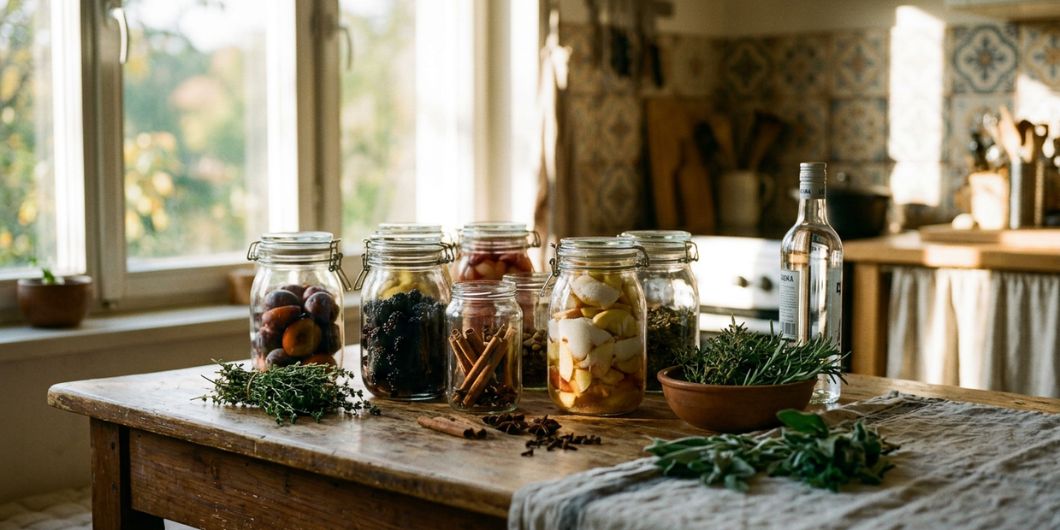
Safety and stability are essential parts of homemade liqueur making. A good liqueur should not only taste balanced and aromatic, but also be prepared, stored, and handled in a way that protects quality over time. Alcohol is a strong preservative, but it is not a magic shield against every problem. Clean equipment, sensible ingredient handling, appropriate alcohol strength, and controlled storage conditions all contribute to a safer and more stable final product.
For beginners, this part of the process is often simpler than it sounds. You do not need laboratory conditions, but you do need care and consistency. Good hygiene reduces the risk of contamination, helps preserve aroma, prevents off-flavors, and gives your liqueurs a better chance of ageing well. Stability is not only about avoiding spoilage; it is also about maintaining clarity, structure, and flavor from the day the liqueur is bottled to the day it is served.
Clean equipment prevents contamination and unwanted flavors. Every jar, bottle, funnel, spoon, filter, and measuring tool that touches the liqueur should be properly washed before use. Residual food particles, dust, old aromas, oils, soap traces, or moisture from previous use can all affect the final result. Even when the alcohol level is high enough to discourage microbial growth, poor hygiene can still introduce off-notes, dull aroma, and instability.
Sterilization does not need to be complicated. For most homemade liqueurs, careful washing with hot water and suitable detergent followed by thorough rinsing is the starting point. Jars and bottles can then be sterilized with boiling water or another reliable food-safe method before being left to dry completely. What matters most is consistency: clean tools every time, not only for special batches.
Use clean hands, clean cloths, and clean tools throughout the process. If you are preparing fresh fruit, herbs, or vegetables, inspect them carefully and remove bruised, moldy, damaged, or spoiled sections. Rotten material should never be “rescued” by alcohol. The flavor damage alone is usually enough reason to reject it, even before safety concerns are considered.
It also helps to separate stages of work. Prepare ingredients on a clean surface, move them into the infusion jar, close the jar properly, and avoid repeated unnecessary opening unless you are tasting or checking the batch. Fewer opportunities for contamination generally mean cleaner results and better aroma preservation.
Alcohol above roughly 20% ABV inhibits most microbial growth, which is one of the main reasons liqueurs can remain stable far longer than many fresh homemade drinks. In practice, many traditional liqueurs are stronger than this and gain even more protection from sugar, which also lowers available water in the mixture. This is why a properly made liqueur can often be stored for months or even years, depending on its ingredients and final structure.
That said, shelf life is influenced by more than alcohol alone. Fresh fruit, herb matter, dairy, egg, improper filtration, weak closures, light exposure, and low final ABV can all reduce stability. A fruit liqueur strained well, balanced, bottled cleanly, and kept in a cool dark place will usually last much better than a poorly filtered bottle with low strength and floating solids left inside.
Alcohol limits microbial growth by creating an environment that many spoilage organisms cannot tolerate. It also extracts compounds that contribute aroma and flavor while helping stabilize the liquid. Combined with sugar, it gives liqueurs a built-in preservation advantage compared with juices, syrups, or infused waters. This is why traditional liqueur making has long relied on alcohol as both flavor carrier and preservation system.
However, preservation works best when the liqueur is finished properly. If large amounts of fresh ingredient remain in the bottle, if the final strength is too low, or if the mixture is exposed repeatedly to air and contamination, the protection becomes less reliable. Alcohol helps a great deal, but process still matters.
A stable liqueur should smell intentional, pour normally, and remain visually consistent with its style. Some haze is natural in nut, spice, herb, or honey-based liqueurs, so cloudiness alone does not always mean spoilage. What matters more is change: unexpected gas, visible mold, sour or rotten aroma, strange separation beyond normal oil haze, or a clear shift toward unpleasant fermentation-like notes should all be taken seriously.
If a batch smells obviously rotten, moldy, or contaminated, it should be discarded. When in doubt, caution is better than attachment to the batch. Good liqueur making includes knowing when something has gone wrong and not trying to force a bad bottle into use.
Storage has a direct impact on shelf life and flavor stability. Finished liqueurs should usually be kept in well-sealed bottles away from direct sunlight, strong heat, and large temperature swings. A cool cupboard, pantry, or cellar-like storage space is often ideal. Light can damage color and aroma, while heat can speed oxidation and flatten delicate notes.
Once bottled, many liqueurs become more stable when left undisturbed. Frequent opening introduces oxygen and can slowly shift aroma over time, especially in delicate fruit or herb liqueurs. Small-batch makers often benefit from bottling into slightly smaller containers so that once opened, each bottle is consumed within a more reasonable period.
Resting allows flavors to integrate and alcohol sharpness to soften. A freshly sweetened liqueur often tastes more disjointed than the same liqueur a few weeks later. During maturation, the alcohol, extracted flavors, and sweetener begin to settle into a more cohesive whole. Harsh edges fade, texture becomes rounder, and the aroma often feels deeper and more unified.
Not every liqueur needs long ageing, but many benefit from at least a short resting period after filtration and sweetening. Citrus liqueurs may become smoother, spice liqueurs more integrated, nut liqueurs rounder, and fruit liqueurs less raw. Ageing is often less about making the liqueur older and more about allowing it to become calmer and more balanced.
As a liqueur rests, volatile compounds settle and the relationship between sweetness, alcohol, and aromatic ingredients changes. This can reduce the impression of harshness and make the drink feel softer even when the actual alcohol level remains the same. Some spice notes blend into the background, fruit aromas become more unified, and textures can feel fuller.
Sediment may also continue to settle during maturation, which can improve clarity naturally before a final re-filtering if needed. This is one reason many makers prefer not to rush bottling and serving immediately after sweetening.
Ageing is especially useful for spice liqueurs, nut liqueurs, darker spirit-based liqueurs, and recipes containing honey, caramel, or dried fruit. These styles often need time for their heavier notes to come together and for alcohol sharpness to fade. Fresh herb and delicate floral liqueurs may need shorter rest periods because too much time can dull their brighter top notes.
The style of liqueur should guide the ageing approach. A bright citrus liqueur may be best after a shorter rest, while a coffee, walnut, spiced rum, or brandy-based liqueur may improve significantly over a longer period.
The best guide is always tasting. Some liqueurs reach their best balance quickly, while others continue improving with time. The maker’s task is to notice when the liqueur has moved from raw to integrated without ageing it past its best expression.
These three recipes are designed for beginners who want clear, reliable introductions to homemade liqueur making. Each one focuses on a different ingredient style and teaches a different lesson about extraction, sweetness, and balance. The berry liqueur shows how fruit behaves in alcohol, the vanilla spice liqueur introduces gentle aromatic layering, and the coffee liqueur demonstrates how roasted ingredients create depth and structure.
They are intentionally simple, but they still follow the same principles used in more advanced recipes: choose a suitable alcohol base, extract flavor with control, sweeten carefully, and allow the liqueur to rest before final judgment. These starter recipes are also flexible. Once you understand the method, you can adapt them with different berries, different spice combinations, or different coffee styles to begin building your own variations.
Berry liqueur is one of the easiest and most rewarding starting points for beginners. Berries infuse well, release color quickly, and usually produce a highly aromatic result without requiring complicated technique. This recipe works especially well with raspberries, blackberries, blueberries, blackcurrants, strawberries, or mixed berries. It creates a bright, fruit-forward liqueur that can be enjoyed on its own, poured over ice, or used in cocktails and desserts.
Vodka is used here because its relatively neutral profile allows the fruit to remain at the center of the liqueur. The sugar level is enough to soften acidity and support body without turning the result into syrup. If the berries are especially tart, you may want a little more sweetness; if they are very ripe and naturally sweet, the recipe may need less. Taste and adjustment are part of the process.
This recipe teaches one of the core lessons of homemade liqueur making: fruit intensity changes with ripeness, variety, and season. A blackcurrant liqueur will behave very differently from a strawberry liqueur even when the quantities are the same. That is why this simple recipe becomes a valuable template for future experimentation.
Vanilla spice liqueur is a gentle introduction to aromatic layering. It is ideal for beginners who want to understand how a dominant ingredient can be supported by softer background notes without becoming overcrowded. Vanilla brings warmth, smoothness, and a naturally rounded impression, while the spirit base and sweetener help shape the final finish. A simple version can remain focused on vanilla alone, while a slightly more developed version might include a small piece of cinnamon, a clove, or a strip of orange peel.
Rum works especially well here because it already contains subtle notes of sugarcane, vanilla, caramel, and warmth. These traits support the vanilla pod rather than competing with it. The result is a liqueur that feels soft, fragrant, and versatile. It can be served neat, added to coffee, used in dessert sauces, or blended into richer cocktail-style drinks.
This recipe shows how a liqueur does not need many ingredients to feel complete. A good vanilla liqueur works because the base spirit, the sweetener, and the aromatic focus are aligned. It also teaches discipline: a little spice can improve the result, but too much can bury the main character.
Coffee liqueur is an excellent beginner recipe because coffee is naturally intense, recognizable, and highly expressive in alcohol. It creates a darker, more structured liqueur than fruit or vanilla, with roasted aroma, bitterness, and depth. This makes it especially useful for learning how sweetness interacts with bitterness and how alcohol can carry bold flavors without needing many supporting ingredients.
Vodka is a practical base because it lets the coffee lead clearly, although rum can also be used for a softer, warmer style. The choice of coffee matters. Beans with chocolate, nut, caramel, or spice notes often work especially well. Very light roasts can be too sharp, while extremely dark roasts may become overly bitter if infused too long. Whole beans are often easier to control than ground coffee because they produce less sediment and a cleaner flavor profile.
This recipe teaches control. Coffee is powerful, and the goal is not to eliminate its bitterness completely, but to shape it into something smooth and drinkable. A good coffee liqueur should feel deep and aromatic, not burnt or overly sugary. Once the basic version works, it can be extended with vanilla, cacao nibs, orange peel, cinnamon, or a darker spirit base.
Together, these recipes cover the main building blocks of liqueur making: fruit, spice, roasted ingredients, neutral and character-driven spirits, and the importance of tasting throughout the process. Once you are comfortable with them, you can begin changing one element at a time and learning how your own preferences shape the final result.
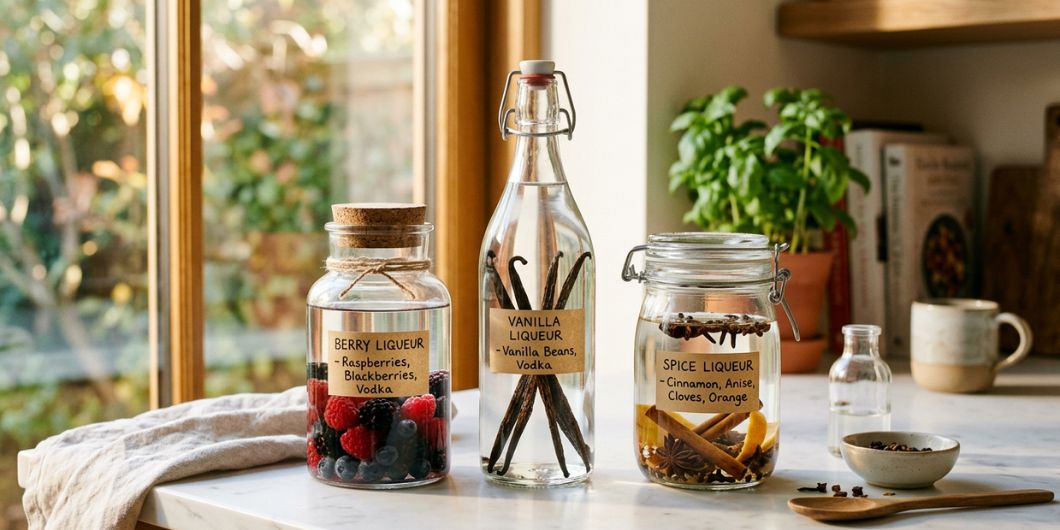
Filtering, bottling, and labeling are the final practical stages of homemade liqueur making. They may seem secondary compared with choosing ingredients or building flavor, but they have a major effect on clarity, texture, storage stability, presentation, and how confidently you can evaluate the finished result. A well-made liqueur deserves a clean finish, a suitable bottle, and a clear label that helps you track what you made and when.
This stage is where the liqueur moves from experiment to finished product. Good filtration removes unwanted solids, bottling protects the liquid from oxidation and contamination, and proper labeling turns each batch into a usable reference for future improvement. These final steps also help you understand how your liqueurs evolve over time, which is essential if you plan to refine recipes or build a more serious personal library.
Filtering removes fruit pieces, herbs, spices, sediment, and suspended particles from the liquid after infusion. The level of filtration you choose depends on the style of liqueur you want. Some recipes benefit from a bright, polished look, while others are perfectly acceptable with a little natural haze or texture. The key is to remove anything that would negatively affect the drinking experience, storage, or appearance.
In many cases, filtration works best in stages. A coarse strainer removes the large solids first, then cheesecloth or muslin removes finer debris, and finally a coffee filter can polish the liqueur further if a cleaner appearance is desired. Trying to pass a heavily pulpy or spice-rich liqueur through a fine filter immediately can be slow, messy, and ineffective.
Not every liqueur needs to be crystal clear. Some are intentionally cloudy because of natural oils, fine fruit pulp, spice particles, or the character of ingredients such as nuts, honey, cacao, or citrus peel. Slight haze does not automatically mean the liqueur is flawed. In many traditional styles, a little visual softness is completely normal and may even signal that the drink is less processed and more ingredient-driven.
What matters is whether the cloudiness suits the style and whether the liqueur remains pleasant to drink. A rustic fruit liqueur may look appealing with a little natural body, while a refined citrus or herb liqueur may benefit from greater clarity. The decision is aesthetic as well as practical. If the haze comes from natural oils and the liqueur tastes excellent, that is very different from unwanted sludge, grit, or unstable sediment caused by poor filtration.
Bottling protects your work and prepares the liqueur for resting, storage, serving, or gifting. The bottle you choose should be clean, dry, and able to seal tightly. Good bottling practice reduces oxidation, protects aroma, and helps maintain stability over time. It also makes the finished liqueur easier to evaluate because it removes unnecessary variation caused by poor storage conditions.
A funnel is one of the simplest tools for clean bottling, especially when working with narrow-neck bottles. It reduces waste and makes filling more precise. If the liqueur is likely to throw more sediment after resting, some makers prefer to bottle it once, allow it to settle, and then re-filter and rebottle later for a clearer final presentation.
Clear bottles are popular because they show off the color of the liqueur, whether ruby, amber, gold, green, or deep brown. Darker bottles can be better for light-sensitive liqueurs, especially those built around delicate herbs, flowers, or citrus. Small bottles are useful when gifting or when you want to limit how often a larger batch is repeatedly opened. Larger bottles are practical for personal use if the liqueur will be consumed steadily.
The choice of bottle also influences perception. A corked bottle may feel traditional and elegant, while a swing-top can feel practical and handmade. What matters most is that the bottle protects the liqueur properly and fits the style you want for storage or presentation.
Labels are one of the most overlooked but most valuable parts of the process. They transform a bottle from a mystery into a useful record. Even a simple handwritten label can save you from confusion weeks or months later, especially if you are making several batches at once or adjusting recipes during a season.
At a minimum, include the recipe name, date, and ingredients. More detailed labels can also note the alcohol base, sweetener used, infusion dates, bottling date, and any special method such as toasted nuts, separate herb infusion, or reduced sugar. The more consistently you label, the easier it becomes to compare batches and refine recipes with confidence.
For makers who want to improve over time, labeling is not decoration; it is part of the recipe system. A bottle without a proper label may still taste good, but it becomes much harder to learn from.
Most beginner mistakes in homemade liqueur making are not dramatic failures. More often, they are small decisions that gradually push the liqueur out of balance. A jar is left too long, sugar is added too quickly, the ingredients are weak, or the final bottle is judged too early. These mistakes are common because the process looks simple from the outside, but good liqueur making depends on timing, tasting, and restraint.
The useful part is that nearly all beginner mistakes teach something valuable. Each one reveals how extraction, sweetness, alcohol strength, ingredient quality, or patience affects the final drink. Learning to recognize these patterns early makes it much easier to correct future batches and develop a more reliable, confident approach.
Over-infusion happens when ingredients are left in alcohol too long and start releasing harsh, bitter, woody, medicinal, or muddy flavors. This is especially common with citrus peel that includes too much pith, with strong spices such as clove or cinnamon, and with fresh herbs that quickly move from bright to grassy or bitter. Coffee and tea can also become rough and overly drying if extraction is not controlled.
The best prevention is regular tasting. Do not rely only on a fixed timeline. The same ingredient may behave differently depending on freshness, alcohol strength, cut size, temperature, and variety. A liqueur should be strained when the flavor reaches its best point, not when the calendar says the infusion is complete.
Too much sweetness is one of the most common beginner problems because sugar can make a liqueur taste pleasant immediately, even when it is masking flaws. Excess sweetness can hide fruit detail, flatten spice character, blur herbal freshness, and leave the final liqueur heavy instead of balanced. A drink that tastes enjoyable on the first sip may become tiring after a full glass if the sweetness dominates everything else.
The solution is to sweeten gradually. Add sugar or syrup in stages, taste after mixing, and remember that many liqueurs taste different after resting. What seems slightly dry on day one may feel more balanced a week later, while a very sweet batch can become cloying as the flavors settle. Sugar should support the profile, not overwhelm it.
The opposite problem also appears often. A liqueur that is too dry may taste hot, thin, sharp, or incomplete. This is especially noticeable in fruit liqueurs, where acidity needs some sweetness to feel rounded, and in spice or coffee liqueurs, where bitterness can become too dominant without enough support. Dryness is not always sophistication; sometimes it is simply imbalance.
Again, tasting is the key. A well-balanced liqueur should feel integrated, with sweetness present enough to soften the edges without turning the drink sugary. If the aroma seems right but the finish feels harsh or empty, the batch may need more sweetness rather than more infusion time.
Weak flavor usually comes from insufficient ingredient quantity, poor ingredient quality, overly gentle alcohol strength, or a mismatch between the ingredient and the chosen spirit. Bland fruit, stale spices, tired herbs, and low-impact ingredients rarely become expressive just because they spend time in alcohol. Liqueurs depend heavily on starting material. If the ingredient lacks aroma before infusion, the finished drink will usually show the same weakness.
To avoid this, use ingredients that taste and smell good on their own. Seasonal fruit, fresh spices, properly stored herbs, and well-chosen coffee or nuts create much stronger results. It also helps to match the alcohol base to the ingredient. Delicate ingredients may need a neutral spirit, while bolder ones can stand beside rum, whiskey, or brandy.
Cloudiness is not always a mistake, but beginners often treat it as one. Some haze is natural because of oils, pulp, honey, nut fats, or fine sediment. Citrus peel, nuts, cacao, spices, and unfiltered fruit can all create a softer appearance. This is not necessarily a problem if the liqueur tastes good and the style suits it.
Unwanted cloudiness usually comes from poor filtration, too much fine sediment, or ingredients breaking down excessively during infusion. Powdered spices, heavily crushed fruit, or aggressive shaking can make clarification harder. If you want a cleaner result, filter in stages and allow the liquid to rest so sediment can settle before final bottling.
One of the fastest ways to weaken a liqueur is to start with poor raw material. Overripe fruit, stale spices, tired herbs, cheap flavorless nuts, or poor-quality alcohol may seem acceptable in the moment, but they often produce flat, muddy, or imbalanced results. Liqueur making can transform ingredients, but it cannot create quality that was never there.
A useful rule is simple: if the ingredient smells dull, tastes bad, or looks questionable before infusion, it should not go into the jar. Better ingredients do not always mean expensive ingredients, but they should be fresh, sound, and suited to the style of liqueur you want to make.
Beginners sometimes focus only on the flavor ingredient and forget that the alcohol base also contributes character. A delicate berry may disappear in a strong whiskey, while a rich dried fruit or spice blend may feel too thin in a very light vodka. The spirit is part of the recipe, not just a container for extraction.
Choosing a base with the right level of neutrality or personality can solve many balance problems before they begin. When the spirit and the ingredient work together, the liqueur feels more coherent from the start.
A freshly strained and sweetened liqueur often tastes less integrated than the same bottle after a few days or weeks of rest. Beginners sometimes think a batch has failed when it is simply young. Alcohol can feel sharp, sweetness can feel separate, and spice or fruit notes may not yet be fully connected.
Patience is part of the craft. While not every liqueur needs long ageing, most improve with at least a short resting period. Before making big corrections, it is often wise to let the batch settle and taste it again later. Many liqueurs become noticeably smoother and more balanced with time.
Beginner mistakes are part of the learning process, but they become much less frequent once you understand the main pattern: strong liqueurs come from balance, not excess. More time is not always better, more sugar is not always smoother, and more ingredients do not always create more complexity. Good liqueur making is controlled, deliberate, and built on tasting at every stage.

Once the basic methods of homemade liqueur making feel familiar, advanced techniques allow you to shape flavor with much more precision. These methods are not necessary for a good beginner batch, but they become valuable when you want cleaner layering, deeper complexity, more control over extraction, or a more distinctive final style. Advanced work in liqueur making is rarely about making the process more complicated for its own sake; it is about gaining finer control over how ingredients behave in alcohol and how the finished liqueur develops over time.
The most useful advanced techniques usually focus on timing, preparation, and structure. Instead of placing every ingredient into one jar and hoping they integrate well, you begin to manage them according to how quickly they extract, how intense they are, and what role they should play in the final profile. This often leads to liqueurs that taste more deliberate, better balanced, and more refined.
Multi-stage infusion is one of the most effective ways to improve control. Instead of infusing all ingredients at the same time, you add them in phases or extract them separately. This matters because ingredients do not behave equally in alcohol. Fresh herbs may be ready in a few days, while dried fruit or nuts may need weeks. If everything sits together for the same length of time, one ingredient may become over-extracted before another has fully developed.
A multi-stage approach solves this problem. You might begin with fruit and spirit, then add spices later, then introduce herbs for only a short finishing infusion. Another option is to make separate infusions and blend them afterward. This gives much more control over intensity, balance, and timing. It is especially helpful for recipes that combine delicate and powerful ingredients in the same liqueur.
For example, a berry-and-herb liqueur may benefit from a long fruit maceration followed by only a short mint or basil infusion at the end. A spice liqueur may work better if vanilla is infused throughout, while clove and cinnamon are added later and removed sooner. This method requires more attention, but it often produces a cleaner and more polished final result.
Layered liqueurs are built so that different parts of the flavor profile appear in sequence rather than all at once. The first impression may be fruit, followed by spice in the middle, and a longer nutty or herbal finish afterward. This technique is not about visual layers in the bottle, but about sensory layering in aroma, taste, and finish.
Creating layered flavor usually begins with identifying the roles of your ingredients. One ingredient should lead, another should support, and one or two more may shape the finish. A cherry liqueur might lead with fruit, use orange peel to brighten the middle, and vanilla to round the finish. A coffee liqueur might open with roast, soften with cacao, and finish with spice or caramel sweetness.
The key is restraint. Too many ingredients do not automatically create more complexity. In fact, overcrowding often leads to confusion. Strong layered liqueurs usually have a clear structure, where each ingredient has a defined purpose. This makes the final drink feel intentional rather than busy.
Toasting is used to deepen aroma and bring warmer, richer notes out of certain ingredients before they are infused. It works especially well with nuts, seeds, some spices, cacao nibs, coconut, and occasionally fruits that benefit from a slight caramelized edge. Heat changes the aromatic profile, often reducing raw or green notes while enhancing roasted, nutty, or dessert-like character.
Hazelnuts, almonds, walnuts, sesame, coconut, and cacao nibs are classic candidates for toasting. Some spices such as cardamom, coriander seed, or cinnamon can also benefit from very gentle warming before infusion, which helps release fragrance and improve depth. The process should be controlled carefully. Light toasting develops aroma; over-toasting introduces burnt bitterness that becomes stronger in alcohol.
For liqueur making, the aim is usually gentle browning rather than dark roasting. You want the ingredients to smell more expressive, not scorched. Once toasted, they should be cooled before adding them to alcohol. This technique is particularly effective in dessert-style, coffee-based, nut-based, and spiced liqueurs.
Smoke adds a different type of complexity than spice or roast. It introduces dryness, warmth, atmosphere, and a more savory or mysterious edge. Smoked liqueurs can be especially compelling when paired with pineapple, citrus peel, coffee, cacao, spices, black tea, nuts, or darker spirits such as rum, whiskey, or brandy. Used carefully, smoke can add depth without overpowering the main ingredient.
There are several ways to bring smoke into a liqueur. Ingredients can be lightly smoked before infusion, such as pineapple, orange peel, or nuts. In some cases, the syrup or even the bottle itself can be exposed to smoke. Another option is to work with already smoky ingredients, such as lapsang souchong tea, smoked pepper, or smoked spices. The gentlest and most reliable method is usually to smoke the ingredient rather than the finished liquid.
Moderation is essential. Smoke becomes dominant quickly and can flatten fruit or herbal detail if used too heavily. A successful smoked liqueur still allows the base ingredients to speak. The smoke should feel integrated and supportive, not like the only thing in the glass.
Advanced techniques are best introduced once you can already make a stable, balanced basic liqueur with confidence. If the fundamentals are still inconsistent, more complexity may only make problems harder to diagnose. Once you understand how ingredients extract, how sweetening changes structure, and how resting affects the final result, advanced methods become much more useful.
A good way to begin is by changing only one element at a time. Take a simple berry liqueur and turn it into a multi-stage infusion by adding herbs at the end. Take a nut liqueur and compare raw nuts against lightly toasted nuts. Take a citrus-spice recipe and build it in layers rather than all at once. Small controlled changes teach more than jumping into a highly complicated recipe immediately.
These methods matter because they make it possible to create liqueurs with stronger identity and greater refinement. A simple infusion can be delicious, but advanced techniques give you better control over brightness, depth, finish, and texture. They also help you solve flavor problems more intelligently. Instead of adding more sugar or more ingredients to fix a flat recipe, you begin to think in terms of extraction order, aromatic hierarchy, and structural balance.
This is where homemade liqueur making starts to become more than following recipes. It becomes recipe design. Once you can control timing, layers, toasted character, and smoke with intention, your liqueurs begin to feel more personal, more expressive, and more recognizably your own.

One of the most rewarding parts of homemade liqueur making is building a personal library of recipes, experiments, and finished bottles. A liqueur library is more than a collection of drinks on a shelf. It is a record of your ideas, your ingredient choices, your seasonal discoveries, and the way your own taste evolves over time. Even simple notes and carefully labeled bottles can turn casual experimentation into a much more deliberate craft.
Without records, it becomes difficult to repeat a successful batch or understand why one recipe worked better than another. Small changes in fruit ripeness, sugar level, alcohol base, spice quantity, or infusion time can have a major effect on the final result. A personal library helps you capture those differences and learn from them instead of starting from zero each time.
Recipe tracking is the foundation of a useful liqueur library. At minimum, each batch should include the name of the liqueur, the date started, the date bottled, the ingredient list, the quantities used, the alcohol base, and the type and amount of sweetener. It also helps to note whether ingredients were fresh, dried, roasted, frozen, zested, or otherwise prepared in a special way.
The more accurately you record your recipe, the easier it becomes to repeat successes. If one berry liqueur was brighter, cleaner, or smoother than another, your notes should help explain why. The difference might be the fruit variety, the alcohol proof, the sweetness level, or simply a shorter infusion. Without written records, these lessons are easy to lose.
Tasting notes turn a bottle into a learning tool. They help you move beyond “good” or “not good” and start identifying what is actually happening in the glass. You might notice that one liqueur opens with bright fruit but finishes too sweet, while another has beautiful aroma but feels thin. These observations are what allow the next batch to improve.
Useful tasting notes can include aroma, sweetness, acidity, bitterness, alcohol heat, texture, clarity, finish, and overall balance. It is also helpful to taste the same liqueur at different stages: just after infusion, after sweetening, after one week of rest, and after a month or more. Many homemade liqueurs change significantly as they settle, and those changes are worth recording.
Seasonal batches help connect your liqueur library to real ingredients and real time. Instead of making the same thing all year with whatever is available, you can work with ingredients when they are naturally at their best. Spring may bring herbs and flowers, summer may focus on berries and stone fruit, autumn may favor apples, pears, nuts, and warming spices, while winter may lean toward dried fruits, citrus peel, coffee, chocolate, and darker spirits.
This approach often leads to better flavor and stronger creativity. Seasonal ingredients are usually more aromatic and more affordable, and they encourage you to think in cycles rather than isolated bottles. Over time, your library becomes a record of seasons as much as recipes, with recurring favorites and new variations each year.
Refinement is what transforms a one-time batch into a signature liqueur. Instead of changing everything at once, the most effective method is to adjust one variable at a time. You might keep the fruit and spirit the same but reduce the sugar, or keep the sweetness fixed while changing the alcohol base, or compare fresh fruit against dried fruit. This makes it easier to understand what each change is doing.
Gradual refinement also builds confidence. Rather than relying on guesswork, you begin to develop a clear sense of cause and effect. You learn how much vanilla is enough, how long your favorite berries usually need, which spirit works best with a certain spice, and how a recipe tastes after two weeks compared with two months. This is how a personal style begins to form.
Your library can be as simple or as structured as you like. Some makers use notebooks, some use printed recipe cards, and others keep digital spreadsheets or dedicated folders. What matters is consistency. The system should make it easy to search past batches, compare versions, and locate the information you need when planning the next recipe.
It can also help to organize bottles by category or season. For example, you might group fruit liqueurs together, keep herbal experiments separate, or arrange bottles by year. This makes the collection feel more intentional and makes tasting comparisons easier when you want to see how different styles age.
A personal liqueur library gives your work continuity. Instead of every batch being an isolated experiment, each new bottle becomes part of a wider body of knowledge. You start noticing patterns: which sweeteners you prefer, which spirits suit your style, which fruits age beautifully, and which ingredients are better used in small supporting roles. That accumulated knowledge is one of the real rewards of the craft.
Over time, your library becomes more than storage. It becomes your own reference system, your tasting archive, and a record of how your palate and technique have developed. This is where homemade liqueur making becomes deeply personal: not just following recipes, but building a collection that reflects your ingredients, your decisions, and your evolving sense of balance.
Homemade liqueur making blends craft, patience, curiosity, and creativity. At its core, the process is simple: ingredients are infused into alcohol, sweetness is balanced, and the liqueur is allowed to rest until its flavors integrate. Yet the simplicity of the method hides a surprising depth. Once you begin exploring different fruits, herbs, spices, nuts, seeds, and sweeteners, you quickly discover that even small changes in preparation, alcohol base, or infusion timing can create dramatically different results.
Understanding the fundamentals transforms this process from guesswork into a controlled craft. When you learn how alcohol extracts aromatic compounds, how sweetness affects texture and balance, and how resting allows harsh edges to soften, you gain the ability to shape flavor intentionally. Instead of simply following recipes, you begin to design them. Each ingredient becomes a tool, and each batch becomes an opportunity to refine your understanding of aroma, structure, and timing.
Every jar is an experiment. Some batches will be simple fruit infusions that capture the brightness of a single ingredient. Others may combine spices, herbs, or toasted elements to create deeper and more layered profiles. Occasionally a recipe will not work as expected, but even those moments provide valuable information about extraction, sweetness, and ingredient compatibility. With each batch, your instincts become sharper and your results more consistent.
Over time, these experiments naturally grow into a personal collection of recipes and techniques. You begin to recognize which alcohol bases work best with certain ingredients, which sweeteners support your preferred style, and how different flavors behave during ageing. This growing understanding is what turns casual experimentation into a true liqueur practice. The bottles on your shelf become more than drinks; they become records of your evolving skill.
The most important quality in a liqueur maker is not complexity but attentiveness. Taste regularly, observe how ingredients behave, adjust sweetness gradually, and give each batch enough time to settle before making final judgments. Many of the best homemade liqueurs come from simple ideas executed carefully rather than complicated recipes filled with too many elements.
As your experience grows, the process becomes more intuitive. You begin to see how seasonal fruit can inspire new batches, how herbs can brighten darker spirits, how toasted or smoked ingredients can add depth, and how patience during ageing can turn a rough infusion into something smooth and elegant. This is the moment when liqueur making becomes more than a recipe exercise and starts to feel like creative expression.
Becoming a liqueur alchemist does not mean mastering every technique immediately. It means learning to observe, taste, refine, and enjoy the process of transformation. Alcohol, ingredients, sweetness, and time are simple tools, but when used thoughtfully they can produce an extraordinary range of flavors. With curiosity, patience, and careful attention, your homemade liqueurs can become distinctive expressions of your own taste and imagination.
What is homemade liqueur and how is it different from infused spirits?
What alcohol works best for homemade liqueurs?
What ingredients can be used to make homemade liqueurs?
How long should ingredients infuse in alcohol?
How long do homemade liqueurs last?
Discover more guides, techniques, and ingredient insights from the Liqueur Alchemy Knowledge Hub. Explore articles that explain the science of flavor extraction, balance sweetness and alcohol, and help you craft better homemade liqueurs with confidence and creativity.
This website uses cookies to ensure you get the best experience on our website. Read our Privacy Policy.