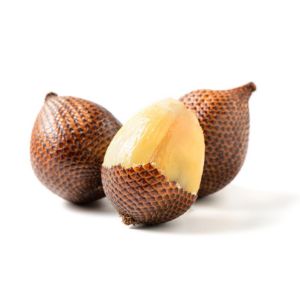
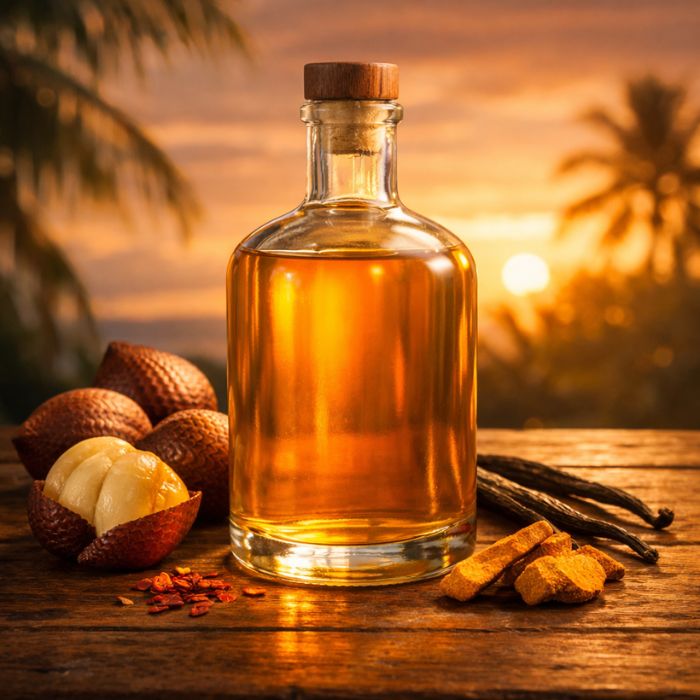
Salak (Snake Fruit)

Salak in Liqueurs: Honeyed Tang, Crisp Fruit Snap, and Bright Lift

Salak (snake fruit) tastes like a tropical mash-up of crisp apple, pineapple, and light honey, with a gentle tannic grip that reads “dry” if over-extracted. In liqueurs it brings bright, refreshing acidity and a clean fruit snap that pairs beautifully with palm sugar, vanilla, ginger, and warm spices. Use peeled flesh only; avoid skin and seeds. Slice thin for faster extraction and taste early—7–14 days often captures peak fruit before woody notes appear. Strain, then rest 2–4 weeks so acidity and sweetness integrate into a smooth, vibrant finish.

Salak (Snake Fruit)

Salak (Snake Fruit) Flavor Profile

crisp, honeyed, tangy, apple-like, pineapple, lightly tannic, tropical

Salak (Snake Fruit) Impact on Liqueurs

Adds bright tropical crunch and lively acidity; can turn woody/dry if left too long.

How to Use Salak (Snake Fruit)?

Peel fully and use only the flesh. Start with 300–600 g per 1 L spirit; slice thin and taste from day 5. Typical infusion 7–14 days, then strain. Sweeten in stages (palm sugar works well) and rest 2–4 weeks before final tasting.

Salak (Snake Fruit) Pairing Suggestions

vodka, rice spirit, light rum, palm sugar, vanilla, ginger, chili, cinnamon, lime zest, toasted coconut

Salak (Snake Fruit) FAQ


What can I substitute for salak in liqueur recipes?

If salak is unavailable, firm fruits with balanced sweetness and mild acidity work best as substitutes. Crisp apple, pear, or lightly underripe pineapple can mimic salak’s fresh tropical profile without overwhelming the base spirit.

The key is texture and sugar level. Very juicy fruits dilute alcohol and shift balance, while overly soft fruits can create haze and muddy texture. Choose fruits with structure and moderate sweetness to maintain clarity and control.

When substituting, adjust sweetness after infusion. Salak has a natural honeyed character, so substitutes may need a small touch of palm sugar or light honey to recreate its rounded tropical feel.

What are common mistakes when making salak liqueur?

One common mistake is leaving woody inner parts in contact too long, which can introduce dry, tannic notes. Proper peeling and trimming keep the flavor clean and fruit‑forward.

Another issue is over-sweetening too early. Salak’s flavor deepens during resting, and too much sugar can flatten its delicate tropical edge and reduce perceived brightness.

Finally, poor storage reduces aroma. After straining and sweetening, store in airtight glass away from light. Salak benefits from 2–3 weeks of rest, but excessive aging can soften its fresh fruit identity.

How does salak (snake fruit) behave during alcohol infusion?

Salak (snake fruit) extracts relatively quickly in alcohol because of its firm but porous flesh. Within the first few days, alcohol pulls out its honeyed, slightly acidic, apple‑pineapple notes. If left too long, subtle woody and tannic undertones can become more noticeable.

Because salak has moderate natural acidity but not much juice, it doesn’t heavily dilute the spirit. That makes it ideal for clean maceration at standard liqueur strengths. Slicing thinly increases surface area and speeds extraction, while larger chunks extract more slowly and gently.

For best results, infuse 5–14 days depending on slice size and desired intensity, tasting regularly. Once peak fruit aroma is reached, strain promptly to avoid dryness overtaking the bright tropical notes.

RELATED RECIPES OF LIQUEUR ALCHEMY


Explore more creations from Liqueur Alchemy that share similar flavours, techniques, or ingredients. These related recipes offer fresh ideas and inspired combinations to help you craft your next bold, homemade spirit.