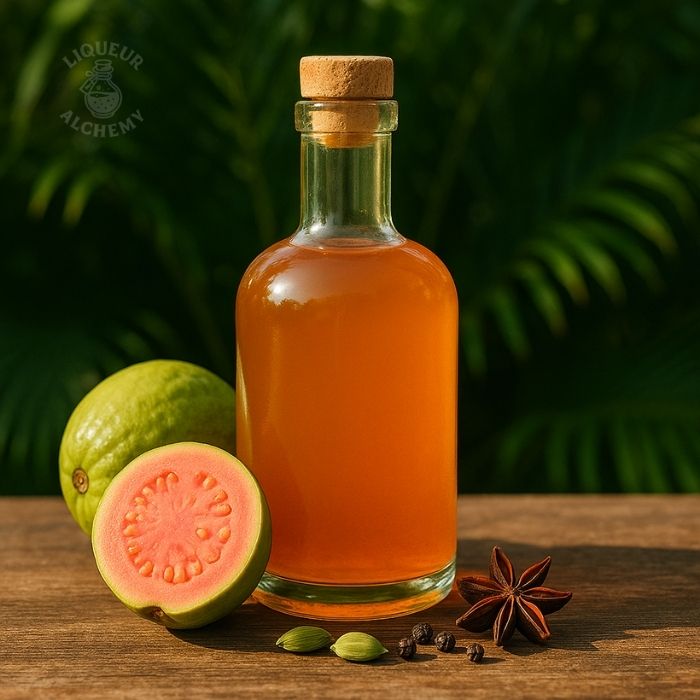
Fresh guava vs guava juice: which is better for guava liqueur?
Fresh guava usually tastes better because you capture the fragrant, tropical top notes that often disappear in bottled juice. Juice is convenient but can be diluted and sometimes has additives that flatten aroma. With fresh guava, the key is managing pulp: cut into chunks, remove hard seed clusters if possible, and avoid blending.
Use 40–50% ABV and start tasting at day 3–4; strain around days 7–14 for a bright guava profile. If you use juice, add it after you’ve made a strong guava infusion (or use it only as a small top-up) so you don’t drop ABV too much.
Common mistakes include pureeing (cloudy sludge), leaving guava too long (stewed notes), and oversweetening. Flavor impact should be floral-tropical with a creamy edge; a small lime acid lift can sharpen it. Store cool and dark; guava aromatics fade with heat and oxygen.
Why is my guava liqueur cloudy, and can I make it clear?
Guava is naturally pulpy and high in fine solids, so haze is common—especially if you cut too small or stir aggressively. Prevent by keeping pieces large and doing a two-stage strain: sieve first, then let it settle cold for 24–72 hours and decant before final filtration.
If it’s already cloudy, cold-crash and decant again. Paper filtering can help but will be slow; settling first is essential. Avoid heat—heating can lock in haze.
Common mistakes include squeezing the fruit bag and adding juice/water early. The flavor impact can still be excellent even with haze, so decide if clarity is worth the aroma loss from over-filtering. Store refrigerated if it’s very pulpy.
What base spirit works best with guava: vodka, rum, or tequila?
Vodka keeps guava clean and floral, making it ideal if you want guava to lead. Light rum complements guava’s tropical sweetness and adds a soft caramel edge—great for cocktail-friendly bottles. Tequila can work if you want a tropical-margarita vibe, but choose a clean, lightly oaked style so it doesn’t fight guava’s perfume.
Extraction is similar: 40–50% ABV, 7–14 days, taste early. With rum/tequila, keep sweetening slightly lower at first and adjust after a short rest; base spirit character can amplify perceived sweetness.
Common mistakes include using heavy dark rum (masks guava) and leaving fruit too long (stewed notes). Flavor impact should remain aromatic and tropical. Store cool and dark; guava benefits from smaller batches and fresher consumption.