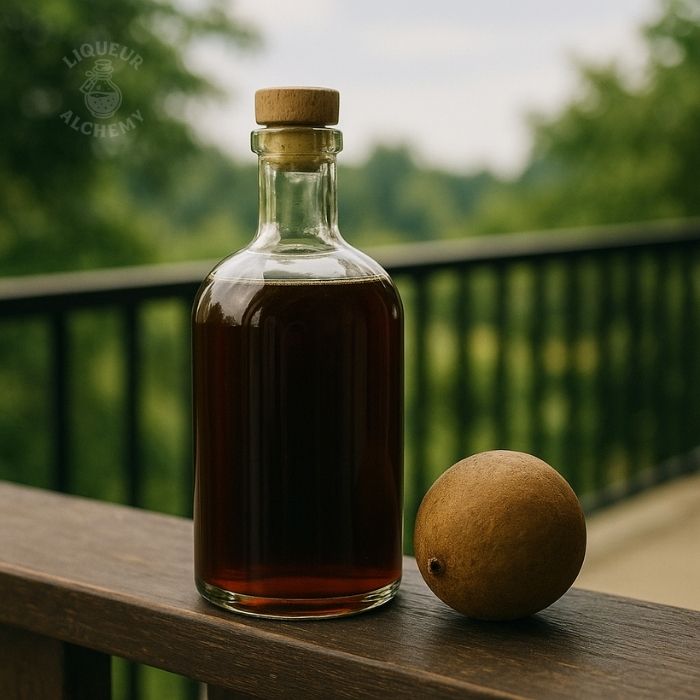
Why does chikoo liqueur get thick or gritty, and how do I clarify it?
Thickness comes from pulp and pectin; grittiness often comes from fiber and tiny seed fragments. Keep pieces large, don’t shake too hard, and strain early through a fine sieve before any cloth or paper filter. Let it settle overnight and decant off sediment before the final polish.
If it’s already thick, cold‑crash in the fridge 24–72 hours and decant again. You can also dilute slightly with higher-proof spirit before filtering to thin it, then re-balance sweetness. Avoid boiling syrups into it—heat can set pectin and make haze permanent.
Common mistakes are pureeing fruit, pressing filters, and adding water early. Flavor impact is creamy caramel fruit, so a little natural haze is acceptable if the aroma is strong. For storage, keep cold if texture is heavy and consume sooner; the richer the liqueur, the more it benefits from refrigeration.
What base spirit works best with chikoo: vodka, rum, or brandy?
Vodka is the cleanest choice if you want chikoo to taste like pure caramel-pear fruit. Light rum adds a natural brown-sugar echo that matches sapodilla beautifully, while brandy pushes it toward baked fruit and toffee. Choose based on your target: bright fruit (vodka), dessert‑rum (rum), or “winter sipper” (brandy).
Extraction and timing are similar: 40–50% ABV, 7–12 days, taste early. With rum or brandy, keep spices minimal because the base already brings complexity; a tiny vanilla note is usually enough. Sweeten after straining and let it rest 2–3 weeks to integrate.
Common mistakes: using heavy spiced rum (double-spicing), or very oaky brandy that masks chikoo’s gentle aroma. If you only have darker rum, blend it with vodka 50/50 to keep the profile lighter. Store cool and dark; rum/brandy versions age a bit better than vodka versions.
How ripe should chikoo (sapodilla) be for liqueur, and how long should it macerate?
Use chikoo that’s fully ripe and fragrant—soft enough to yield to gentle pressure, but not fermented. Underripe fruit tastes starchy and dull; overripe can go “winey” fast. Peel, remove seeds, and cut into chunks (avoid blending) to keep filtration manageable.
Chikoo is rich, brown‑sugar and pear-like, so it extracts well at 40–50% ABV. Start tasting at day 4 and strain between days 7–12 for a clean profile. Longer contact tends to add muddy notes and thick texture from pulp.
Common mistakes: low ABV, warm storage during maceration, and squeezing the pulp through filters. Sweeten after straining and consider a tiny pinch of salt to sharpen caramel notes. For substitutions, brown sugar or jaggery syrup can enhance the natural “molasses” vibe, but add slowly so it doesn’t overwhelm the fruit.