
Learn how to transform fresh or dried fruit into structured, balanced liqueurs using proper extraction techniques and controlled sweetness. This guide explains alcohol selection, sugar ratios, steeping time, and seasonal fruit choices so your results taste deliberate rather than accidental.
Whether you are completely new to liqueur making or refining your skills, you’ll understand how flavor moves from fruit into spirit, how to prevent common mistakes, and how to create bottles that feel cohesive, stable, and craft-level.
On this page
Fruit liqueurs are the natural entry point into homemade spirits because they teach the core mechanics of liqueur making in a clear and forgiving way. When you work with fruit, you immediately begin to understand extraction, sugar balance, alcohol strength, and patience. Fruit responds visibly and aromatically. If you steep too long, bitterness appears. If sugar is too low, acidity feels sharp. If alcohol strength is too weak, fermentation becomes a risk. The feedback is direct — and that’s what makes fruit liqueurs such powerful teachers.
Many beginners assume making liqueur is simply “soaking fruit in alcohol.” True flavor extraction is more deliberate. Alcohol dissolves aromatic oils, esters, color pigments, and subtle volatile compounds that define a fruit’s personality. The goal is not just flavor transfer — it is balance and structure. A properly made fruit liqueur tastes integrated, not harsh or sugary.
Homemade fruit liqueurs often taste better than commercial versions because you control everything: fruit ripeness, sugar quantity, alcohol strength, steeping time, and resting period. Commercial products prioritize shelf stability and consistency. At home, you prioritize flavor.
Understanding this craft prevents bitterness, fermentation mistakes, and mold contamination. It helps you balance sweetness accurately, avoid wasting fruit or alcohol, improve shelf stability, and elevate your results from experimental to intentional. The difference between a “sweet fruit spirit” and a craft-level liqueur is knowledge.
A fruit liqueur is a flavored spirit that has been sweetened and rested until the alcohol, fruit, and sugar taste cohesive. It is built from four essential components: a base spirit, fruit, sugar, and time.
The base spirit acts as the extraction medium. Vodka provides neutrality. Brandy contributes warmth and depth. Rum adds body and subtle sweetness. Neutral grain spirit offers maximum extraction power. Each choice influences the final character.
Fruit provides acidity, aroma, texture, and natural sugar. Sugar shapes the finish and controls how sharp or round the final product feels. Time is the invisible ingredient — it allows harsh alcohol edges to soften and aromatic compounds to stabilize.
Alcohol extracts flavor compounds because it dissolves both water-soluble and alcohol-soluble elements. Sugar moderates acidity and bitterness by binding and masking sharp edges. Resting allows chemical equilibrium to occur, smoothing volatile alcohol notes.
Remove any of these four pillars and balance collapses.
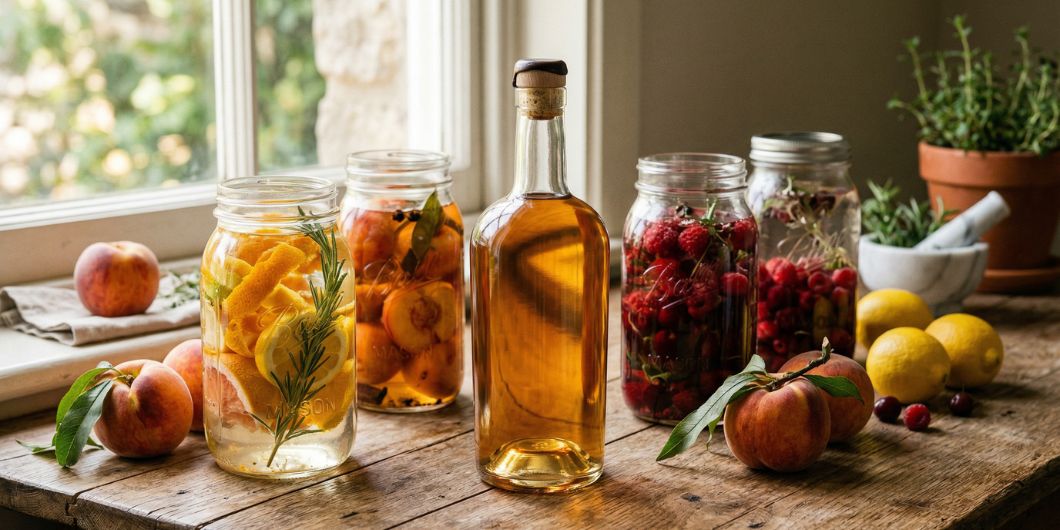
Fresh fruit delivers brightness and high aromatics. Berries, stone fruits, and citrus provide vibrant top notes and natural acidity that make liqueurs feel lively and expressive. However, fresh fruit contains significant water content, which slightly dilutes alcohol strength. If the spirit is below 30% ABV, fermentation risk increases.
Fresh fruit is ideal for berries, cherries, peaches, plums, and citrus zest. It produces lighter, more aromatic styles with natural color intensity.
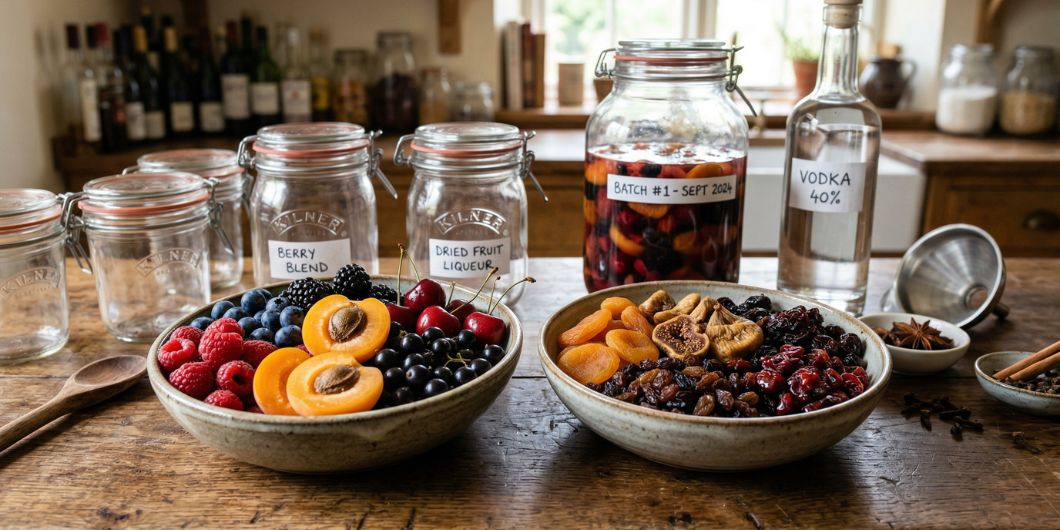
Dried fruit behaves differently. Because moisture has been removed, sugars and flavor compounds are concentrated. The resulting liqueurs tend to be deeper, richer, and darker. Dried apricots, raisins, dried cherries, and citrus peel create more rounded, sometimes caramelized profiles.
The trade-off is reduced brightness. Dried fruit can dominate blends and often requires longer extraction time. It works particularly well in winter or in brandy-based liqueurs where warmth and depth are desired.
Seasonal fruit produces superior liqueur. When fruit is harvested at peak ripeness, its sugar content is higher and aromatic compounds are more concentrated. Off-season fruit often travels long distances and is picked underripe, resulting in weaker flavor and lower natural sugar.
In spring, strawberries and rhubarb provide bright acidity and fresh character. Summer brings raspberries, peaches, cherries, and mango — fruits that are rich, sweet, and aromatic. Autumn favors apples, pears, plums, and figs, producing rounder, more structured liqueurs. Winter is ideal for citrus and pomegranate, while dried fruits become valuable when fresh options are limited.
Slightly overripe fruit is particularly useful. As fruit softens, cell walls break down and sugars concentrate, improving extraction efficiency. Overripe does not mean spoiled — it means intensely aromatic and fully developed.
Sugar is not simply sweetness. It is structural. Fruit acidity varies significantly between varieties. High-acid fruits such as lemon, raspberry, and sour cherry require more sugar to balance sharpness. Low-acid fruits like mango, banana, and peach require less.
As a starting framework, light liqueurs use approximately 150-200 grams of sugar per liter of spirit. Medium sweetness ranges from 200-300 grams. Dessert-style liqueurs may reach 300-450 grams per liter.
White sugar keeps flavor clean and neutral. Cane sugar adds subtle warmth. Honey contributes viscosity and floral character but may reduce clarity. Simple syrup integrates faster and distributes evenly.
Adding sugar after extraction allows more control. Adding it earlier can soften acidity during maceration but may slightly slow extraction speed. Sugar also changes mouthfeel — higher levels create thicker texture and slower palate movement.
Direct maceration is the most traditional approach. Fruit is submerged in spirit and left to steep for two to six weeks. The mixture is then filtered and sweetened. This method works particularly well for berries and stone fruits.
The syrup method begins by layering fruit with sugar. The sugar draws out juice through osmotic pressure. Spirit is added afterward. This technique preserves fresh brightness and is effective for strawberries, raspberries, and cherries.
The heat-assisted method gently warms hard fruits such as apples or pears to accelerate extraction. Temperature must remain low; boiling damages aroma and alters structure.
Layered infusion introduces delicate ingredients later in the process. For example, mango may steep first, while citrus zest is added during the final week to preserve fresh aromatic lift.
A berry liqueur template begins with 500 grams of berries, 700 ml of 40% vodka, and 200-300 grams of sugar. Steep for three to four weeks, then filter and rest.
A stone fruit template uses 600 grams of peaches or plums, 750 ml of brandy, and around 200 grams of sugar. Allow four to six weeks for deeper extraction.
A citrus liqueur relies on zest only, avoiding bitter pith. Steep zest in 750 ml of neutral spirit for five to seven days, then add simple syrup and filter carefully.
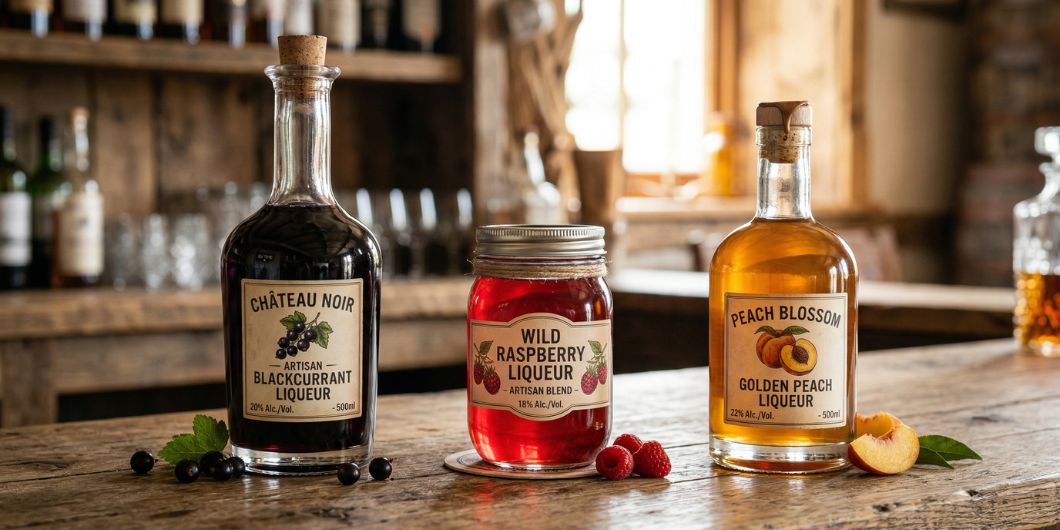
Cherry, raspberry, peach, mango, lemon, blackcurrant, and plum are excellent beginner choices. They possess strong natural flavor, forgiving extraction behavior, and clear acidity-to-sweetness balance. These fruits allow new makers to focus on technique rather than problem-solving.
Using fruit with mold spots introduces contamination. Cutting fruit too small increases bitterness through over-extraction. Leaving citrus peel too long extracts pith compounds. Using alcohol below 30% ABV risks fermentation. Adding too much sugar early masks flavor imbalance. Inadequate filtration causes cloudiness. Bottling too soon prevents integration.
After infusion, alcohol strength can be adjusted by controlled dilution. Small amounts of citric acid can correct flat profiles. Blending multiple fruits adds complexity but requires restraint. Botanicals should be introduced sparingly to avoid dominance.
Resting the liqueur for two to four weeks after filtration significantly improves integration. Cold crashing before final filtration helps clarify suspended particles.
The base spirit determines how clearly the fruit speaks. Many beginners default to vodka because it is neutral and widely available. That is a good starting point. A neutral base allows you to understand the fruit’s raw behavior without interference.
Brandy, however, creates warmer and more structured fruit liqueurs. It works exceptionally well with cherries, plums, apricots, and figs because its natural oak and grape undertones reinforce darker fruit characteristics.
White rum adds subtle sweetness and body, making it suitable for mango, pineapple, and banana. Neutral grain spirit (above 50% ABV) extracts faster and more aggressively, but requires dilution afterward. It is a more advanced option and should be used with awareness of strength adjustments.
For beginners, 40% ABV is safe and effective. For more efficient extraction, 45-50% ABV can produce brighter and more stable results.
When fruit meets alcohol, several processes begin simultaneously. Alcohol penetrates cell walls and dissolves aromatic compounds. Color pigments move into solution. Organic acids mix with the spirit. Sugar inside the fruit begins balancing the mixture even before you add external sweetener.
Extraction speed depends on surface area, alcohol strength, temperature, and fruit structure. Berries extract quickly because their cell walls are soft. Apples extract more slowly due to dense flesh. Citrus zest extracts rapidly because essential oils are volatile and highly soluble in alcohol.
This is why cutting fruit too small can cause problems. More surface area means faster extraction — but it also means faster bitterness release from skins and seeds.
Patience is not passive waiting. It is controlled observation.
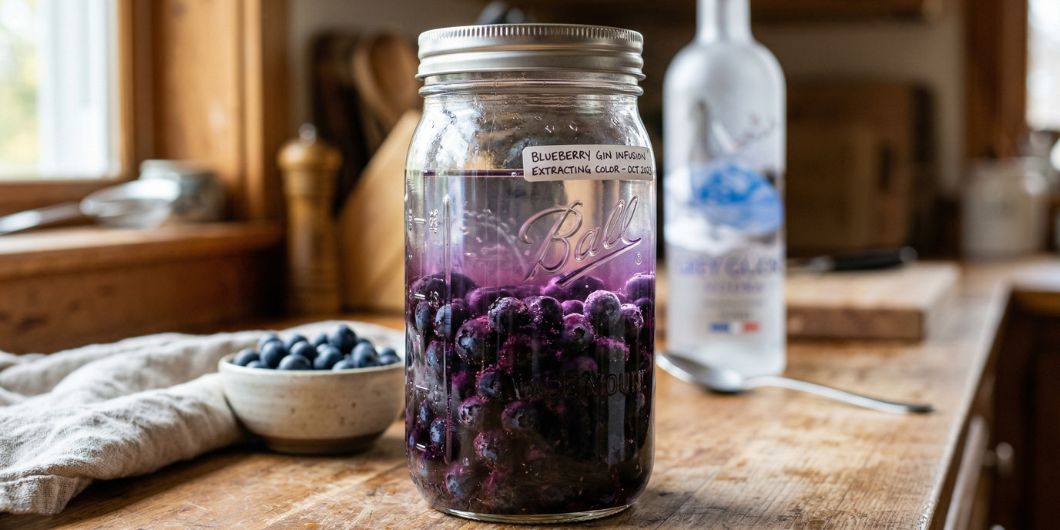
There is no universal time rule. Instead, steeping duration depends on fruit type and desired intensity.
Berries often require 2-4 weeks. Stone fruits typically need 4-6 weeks. Citrus zest should rarely exceed 7-10 days. Hard fruits like apples may benefit from 6 weeks or more.
The correct method is sensory testing. After the first week, taste small samples every few days. When the fruit character is clear and vibrant — not harsh or vegetal — it is time to filter.
Over-steeping dulls brightness. Under-steeping produces weak aroma. Experience sharpens this judgment.
Cloudiness in fruit liqueur usually comes from pulp particles, pectin, or undissolved sugars. Clarity is not mandatory for flavor, but it improves visual quality and shelf stability.
Begin with coarse filtration through a sieve. Follow with fine filtration using coffee filters or muslin cloth. Avoid squeezing pulp aggressively — this pushes bitter compounds and fine sediment into the liquid.
Cold crashing, which means refrigerating the liqueur for 24-48 hours before final filtration, helps suspended particles settle naturally.
Clear liqueur reflects control. Cloudy liqueur reflects rushed processing.
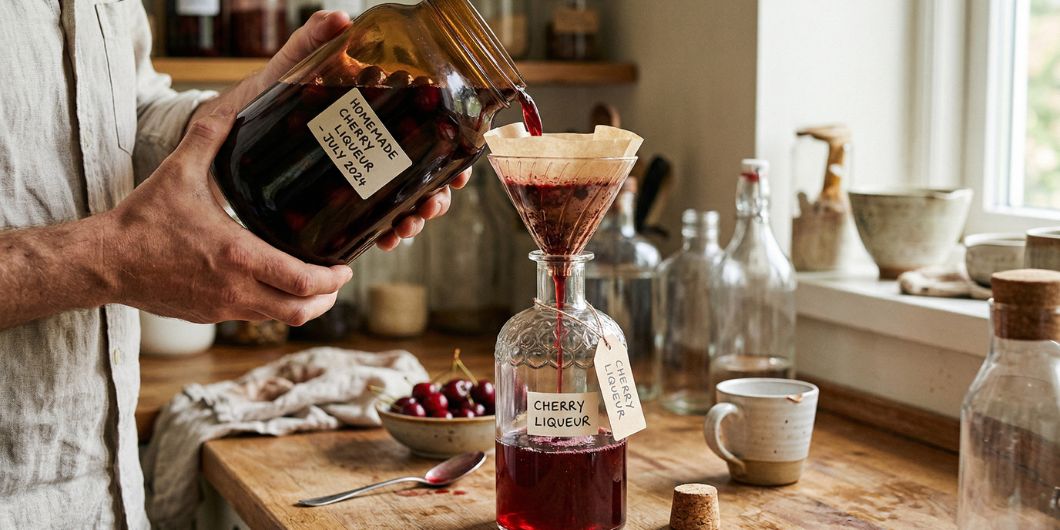
After filtration and sweetening, taste again. The first taste immediately after mixing sugar is misleading. Alcohol and sugar need time to integrate.
If the liqueur tastes too sharp, additional sugar may help. If it tastes too sweet and flat, a small amount of fresh citrus zest infusion or a minimal citric acid correction can restore brightness.
If alcohol heat dominates, resting is usually the solution. Time smooths volatility better than dilution.
Balance is rarely achieved in one adjustment. Small corrections are safer than large ones.
Freshly filtered liqueur often tastes fragmented. Fruit, sugar, and alcohol exist separately. Resting allows molecular integration and softening of harsh notes.
A minimum of two weeks improves most fruit liqueurs. Some benefit from one to three months of rest. During this time, sharp edges fade and aroma stabilizes.
Store in sealed glass bottles away from light. Avoid frequent opening during resting, as oxygen exposure accelerates degradation.
Maintain a minimum of 30-35% ABV for microbial stability. Store in dark glass away from sunlight. Properly balanced fruit liqueurs typically remain stable for one to three years depending on fruit type and sugar concentration.
Start with a single-fruit recipe. Observe how it behaves. Record sugar quantity, alcohol percentage, and steeping time. Taste weekly.
Once you understand how raspberry extracts compared to peach, or how mango differs from lemon, you gain predictive power. You stop guessing ratios and start anticipating them.
Liqueur making improves quickly with repetition. The first batch teaches mechanics. The second teaches correction. The third teaches nuance.
Fruit liqueurs are not only for sipping. They enhance cocktails, enrich desserts, glaze roasted fruits, and elevate baking. A well-made cherry or peach liqueur becomes a versatile kitchen ingredient.
Seasonal batches allow you to capture fruit at peak ripeness and preserve it for months. This transforms surplus fruit into stable, refined flavor.
The creative element is powerful. You can experiment with spice pairings, blend multiple fruits, or adjust sweetness for specific serving styles. Crafting your own bottle is not only economical — it is expressive.
Fruit liqueur making is controlled extraction guided by observation. It requires awareness of acidity, sugar balance, alcohol strength, and timing. It rewards patience and seasonal sensitivity.
When you understand what is happening inside the jar, you move beyond recipes. You begin shaping flavor intentionally.
That shift — from following instructions to controlling outcomes — is the moment fruit liqueur making becomes craft.
How long should fruit steep when making fruit liqueurs at home?
Can you use frozen fruit to make fruit liqueurs?
How do you make homemade fruit liqueurs clearer and less cloudy?
What type of sugar works best for homemade fruit liqueurs?
How do you fix a fruit liqueur that tastes too sweet?
This website uses cookies to ensure you get the best experience on our website. Read our Privacy Policy.